
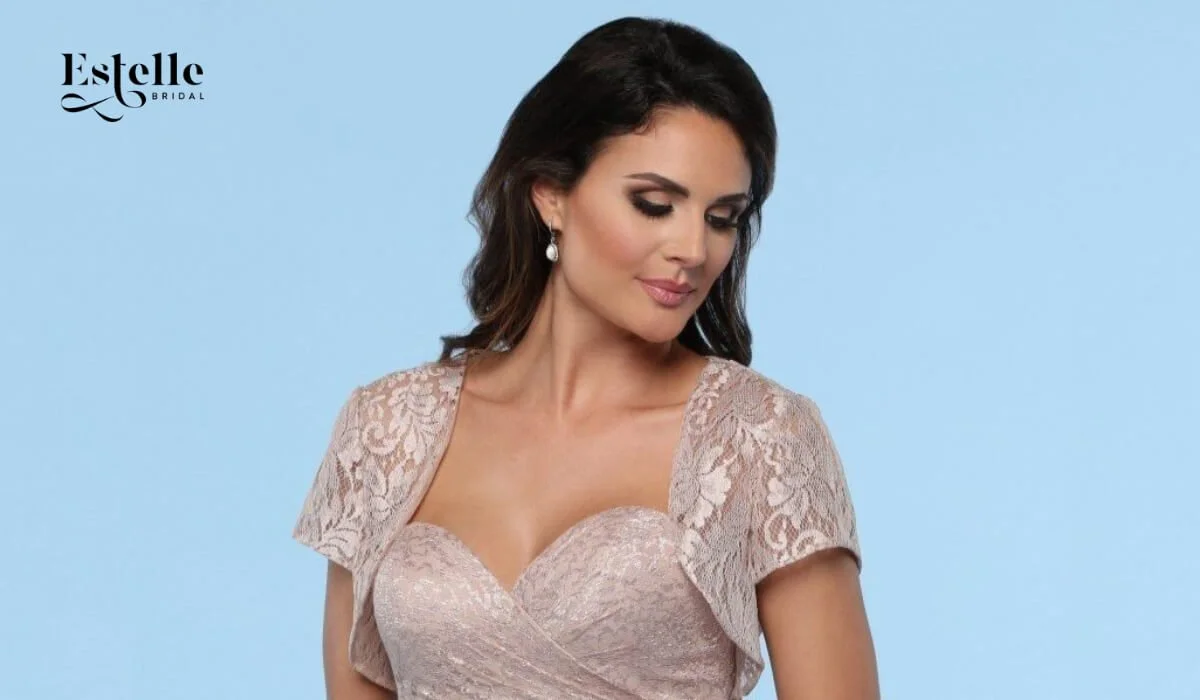
To get a custom bridesmaid dress: find a dressmaker who specializes in custom bridal work, schedule a consultation with inspiration photos, have each bridesmaid measured, finalize the design, schedule fittings, and allow at least six months from start to finish. At Estelle Bridal in Houston, custom bridesmaid dresses are available with alterations included. See our complete bridesmaid dresses Houston guide for the full process.
If you are interested in getting a custom bridesmaid dress made, there are a few clear steps that make the process run smoothly. Here is the complete guide from finding the right dressmaker through to the final fitting.
Key Observations
- A group custom order is a project, not a purchase. The things that go wrong are almost never the sewing. They are measurements taken badly, a decision nobody closed, and money that did not arrive.
- Ask which measurement the size was chosen from, and get the answer in writing. Brides have had whole parties ordered to the waist measurement and delivered not fitting the hips, six months later, with no checkpoint in between.
- The standard four measurements are not enough. Bust, waist, hip and hollow-to-floor miss the rib cage, which is exactly where a fitted bodice fails to close.
- Never let a bridesmaid self-report a size. If a dress is ordered to a size she asked for and it does not fit, the shop owes you nothing.
- Do not pay in full up front if you can avoid it. A balance outstanding is the only leverage you have if something arrives wrong.
- One roll of fabric, one dye lot, one cut date. That is why one late payment or one unsettled decision holds the entire party.
Step-by-Step: How to Get a Custom Bridesmaid Dress
1. Find a Dressmaker Who Specialises in Custom Work
Look for a dressmaker or boutique that specializes specifically in custom bridal and bridesmaid dress design. Look for reviews, a portfolio of previous custom work, and recommendations from other brides. A dressmaker experienced in custom bridesmaid dresses will understand how to coordinate color, fit, and design across a group of women with different body types and preferences. At Estelle Bridal in Houston, custom bridesmaid dress design is a dedicated service with a full portfolio of completed bridal party work. For the full custom design process guide, see our custom wedding dress design guide.
2. Schedule a Consultation
Schedule a consultation with the dressmaker to discuss your vision for the bridesmaid dresses. Bring any inspirational photos or sketches you have, and be prepared to discuss the style, fabric, color, and any specific design details you want. The consultation is also the right time to discuss the mix-and-match approach if you want different silhouettes for different bridesmaids within a shared color palette. For preparation tips, see our first bridal appointment guide.
3. Take Measurements for Every Bridesmaid
Accurate measurements are essential for custom bridesmaid dresses. Each bridesmaid needs her bust, waist, hip, and hollow-to-floor measurements taken by a professional. The dressmaker may also request a photo of each bridesmaid to understand body shape and posture before finalizing patterns. If any bridesmaids are in other cities, many boutiques can coordinate remote measurement instructions and fittings.
4. Finalize the Design and Begin Production
Once the design is finalized and measurements are taken, the dressmaker creates a pattern and begins cutting and sewing the fabric. For larger bridal parties, this stage requires clear communication about which bridesmaid is assigned which design variation if the party is doing mix-and-match silhouettes. Keep a record of each bridesmaid's measurements and design specifications in writing to avoid confusion during production.
5. Schedule Fittings and Alterations
Schedule a fitting for each bridesmaid to ensure the dress fits well and make any necessary adjustments. Even custom dresses built to measurements almost always require at least minor alterations after the initial production, particularly if body measurements have changed between the order date and the fitting date. At Estelle Bridal, alterations are included in every custom gown price. For the full alteration process, see our wedding dress alterations guide.
6. Allow Enough Time
Allow the dressmaker plenty of time to complete the dresses before the wedding day. It is recommended to start the process at least six months before the wedding to allow enough time for design, production, shipping, fittings, and any necessary alterations. Starting earlier is always better. If any bridesmaid is ordering from another city, add shipping and remote fitting time to the overall timeline. Communicate clearly throughout the process to ensure the final result is exactly what everyone agreed on.
How Do You Vet the Maker Before You Commit?
This is the single biggest point of failure in a custom group order and almost nothing is written about it. A bride can measure her party perfectly, use the designer's own size chart, and still receive dresses in the wrong color and the wrong size from a supplier who then tells her it was a problem with her monitor. Correct measuring does not protect you from the wrong maker.
Ask these before any money moves:
| Ask | Why | A good answer |
|---|---|---|
| Who physically sews these, and where? | Separates a workroom from a reseller placing an order elsewhere | A direct answer, in house or a named partner |
| Can I see finished dresses on real bridesmaids, not samples? | Finished work on real bodies is the only useful evidence | Photographs, and ideally a bride you can contact |
| Which measurement do you choose the size from? | The most common cause of a party of dresses that do not fit | A clear rule, and a willingness to put it in writing |
| Will I approve the color against a physical swatch? | Screens misrepresent color, and "it was your screen" is a real response brides have received | Yes, a swatch in hand before the fabric is cut |
| What is the deposit, and is it refundable? | Bridesmaid orders are often the one category demanded in full up front | A percentage, a cancellation window, and it stated on paper |
| What happens if a dress arrives wrong? | Remake versus alter, and who pays, is the question nobody asks in advance | A stated remedy, not a reassurance |
| Is there a checkpoint between measuring and delivery? | Six months with no checkpoint is how whole parties arrive wrong | A named stage where fit is verified before completion |
| Do you do the alterations too? | One workroom hemming the party to one clearance beats six separate tailors | Yes, with a rate |
A boutique that answers all eight without hesitating has done this many times. One that cannot answer the third and the seventh is the one to be careful with.
What Measurements Does a Custom Bridesmaid Dress Need?
Almost every bridesmaid sizing guide online lists four measurements: bust, waist, hip and hollow to floor. Those four are what a stock size is chosen from. They are not what a dress is built from, and the gap between the two is where a lot of parties come unstuck.
A workroom building to measure takes more, and the extras are the ones that fail in practice:
| Measurement | Where it is taken | Why it matters | In a standard size chart? |
|---|---|---|---|
| Full bust | Around the fullest part, tape level all the way round | Sets the cup and the front width | Yes |
| Underbust or rib cage | Directly under the bust, snug but not tight | This is where a fitted bodice refuses to close. Bridesmaids report exactly this failure | No |
| Natural waist | The narrowest point, roughly one to two inches above the belly button | Sets the waist seam position as well as the size | Yes |
| Hip | Fullest part, usually seven to nine inches below the natural waist | Decides whether she can sit and walk | Yes |
| Hollow to floor | From the notch at the base of the throat to the floor, in the shoes she will wear | Sets length. Useless if taken barefoot when she will wear a heel | Yes |
| Waist to hip | Down the side from the natural waist to the fullest hip | Two people with identical waist and hip numbers can need very different skirts | No |
| Shoulder to waist, front and back | Over the fullest part of the bust at the front, straight down at the back | Torso length. This is what makes a bodice buckle or ride up | No |
| Shoulder width and across back | Point to point, and across the back at armhole height | Straps staying put, and whether she can raise her arms | No |
| Armhole and bicep | Around the arm at the fullest point | Only needed with sleeves, and always needed with sleeves | No |
| Height and heel height | Barefoot height, plus the heel she has actually bought | The hem reference for the whole party | Partly |
If a maker only asks for four numbers, they are choosing a standard size for you rather than building to you. That may be exactly what you want, and it should be said out loud rather than assumed.
How to Take Each Measurement on Someone Else
Every measuring guide online is written for someone measuring herself. Almost nobody writes it from the measurer's side, which is the position you will actually be in. Here is how to do it properly.
- Set her up first. She stands straight, feet together, arms relaxed at her sides, looking forward, not down at you. Have her wear the bra she will wear on the day and close-fitting clothes or underwear. A padded or push-up bra can change a bust measurement by an inch or more, which is a whole size.
- Stand to her side, not in front. You need to see the tape at the back, and you cannot from the front. Bring the tape round and read it at the front, but check the back line first.
- Keep the tape parallel to the floor. This is the single most common error. A tape that rides up at the back adds an inch you will pay for later. Look at the back line in a mirror, or take a phone photo from behind and check it before writing the number down.
- Use the fingertip test for tension. The tape should be snug, and you should be able to slide one fingertip underneath. If you cannot, you are pulling too tight and the dress will be too small.
- Find her natural waist without asking her to bend. Have her put her hands on her hips and slide them upward until they meet the narrowest point, or run the tape down and watch where it settles on its own. Asking someone to bend sideways works but is awkward and imprecise.
- Measure the hip at the fullest point, not at the hip bone. Usually seven to nine inches below the natural waist. Walk around her to check you have not caught the tape on a pocket or a fold.
- For hollow to floor, kneel and have her in her shoes. Start at the notch at the base of her throat and run the tape straight down the front to the floor. Do not let it drift to one side, and do not do it barefoot if she is wearing a heel.
- Write each number down immediately, in front of her. Not at the end. Read it back to her so she hears it.
- Take everything twice. If the two readings differ by more than a quarter of an inch, take it a third time. This takes ninety seconds and it is the cheapest insurance in the whole project.
And say the obvious thing out loud before you start: nobody is being judged, the numbers are going to a workroom and nowhere else, and a bigger number is not a worse number. That one sentence prevents most of the problems in the next section.
How Much Does a Measurement Error Actually Cost?
The consequences are not symmetrical, and this is the part nobody explains.
| The error | What it means | What it costs |
|---|---|---|
| Half an inch too large | The dress is slightly generous | A routine take-in at the fitting. Usually absorbed |
| One to two inches too large | A real alteration | Published US bridesmaid take-in prices run roughly $25 to $135 |
| Half an inch too small on a soft skirt | Usually recoverable | Let out to the seam allowance, if there is any |
| Half an inch too small on a fitted bodice | Often not recoverable | Seam allowance is limited and a French seam leaves none. May need a corset back or a panel |
| Two inches too small | A remake question, not an alteration question | Letting out is limited and opinions differ on how far. Some shops say one to two sizes, some say more. Nobody says six |
So the working rule for a group order is simple: when in doubt, round up. A dress that is slightly too big is a fitting appointment. A dress that is too small in the bodice can be a crisis three weeks before the wedding.
Which Measurement Is the Size Chosen From?
Ask this question, get the answer in writing, and you will have avoided the most documented failure in bridesmaid ordering. Brides have had an entire party sized to the waist measurement, six months before the wedding, and discovered on delivery that none of the dresses fit the hips. Others have been sold a bodice size that fit the bust and a skirt several sizes too small.
When a dress is made to measure, this problem disappears, because no single measurement is driving a size. When you are ordering a stock size instead, there is always a rule, and different retailers use different ones. Some size to the largest measurement, some to the waist. You need to know which, because it tells you where the alterations will be.
The other half of this: never let a bridesmaid self-report a size. A dress ordered to a size she asked for and which then does not fit is generally not the shop's problem, and brides have found that out the hard way. Vanity sizing and plus-size upcharges both push people to name a smaller number than their measurements support. Measure, do not ask.
How Do You Measure a Bridesmaid Who Lives Out of Town?
Most guides say "send us her measurements" and stop there. That is where remote orders go wrong, because a number taken badly looks exactly like a number taken well. Use a protocol instead.
- Best option: send her to a local shop. A bridal boutique or alterations shop in her own city will usually measure her, often free and sometimes for a small fee. Brides do this routinely and it is far more reliable than a friend with a tape at home. Ask for the measurements on the shop's own form.
- Second best: someone else measures her, not herself. Self-measuring is where the biggest errors happen, particularly at the back and at the hollow to floor.
- Send the instructions in writing, with the list of what is needed. Not a link to a generic chart. The specific measurements your maker has asked for, in order, with the fingertip tension test written out.
- Ask for photos of the tape in position. Front and back, for the bust, waist and hip. It takes her two minutes and it lets the workroom check the tape is level and in the right place. This single step catches most remote errors.
- Ask what she is wearing when measured. The bra she will wear on the day, and the shoes for the hollow to floor. Write it down alongside the numbers.
- Have the workroom sanity-check the set. Numbers that do not hang together, such as a waist and hip that are implausibly close, are usually a tape placement error rather than an unusual body. A good workroom will query it rather than cut.
- Plan her fitting before she books her flight. If she arrives two days before the wedding, that is when the fitting has to be, and everyone needs to know that now rather than in the wedding week.
How Do You Get a Group to Actually Decide?
Group indecision is the most common reason a custom order misses its window. It is not a taste problem, it is a process problem, and it has a process fix.
- Separate votes from opinions, out loud and early. Everyone gets an opinion. You get the vote. Saying that kindly at the start prevents a dozen well-meaning reopenings later.
- Shop the shortlist with two or three people, not eight. Narrow to two or three options with your maid of honor and maybe one other, then bring the whole party to see the shortlist rather than the whole range. A party of eight choosing from a full collection will not converge.
- Set a decision date and say it in writing. "We are deciding by the 14th" is a different conversation from "let me know what you think". Put the consequence next to it: after that date, the maker cannot hold the timeline.
- Use silence as agreement, and say so. "If I do not hear back by Friday I will assume you are happy" is fair, normal, and it unblocks the two people who never reply.
- Appoint a dress captain. One person, usually the maid of honor, who chases measurements, payments and fitting dates. Not you. This is the highest-value thing on this list and it takes one conversation to set up.
- Close reopened decisions kindly and firmly. "We settled the color in March and the fabric is being cut" is a complete answer. You do not owe a reargument.
Who Pays for What, and How Does the Money Actually Move?
In the US the convention is that bridesmaids pay for their own dresses and their own alterations, and it is entirely normal for a couple to cover some or all of it if they choose to. The convention is not the hard part. The mechanics are, because a custom group order is usually placed as a single order with a single maker.
| Approach | How it works | Risk |
|---|---|---|
| Each bridesmaid pays the maker directly | The boutique takes individual payments against one group order | Lowest risk to you. Ask whether the maker supports it, because many do |
| You collect, then pay the maker | Everyone sends you their share before the order is placed | Workable, but the order does not go in until everyone has paid |
| You front the money and chase reimbursement | You pay, then collect afterwards | The one experienced brides warn against. You are now the debt collector in your own wedding party |
| You pay for all of them | A gift, stated clearly as one | No payment risk at all. Say it early so nobody budgets for a cost that is not coming |
On asking for money, which brides find the most awkward part: be direct and give a date. A short message that says the dresses are being ordered, here is the amount, here is the date, and here are the ways you can pay, works far better than hinting. Offer to split it into two payments for anyone who needs that, and ask privately rather than in the group chat.
For context on the number, The Knot's 2025 Real Weddings Study, based on responses from 16,956 US couples married in 2024, puts the average bridesmaid dress at $128 per person, rising to around $140 in the Mid-Atlantic and Northeast. Alterations are on top: published US price lists put typical bridesmaid alterations at roughly $45 to $150, with a hem alone running about $30 to $120. Our guide on how much bridesmaids should spend goes through the whole budget conversation.
What Deposit Should You Expect?
There is no single industry standard, and bridesmaid dresses are often the one category shops ask to be paid in full up front. Published shop policies range from a 75 percent non-refundable deposit with a 24-hour cancellation window, to full payment at the time of ordering for bridesmaid and mother-of-the-bride dresses while brides are offered 50 percent. Brides report having been asked for 30, 50, 60, 75 and 100 percent at different shops.
Two things follow from that.
- Ask before you fall in love with a maker, not after. The deposit and the cancellation window are policy, and policy is written down somewhere.
- Avoid paying in full if you have the choice. An outstanding balance is the only real leverage you have if a dress arrives wrong. Once it is paid in full, you are asking rather than negotiating.
What If One Bridesmaid Does Not Pay?
Nobody writes about this and it is the highest-consequence question in a group commission, because a workroom cuts one roll of fabric in one dye lot for the whole party. One unpaid share does not delay one dress. It delays everyone.
- Say the deadline and the consequence together, once. Not "please pay soon" but "the fabric is cut on the 20th and I need everyone's share by the 18th".
- Ask privately what is going on. It is usually money, and it is usually temporary. A two-payment plan solves most of it and costs you nothing.
- Ask the maker whether her dress can be ordered separately later. The honest answer is often no, because of the dye lot. Knowing that in advance changes how firm the deadline needs to be.
- Decide in advance what you will do. Cover it yourself, let her step back from wearing the same dress, or move the date. Choosing under pressure at the last minute is how friendships get damaged.
- Do not front it silently and resent it. If you cover someone's dress, either say it is a gift or agree a repayment date. The unspoken version is the one that goes wrong.
In What Order Should the Party Be Measured and Ordered?
Sequence matters more than people expect, and nobody publishes one. This is the order that works.
| Order | What happens | Why it is here |
|---|---|---|
| 1 | Your own gown is chosen | The bridal party is styled around the gown, not the other way round |
| 2 | Color, fabric and length settled with two or three people | A small group converges. A large group does not |
| 3 | Whole party sees the shortlist and the decision is closed | Everyone is heard, and the decision still lands on a date |
| 4 | Everyone buys their shoes | Hollow to floor and hem both depend on the actual heel |
| 5 | Local bridesmaids measured, in one session if possible | One measurer, one tape, one method, so the numbers are consistent |
| 6 | Out-of-town bridesmaids measured, with photos of the tape | Runs in parallel, and needs the longest lead |
| 7 | Anyone pregnant or expecting a change measured last | The closer to the cut date, the more useful her numbers |
| 8 | Payment collected, then the whole order placed together | One dye lot. This is the step that cannot be split |
| 9 | Fabric approved against a physical swatch, then cut | The last reversible moment |
| 10 | Fittings, tallest and out-of-town first | They have the least slack in the schedule |
One note on step five: have the same person measure everyone wherever you can. Two people with two tapes and two ideas of where a natural waist sits will produce a party that does not look consistent, even when every individual number is defensible.
What About a Bridesmaid Who Is Pregnant, Postpartum, or Whose Size May Change?
Every guide says the same one line: delay her final fitting. That is correct and it is nowhere near enough. Here is what actually needs deciding, and most of it is decided at the time of measuring rather than at the fitting.
- Tell the workroom at measuring, not later. Extra seam allowance, a corset or lace-up back, or an empire waist are all pattern decisions. Added afterwards they are repairs.
- Distinguish growing into the wedding from postpartum. A bridesmaid who will be seven months pregnant needs a silhouette planned around a bump. A bridesmaid who will have given birth two months before needs a closure she can nurse in and a fit that is not built around a body she no longer has.
- Ask for a corset or lace-up back. It gives several inches of adjustment in both directions and it is the single most useful insurance available. It also solves the problem for anyone else whose size may shift.
- Choose an empire waist or a soft A-line for a bump. A waist seam above the bump keeps the skirt hanging from a fixed point, which makes the hem far more predictable as she changes.
- Remember the bump lifts the front hem. Fabric travelling over a bump is fabric not reaching the floor, so a floor-length dress reads short at the front and still sweeps at the back. Allow slightly more clearance at the front and mark her hem last.
- Measure her last, and schedule a remeasure. If a remeasure point is not written into the schedule, it will not happen.
- Ask who pays for rework. Fitting adjustments are usually included. A significant change in measurements usually is not. Better to know the policy than to assume one.
The same applies, less dramatically, to anyone who mentions that their size may change for any reason. Extra seam allowance costs nothing at the pattern stage and cannot be added later.
How Do You Schedule Fittings for a Whole Party?
Fittings are where a group order stops being a shopping trip and becomes a logistics problem. Plan them like one.
- Allow roughly thirty to forty-five minutes per person for a first fitting. Two or three people can share a session comfortably. Six cannot, and trying it produces rushed work.
- Everyone brings the real shoes and the real underwear. Including shapewear. A hem set in the wrong shoes is a hem set twice.
- Start first fittings around six weeks out. That is the standard window, and it leaves room for a second fitting and a collection.
- Hem to one shared clearance, not to a number. Every dress the same distance off the floor in that person's own shoes, so the hemline lines up across different heights.
- Book the out-of-town fittings first. They are the constraint. Work out arrival dates before you book anyone local, and keep one contingency slot in the wedding week.
- If someone must be altered in her own city, send the spec. Give her local seamstress the exact hem clearance and any other instruction in writing, so her dress matches the rest rather than being interpreted.
- Inspect every dress the day it arrives. Not the week of. Check color against your swatch, check the label, check the measurements against what was ordered, and put it on. Problems found at delivery are solvable. The same problems found in the wedding week are not.
What Do You Do If One Dress Arrives Wrong?
Act on the day it arrives, not the week of the wedding. The recovery options are real and they narrow quickly.
- Document it immediately. Photograph the dress, the label and the swatch together in daylight. Write down the date it arrived. This is what a remake conversation runs on.
- Check it against what was ordered, not against what you remember. The measurements on the order form, the style number, the color name and the dye lot. This is why getting it in writing matters.
- Contact the maker the same day. Most policies have a short inspection window and it starts at delivery.
- Understand remake versus alter. A remake takes the production time again, which may be impossible. An alteration is faster and may be the practical answer even when the error was not yours.
- Know the rescue techniques that actually work. Let out to the seam allowance. Harvest fabric from the hem while hemming and use it to add room elsewhere, which a good seamstress can do on a floor-length dress. Insert a corset back panel, which can add several inches. Add a side panel or godet where there is no allowance left.
- Check stock before you decide. If the fix involves reordering anything, availability is the thing that closes the door. Brides have caught a sizing error and then found the size was no longer available.
What Should You Get in Writing?
No bridesmaid guide anywhere publishes this list, and every item on it comes from something that has gone wrong for a real bride.
| Get this in writing | Because |
|---|---|
| Every bridesmaid's measurements as recorded, and who took them | If a dress does not fit, the first question is what it was built to |
| Which measurement the size was chosen from, if a stock size is being ordered | The single most documented cause of a party of dresses that do not fit |
| The color and dye lot, confirmed against a physical swatch you have seen | Screens misrepresent color, and "it was your screen resolution" is a real answer brides have received |
| The deposit amount, and whether it is refundable | Bridesmaid deposits are often non-refundable with a very short cancellation window |
| The cancellation window, in hours or days | Some are as short as 24 hours after the order is placed |
| The delivery date, and what happens if it slips | A date with no consequence attached is a hope |
| Who pays for a remake versus an alteration if something is wrong | Decide this while everyone is friendly |
| The last date a design change can be made | Every maker has one. Few volunteer it |
| Any clause about weight change or measurement change | Read it before you sign, not after somebody's size shifts |
| What is included in the price and what is billed separately | Alterations, rush fees, extra fittings and shipping are the usual extras |
An email confirming these after the appointment is enough. It does not need to be a contract to be useful, and a good boutique will be happy to confirm every line.
Where Do Group Orders Actually Fail?
Five failure points, taken from what has genuinely gone wrong for brides rather than from what sounds plausible.
| Failure point | What it looks like | The fix |
|---|---|---|
| One dye lot, one cut date | One late payment or one unsettled decision holds the entire party | A stated cut date and payment deadline, with the consequence said out loud |
| No checkpoint between measuring and delivery | Measured in October, delivered in April, nothing fits and it is too late | Ask for a named fit checkpoint before the dresses are finished |
| An unvetted maker | Correct measurements, wrong color, wrong sizes, no recourse | The eight vetting questions above, and a physical swatch |
| Self-reported sizes | A bridesmaid names a size smaller than her measurements support, and it does not close | Measure everyone. Never order to a size somebody asked for |
| The out-of-town bridesmaid | Arrives two days before, cannot be fitted, and nobody planned for it | Book her fitting before she books her flight, and keep a contingency slot |
A Backward-Planning Calendar for a Custom Bridesmaid Order
| When | What has to happen |
|---|---|
| 10 to 12 months out | Your own gown chosen. First conversation with the maker. Deposit and cancellation terms understood |
| 9 to 10 months out | Color, fabric and silhouette shortlisted with two or three people. Swatches ordered |
| 8 to 9 months out | Whole party sees the shortlist. Decision date set and closed. Dress captain appointed |
| 7 to 8 months out | Everyone buys shoes. Measurement day booked. Out-of-town instructions sent |
| 6 to 7 months out | Everyone measured. Payment collected. Color approved against a physical swatch |
| 6 months out | Whole order placed together. Cut date confirmed in writing |
| 3 to 4 months out | Fit checkpoint. Pregnant or size-changing bridesmaids remeasured |
| 8 to 10 weeks out | Dresses delivered. Every dress inspected on arrival against the order and the swatch |
| 6 weeks out | First fittings begin, out-of-town and tallest first. Hem to one shared clearance |
| 2 to 3 weeks out | Final fittings and collection. Pregnant bridesmaid hemmed now |
| Wedding week | Contingency slot held. Steam, do not press. Hang everything long |
If you are starting later than this, say so on the first call. Production alone commonly runs eight to sixteen weeks for a made-to-order dress and longer for a fully custom one, and a maker who knows your real date can tell you what is still possible instead of finding out later.
How Do You Feel Confident in a Bridesmaid Dress?
Wearing a bridesmaid dress can feel nerve-wracking, especially if formal attire is not a regular part of daily life. Here are the most effective ways to feel confident and comfortable.
Choose a Dress That Fits Well
An ill-fitting dress creates self-consciousness. Make sure the dress is properly altered to your measurements before the wedding day. A professionally fitted dress in any silhouette will always look and feel better than an off-the-rack size that has not been adjusted.
Select a Style That Suits Your Body Type
Not every dress style looks equally good on every figure. If bridesmaids have the flexibility to choose their own silhouette within a shared color palette, encourage each to choose the style that truly flatters her. Custom bridesmaid dresses make this possible from the design stage rather than requiring it to be solved through alterations after the fact. For the mix-and-match guide, see our mismatched bridesmaid dresses guide.
Choose Accessories You Love
Accessories that complement the dress and reflect your personal style add a layer of confidence to the overall look. Jewelry, a clutch, and shoes that feel personal to the bridesmaid make the dress feel like an outfit rather than a uniform.
Practice Walking in the Dress
If the dress is long or has a train or a narrow skirt, spend time walking in it before the wedding day. Familiarity with the weight and movement of the fabric makes the processional feel natural rather than uncertain.
Focus on the Occasion
Shifting focus from personal appearance to the celebration itself is one of the most effective confidence builders. Being a bridesmaid is about supporting the bride on her wedding day, and that shared purpose creates genuine confidence that goes far beyond how the dress looks.
How Many Sizes Can a Bridesmaid Dress Be Taken In?
Bridesmaid dresses can typically be taken in up to two sizes without significantly altering the overall look of the dress. However, this varies based on the dress design and the amount of fabric available. It is generally more difficult to let a dress out than to take it in, particularly if the dress has already been altered once. The best approach is to order based on each bridesmaid's actual current measurements and then have alterations made as needed rather than ordering larger and expecting to take in. For the complete alteration guidance, see our wedding dress alterations guide.
What Is the Most Common Luxury Bridesmaid Dress Material?
The most common luxury bridesmaid dress materials are chiffon, satin, and lace. Chiffon is a lightweight, flowy fabric that drapes beautifully and is particularly popular for summer and outdoor weddings. Satin is a smooth, lustrous fabric used for more formal or elegant wedding settings. Lace adds a romantic and distinctly bridal quality to bridesmaid dresses. Other common materials include crepe, tulle, and organza. For the complete fabric guide covering every option by season and venue, see our summer bridesmaid dress fabric guide.
How Many Bridesmaids Are Appropriate?
There is no set number of bridesmaids that is considered appropriate. Some brides choose one or two. Others have five, six, or more. The decision depends on the size of the wedding, the venue, and the bride's personal relationships and preferences. The most important factor is that every member of the bridal party is someone the bride truly wants standing beside her on her wedding day. Bridal party size should reflect the bride's real relationships, not a sense of obligation or a desire to match the groom's side. Whatever number feels right for the bride is the right number.
What Estelle Bridal Brides Say
★★★★★ Kiran Sunil, Google Review, 2 weeks ago
"This bridal shop is absolutely beautiful, with a wonderful selection of gowns to choose from. They allowed us to try on a variety of dresses, making the experience enjoyable and stress-free. A special thank you to Nisha for her kindness, patience, and guidance in helping us find such beautiful dresses. She made the entire experience truly memorable. I highly recommend this bridal shop to everyone looking for exceptional service and a stunning collection of bridal gowns."
Why Choose Estelle Bridal for Custom Bridesmaid Dresses in Houston
Custom bridesmaid design for every body type in the party. Each bridesmaid is measured individually and her dress is built to those measurements. Mix-and-match silhouettes within a shared color palette allow every bridesmaid to wear what flatters her most while keeping the bridal party visually cohesive.
Color batch coordination guaranteed. All dresses for the same bridal party are produced to the same dye lot, ensuring color consistency across the full group. This matters most for larger bridal parties where slight dye differences between separate orders would be visible in photographs.
Fabric expertise for every Houston venue and season. Whether the ceremony is outdoor spring or indoor winter formal, the fabric recommendation for the custom bridesmaid dress is matched to the specific venue conditions and the bride's overall aesthetic.
Alterations included in every custom gown price. The full fitting and alteration process is covered from first appointment through final delivery. No separate alteration bill for any bridesmaid in the party.
Black-owned, woman-owned Houston boutique since 2016. Founded by Flo A. 4.8 stars, 300+ Google reviews. Private appointments. 2428 S Hwy 6, Houston TX 77077. (281) 208-7805. Tue/Thu/Fri/Sat 10am-5pm, Wed/Sun 1pm-7pm. Browse the wedding gowns collection or book your appointment.
Book Your Custom Bridesmaid Dress Consultation at Estelle Bridal Houston
Individual measurements for every bridesmaid. Mix-and-match silhouettes. Color batch coordination. Alterations included with custom gowns. Private appointments. Houston's Black-owned boutique since 2016.
Book an AppointmentFrequently Asked Questions
How do I get a custom bridesmaid dress made?
Find a dressmaker or boutique that specializes in custom bridesmaid dresses, schedule a consultation with inspiration photos, have each bridesmaid measured, finalize the design, schedule fittings, and allow at least six months from start to the wedding day. See our complete bridesmaid dresses guide for the full process and timeline.
How far in advance should I order custom bridesmaid dresses?
At least six months before the wedding date. This allows time for design consultations, production, shipping, fittings, and any necessary alterations. If bridesmaids are in multiple cities or the party is large, allow eight to nine months. Starting earlier is always better.
Can bridesmaids get different silhouettes in the same custom order?
Yes. A mix-and-match approach allows each bridesmaid to choose a different silhouette within a shared color and fabric. This is one of the most popular approaches at Estelle Bridal because it allows every bridesmaid to wear what flatters her most. See our mismatched bridesmaid dresses guide for how to make this work.
What fabric is best for custom bridesmaid dresses?
Chiffon is the most popular choice for summer and outdoor ceremonies. Satin suits formal indoor events. Crepe is the most versatile all-season choice. Lace adds a distinctly bridal, romantic quality. The right fabric depends on the venue, season, and the overall aesthetic of the wedding. See our summer bridesmaid fabric guide for the complete breakdown.
How many sizes can a bridesmaid dress be taken in?
Typically up to two sizes, depending on the dress design and available fabric. It is generally easier to take a dress in than to let it out, so it is better to order based on actual measurements and alter down rather than ordering smaller and trying to let out. For the full alteration guide, see our alterations guide.
Does Estelle Bridal make custom bridesmaid dresses in Houston?
Yes. Custom bridesmaid dress design is a dedicated service at Estelle Bridal in Houston. Individual measurements are taken for every bridesmaid, mix-and-match silhouettes are available, color batch consistency is coordinated across the full party, and alterations are included in every custom gown price. Book at estellebridal.com/book or call (281) 208-7805.
How do I feel confident wearing a bridesmaid dress?
Choose a dress that fits properly through professional alterations, select a silhouette that flatters your figure, accessorize with pieces you love, practice walking in the dress before the wedding day, and shift focus to the occasion rather than personal appearance. A properly fitted custom dress built to your measurements removes most of the uncertainty that creates self-consciousness in off-the-rack bridesmaid dresses.
How far in advance should custom bridesmaid dresses be ordered?
Start the conversation ten to twelve months out and place the whole order together around six months out. Production alone commonly runs eight to sixteen weeks for made-to-order and longer for fully custom, and you want every dress in hand about eight to ten weeks before the wedding so there is room for fittings and for anything that arrives wrong.
What measurements do you need for a custom bridesmaid dress?
More than the four a size chart uses. Full bust, underbust or rib cage, natural waist, hip, hollow to floor in the actual shoes, waist to hip, shoulder to waist front and back, shoulder width and across back, armhole and bicep if there are sleeves, and height with heel height. Rib cage and torso length are missing from standard charts and are exactly where fitted bodices fail.
How do you measure a bridesmaid correctly?
Have her stand straight in the bra she will wear, stand to her side rather than in front, keep the tape parallel to the floor and check the back line, and use the fingertip test: you should be able to slide one fingertip under the tape. Write each number down in front of her and take everything twice. If two readings differ by more than a quarter inch, take a third.
Can a bridesmaid measure herself?
It is the least reliable option and it is where the biggest errors happen, particularly at the back and the hollow to floor. If she is out of town, the best answer is to send her to a local bridal or alterations shop, which will often measure her free or for a small fee. Failing that, have someone else measure her and send photos of the tape in position.
Who pays for bridesmaid dresses?
In the US the convention is that bridesmaids pay for their own dress and their own alterations, and it is entirely normal for a couple to cover some or all of it as a gift. What matters more is how the money moves. Ask whether the maker will take individual payments against one group order, because that avoids you fronting the cost and then chasing reimbursement.
What deposit is normal for bridesmaid dresses?
There is no single standard. Published shop policies range from a 75 percent non-refundable deposit with a 24-hour cancellation window to full payment at the time of ordering, and brides report being asked for anywhere between 30 and 100 percent. Ask before you commit, and avoid paying in full where you have the choice, because an outstanding balance is your only leverage if something arrives wrong.
What happens if one bridesmaid does not pay in time?
It usually delays everyone, because a workroom cuts one roll of fabric in one dye lot for the whole party. State the payment deadline and the cut date together, ask privately what is going on, offer a two-payment plan, and decide in advance whether you would cover it. Ask the maker whether a single dress can be ordered separately later, because the honest answer is often no.
How much does a measurement error cost?
Half an inch too large is usually absorbed at the fitting. One to two inches too large is a real alteration, commonly $25 to $135 for a take-in. Too small is the dangerous direction: seam allowance is limited, a French seam leaves none, and a fitted bodice half an inch too small may need a corset back or an added panel. When in doubt, round up.
What should a bride get in writing for a group dress order?
Every bridesmaid measurement as recorded and who took it, which measurement the size was chosen from, the color confirmed against a physical swatch, the deposit amount and whether it is refundable, the cancellation window, the delivery date and what happens if it slips, who pays for a remake versus an alteration, the last date a design change can be made, and what is billed separately.
What do you do if a bridesmaid dress arrives not fitting?
Act the day it arrives. Photograph the dress, the label and the swatch in daylight, check it against the order form rather than your memory, and contact the maker the same day because inspection windows are short. Then weigh remake against alteration. Real rescue options include letting out to the seam allowance, harvesting fabric from the hem while hemming, and inserting a corset back panel.
How do you handle a pregnant bridesmaid in a custom order?
Tell the workroom at measuring rather than at the fitting. Ask for extra seam allowance and a corset or lace-up back, choose an empire waist or soft A-line so the skirt hangs from a fixed point above the bump, allow slightly more hem clearance at the front because a bump lifts the front hem, measure her last, and get a remeasure point written into the schedule.
How many fittings does a bridal party need?
Typically two, a first fitting around six weeks out and a final one two to three weeks out, plus collection. Allow thirty to forty-five minutes per person and expect two or three people to share a session comfortably. Book the out-of-town bridesmaids first, because their arrival dates are the real constraint, and keep one contingency slot in the wedding week.
Related Bridesmaid Guides
| Read this next | What it covers |
|---|---|
| What can be customized on a bridesmaid dress | An itemized menu of every change, what each costs, and the one-third rule |
| Custom bridesmaid dresses | What a made-to-measure bridesmaid dress involves |
| Bridesmaid dress length | Dress codes, height-to-hem figures, and hemming a party to one clearance |
| How much should bridesmaids spend | Budget, who pays for what, and how to have the conversation |
| Ordering bridesmaid dresses long distance | Measuring, fitting and hemming for out-of-town bridesmaids |
| Best fabric for bridesmaid dresses in summer | Fabric by weight, what works outdoors and what to avoid |
| Plus-size bridesmaid dresses guide | Fit, construction and styling across a mixed-size party |
| Mismatched bridesmaid dresses | Mixing color, fabric and silhouette so it reads deliberate |
| Bridesmaid dresses in Houston TX | The local guide to choosing and ordering for a Houston wedding |
| Book a bridesmaid appointment | Private appointments at 2428 S Hwy 6, Houston TX 77077 |
About the Author
Flo A. is the founder and lead designer of Estelle Bridal in Houston, TX. Since 2016, she has designed custom bridesmaid dresses for Houston bridal parties across every size, silhouette, and color palette, with particular expertise in coordinating mix-and-match bridesmaid styling and managing the measurement and production process for geographically distributed bridal parties. Estelle Bridal is featured in Black Brides magazine and holds a 4.8-star rating across 300+ Google reviews.
Related guides: Bridesmaid Dresses Houston TX · Mismatched Bridesmaid Dresses · Summer Bridesmaid Fabric Guide · Custom Gown Design Houston · Wedding Dress Alterations Guide · Your First Bridal Appointment · Browse Wedding Gowns