
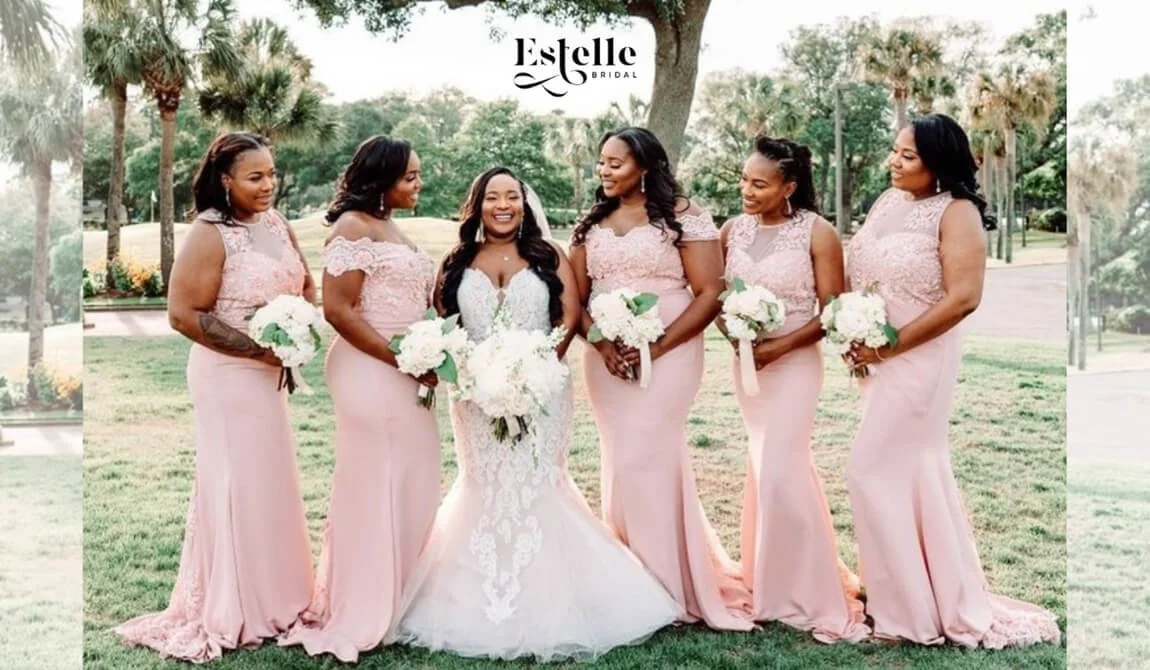
Yes, it is possible to customize luxury bridesmaid dresses. Many high-end designers and bridal boutiques offer customization options such as choosing the color, fabric, silhouette, and embellishments of the dress. However, it's important to note that customization may come with an additional cost and a longer lead time. It's best to inquire with the specific designer or boutique for their customization options and policies.
Can The Bridesmaids Try On The Dresses Before Purchasing Them?
In most cases, yes, bridesmaids can try on dresses before purchasing them. Many bridal boutiques and designers offer appointments for bridesmaids to try on dresses in various sizes and styles to find the best fit for each person. However, it's important to note that some boutiques may require appointments to be made in advance and may have specific policies around trying on dresses, such as limits on the number of dresses that can be tried on or restrictions on taking photos. It's best to inquire with the specific boutique or designer for their policies on trying on bridesmaid dresses.
Read More: How Much Should Bridesmaids Spend on Their Dresses?
How Long Does It Take To Make A Bridesmaid Dress?
The time it takes to make a bridesmaid dress can vary depending on several factors, such as the design complexity, the availability of the fabric and embellishments, and the workload of the dressmaker. Generally, it can take anywhere from a few weeks to several months to make a bridesmaid dress, depending on the specific circumstances. If the dress is ordered from a designer or boutique, the lead time can vary depending on the availability of the dress and any customization options that may be requested.
Typically, bridesmaid dresses can take anywhere from four to twelve weeks to be made and delivered, although rush orders may be possible for an additional fee. If the dress is custom-made by a dressmaker, the timeline will depend on the specific dressmaker's workload and schedule. It's best to inquire with the dressmaker about their estimated time.
Key Observations
- There are three different things people call customizing, and they are not the same product: altering a dress you bought, ordering a stock design in your measurements, and having a dress made to your design. Most disappointment comes from confusing them.
- Changing a neckline, adding sleeves, or converting a back on a finished dress is a rebuild, not an adjustment, because a bodice that is lined, boned and cup-built has to be opened up to do any of it.
- Order every dress in the party at once. Dye lots vary between batches, and the same color name can look up to 25 percent different between two fabrics, so chiffon and satin in the same shade will not match.
- A useful break-even rule: when a restyle will cost more than about a third of the dress price, buy a different dress instead.
- Custom-made and custom-sized dresses are almost never returnable anywhere. Swatch, sample and mock-up stages exist precisely because there is no undo.
- Let one variable float and lock the rest. A party where everyone chooses a different neckline in one fabric and one color reads deliberate. A party where everyone chooses freely does not.
Can You Customize Luxury Bridesmaid Dresses?
Yes, but the word customize is doing a lot of work in that question, and it covers three genuinely different products. Getting this right at the start saves most of the problems that follow.
| What it is | What you can change | What you cannot | Typical lead time | Returnable |
|---|---|---|---|---|
| Buy a stock dress, then alter it | Fit, hem, straps, and modest restyling done afterwards by a tailor | Anything the construction will not allow. A boned, lined bodice resists neckline and sleeve changes | Whatever the dress takes, plus 2 to 3 weeks of alterations | The dress often is, until it is altered |
| Made to order in your size | Color from the designer's range, size, sometimes length. Your dress is cut and sewn after you order | The design. Most designers will not change a scoop neck to a V-neck or add a ruffle | Commonly 2 to 6 months depending on the designer | Usually not, because it was cut for you |
| Made to measure, to your design | Neckline, straps, sleeves, back, skirt shape, length, lining, slit, pockets, closure, fabric and color | Nothing structural, though fabric and dye have real limits | Commonly 3 to 5 months, longer for custom dye or beading | No. Nothing cut to your measurements can be resold |
Most bridal websites blur the middle row into the bottom one. Made to order means the dress is produced after you order it, in your size, from an existing design. That is genuinely useful and it is not the same as design freedom. If you want a different neckline on a made-to-order dress, the answer at most designers is no.
At Estelle Bridal the third row is the one we build in house, which is why this page can be specific about what is actually possible rather than about what a catalog will allow.
What Can Actually Be Changed on a Bridesmaid Dress?
Here is the itemized menu that no bridesmaid dress page publishes. The cost column is what the change typically runs in the United States when it is done after purchase by an alterations specialist, taken from published bridal and formalwear alteration price lists. When the same change is designed in from the start on a made-to-measure dress, it is part of the build and is quoted with the gown rather than added on top.
| Change | On a dress you already own | Typical US cost if done afterwards | Weeks it adds | Better designed in |
|---|---|---|---|---|
| Hem and length | Easy. The most common change of all | $30 to $100, chiffon and lined hems at the top of that | 1 to 2 | No, hem afterwards in the real shoes |
| Shorten straps | Easy, but it moves the cups, neckline and armhole with it | $15 to $30 | 1 | Only if the bodice is already borderline |
| Raise shoulders | Moderate. Harder with sleeves attached | $25 to $60 | 1 to 2 | Yes if you know the torso is short |
| Take in the sides | Easy up to about two sizes. Boning adds work | $30 to $70 | 1 to 2 | No |
| Let out the sides | Only if there is seam allowance. Often there is not | $30 to $70 when possible | 1 to 2 | Yes. This is where bought dresses fail |
| Reshape the neckline | Hard. A lined, boned bodice has to be opened up | $30 to $72 plain, more with lace or appliqué | 2 to 3 | Yes |
| Add sleeves | Hard. The armhole geometry for a sleeve is not there | $20 to $70 plus fabric, higher for long or lace sleeves | 3 to 4 | Yes |
| Remove sleeves | Sometimes impossible. If the sleeves hold the dress up, it cannot be made strapless | $20 to $70 when possible | 1 to 2 | Yes |
| Add a corset back | Moderate to hard, and it changes the back permanently | $75 to $260 | 2 to 3 | Yes, and it is worth it for a changing body |
| Add a slit | Moderate. It has to land on an existing seam | About $35 on top of hem work | 1 to 2 | Yes, so it lands where you want it |
| Add pockets | Hard. Needs side-seam allowance and a skirt with enough drape | Quoted case by case, usually hourly | 2 to 3 | Yes |
| Change the skirt shape | Effectively a rebuild. The skirt is redrafted | $70 to $200 and up | 3 to 4 | Yes |
| Add or change lining | Moderate, priced per layer | $20 to $85 per layer | 1 to 2 | Yes if opacity matters |
| Add bra cups or bust support | Easy | $10 to $40 | 1 | No |
| Replace the closure | Easy to moderate. Hidden zippers in tulle cost more | $30 and up | 1 | Yes if access matters |
| Change the color | Not an alteration. It needs a dye lab and a swatch test | Not usually offered on a finished dress | 4 or more | Yes, only |
| Change the fabric | Impossible. That is a different dress | Not applicable | Not applicable | Yes, only |
Those cost bands are drawn from published US alterations price lists including Fash's 2023 bridesmaid alterations survey, which puts the national average at $140 with a typical range of $60 to $200, and from bridal alterations shops that publish per-item pricing. Houston pricing sits inside those bands. Fabric changes them sharply: Azazie's 2026 alterations guide puts surcharges at roughly 20 to 30 percent for satin, 30 to 40 percent for lace and silk, 40 to 50 percent for velvet, and 50 to 80 percent for beaded or sequined fabric.
When Is a Change Not Worth Making?
A rule you will not find anywhere else, and it settles most of these decisions in about ten seconds.
The one-third rule. If a restyle will cost more than about a third of what the dress cost, stop and look for a different dress instead. A $60 neckline reshape on a $250 dress is sensible. A $260 corset back conversion on the same dress is not, because for that money you are close to a dress that already has the back you want, or to a made-to-measure dress that has everything you want.
Three exceptions where it is still worth it even above a third:
- The dress is already bought and non-returnable, in which case the money is spent and only the remaining choice matters.
- The change solves a genuine requirement rather than a preference, such as coverage, access or a bodice that will not otherwise stay up.
- The whole party is having the same change made, so there is no coherence risk and often a better rate.
What Does a Custom Color Actually Involve?
Custom color is the request brides most underestimate. Picking a shade from a screenshot is not the same as producing that shade on fabric, and the sequence below is what actually has to happen. No bridesmaid site publishes it end to end.
| Step | What happens | Why it matters |
|---|---|---|
| 1. Identify the fiber | Nylon, polyester, silk and blends all take dye differently | Nylon tulle and lace reach almost any color including jet black. Polyester organza and tulle generally will not reach jewel tones or black |
| 2. Swatch test first | A sample of the exact fabric is dyed and shown to you | Satins are often finished for gloss or body, which resists dye. Nobody should promise a result without testing the swatch |
| 3. Approve the swatch in person | Look at it in daylight, in venue light, and under flash | Color reads differently in sunlight, indoor light, flash photography and on every screen |
| 4. Commit the dye run | All the fabric for the party is dyed in one batch | A dye lot is one batch dyed at one time. Two batches of the same color are not guaranteed to match |
| 5. Accept what will not take color | Thread, zippers, crystal, glass, horsehair and some appliqué | Glass and crystal do not tint at all. Metal takes a slight tint. Metallic embroidery tints subtly. Glued rhinestones can loosen in a heated bath |
| 6. Keep the fabric consistent | One fabric across the party wherever possible | The same color name can vary by up to 25 percent between fabrics. Cabernet in matte satin does not match Cabernet in chiffon |
| 7. Allow the time | Custom dye and custom fabric add meaningfully to production | Custom beading or fabric commonly adds a month or more on top of the standard lead time |
The fiber behavior above comes from Renegade Bridal and Dye Lab's published fabric glossary, and the cross-fabric variance figure from Birdy Grey's swatch guidance. Kennedy Blue's dye lot explanation is the clearest in the industry: dyeing is a chemical process, so slight differences happen from one batch to the next.
The single most important practical instruction: order the whole party at the same time. Dresses cut together as one order match. Dresses ordered weeks apart, even in the same named color, may not.
Can Each Bridesmaid Customize Her Own Dress?
Yes, and this is where most parties go wrong, because everyone says yes to everything and then the photographs look accidental. The fix is a rule rather than a vibe.
Lock three, float one. Fix the color, the fabric and the length. Let one thing vary: usually neckline, or sleeve, or skirt shape. Not all three. A party in one color, one fabric and one length with six different necklines reads as a deliberate design. The same party with different colors, fabrics and lengths reads as six people who bought their own dresses.
How far you can push it depends on party size:
| Party size | Variables you can safely float | Why |
|---|---|---|
| 2 to 3 bridesmaids | One, and keep the difference small | With three people, one outlier is a third of the group |
| 4 to 6 bridesmaids | One, freely | Enough people for variation to read as a pattern rather than an exception |
| 7 or more | One, or two if the second is small, such as strap width | A large group absorbs more variation, but color and fabric must still be locked |
One more rule worth having: if one person needs a change for a practical reason, such as coverage, arm movement, a nursing opening or a pregnancy, give at least one other bridesmaid the same option. A single person in a different version always reads as an exception. Two or more reads as a choice.
Our guide to pulling off mismatched bridesmaid dresses covers the styling side of this, and bridesmaid dress length covers mixing lengths specifically.
Is There a Minimum Order, and What If Someone Drops Out?
Nobody in this corner of the industry publishes an answer to the second half, which is odd, because it happens in a meaningful share of weddings. Here is how it actually works.
- Minimums vary and are usually per style, not per party. Some custom makers require three dresses per style, which is why a party of eight in eight different cuts is often refused. Others have no minimum at all. Ask before you fall in love with a plan.
- Before cutting, a dropout is a scheduling problem. If the fabric has not been cut for that dress, it is usually straightforward to reduce the order, though a deposit covering design time may not come back.
- After cutting, it is not. Fabric cut to one person's measurements cannot be resold. Whether it can be resized for a replacement depends on whether the replacement is smaller, and by how much.
- A late joiner has three problems, not one. Style availability, dye lot, and lead time. Dye lot is the one nobody thinks about. Some retailers guarantee a color match for orders placed within six months of each other, but that is a guarantee, not a guarantee everywhere.
- Build slack in deliberately. If the party is unsettled, order one extra length of fabric from the same dye lot at the start. It costs far less than a color mismatch and it is the single best insurance available.
Who Does What: The Boutique or the Tailor?
A division of labor that nobody publishes, and it explains most of the confusion about who to ask for what.
| Decision | Made at order, by the boutique or maker | Made later, by a tailor |
|---|---|---|
| Color and fabric | Always. This is not reversible later | Never |
| Neckline, back, sleeves, skirt shape | Should be. It is a pattern decision | Possible as a rebuild, at rebuild prices |
| Pockets, slit, lining, closure type | Best done here | Possible if the seams and allowance cooperate |
| Overall size | Yes, from measurements | Yes, within about two sizes |
| Hem length | Roughly | Yes, and it should be. Hem last, in the real shoes |
| Bust cups, strap length, final fit | Partly | Yes, at the fitting close to the date |
One consequence almost nobody mentions: a heavily customized dress can be harder and more expensive to alter later, because a restyle consumes the seam allowance a tailor would otherwise use. If you know a bridesmaid's measurements may change, say so at order, and ask for the allowance to be kept or for a corset back to be built in.
What If a Bridesmaid Customizes Something and Then Hates It?
This is the risk nobody writes about, because the honest answer across the whole industry is the same: there is usually no return. Made-to-order and custom-sized dresses cannot be resold, so almost every retailer states plainly that they are non-returnable, and change-of-mind returns are refused as a matter of policy.
Which means the work happens before you commit, not after. Five stages that genuinely de-risk it:
- Swatches, seen in person and in the venue's light. Not on a screen. Screens are the single biggest source of color disappointment.
- Try the base style on, even in the wrong size. You are testing the silhouette, not the fit. A clipped sample tells you whether the shape suits her.
- Ask for a photograph of the same change on another dress. A neckline drawn on a sketch and a neckline sewn on a body are different things.
- Use the mock-up if one is offered. On a made-to-measure dress this is where shape is proved before fabric is cut, and it is the only cheap point to change your mind.
- Agree the decision deadline in writing. Ask for the date after which a change is no longer possible, because that is when cutting begins. Nobody volunteers this and everybody has one.
If it does go wrong after the dress is made, be realistic about the options. Fit is fixable. Length is fixable. A neckline or a color is usually not, and the practical answer is a different dress. That is precisely why the one-third rule and the swatch stage matter so much.
How Much Time Does Customization Add?
Plan backward from the wedding date, not forward from today. Here is the realistic schedule for a customized bridal party.
| When | What should be happening |
|---|---|
| 9 to 12 months out | Decide color, fabric and length. Order swatches. Decide which single variable will float |
| 7 to 9 months out | Swatch approved in person. Custom dye tested if you are going that route |
| 6 to 8 months out | All measurements taken. Whole party ordered together, in one dye lot |
| 4 to 6 months out | Production. Mock-up or first fitting where offered. Last point for design changes |
| 3 to 4 months out | Everyone buys their actual shoes. This step is always the one that slips |
| 6 weeks out | Alterations begin, in the real shoes and underwear. Hem to a shared clearance |
| 2 to 3 weeks out | Collection. Any pregnant bridesmaid hemmed at this point |
Add roughly a month on top of all of that for custom dye or custom fabric, and another two to four weeks for changes that touch the bodice rather than the hem. If the wedding is inside about eight weeks, customization is not realistically available and the honest recommendation is a ready-to-ship dress plus alterations.
Why Choose Estelle Bridal for Custom Bridesmaid Dresses
Made in house, so the answer is rarely no. Neckline, straps, sleeves, back, skirt shape, length, lining, slit, pockets and closure are pattern decisions here rather than requests passed to a factory that will refuse them.
One workroom for the whole party. Dresses cut together, hemmed to one shared clearance by one pair of hands, rather than six bridesmaids using six different tailors in six different suburbs.
Color handled properly. Swatches seen in person, fabric kept consistent across the party, and everything ordered together so nobody is relying on two dye lots matching.
Every size treated the same way. Plus-size, petite and tall bridesmaids get the same construction quality and the same styling attention, not a separate rail.
A straight answer on whether to customize at all. If a change will cost more than the dress is worth, or the wedding is too close, you will be told that rather than sold it.
Out-of-town bridesmaids planned for. Measuring instructions in writing, a shared hem clearance so local alterations still line up, and fittings scheduled around arrival dates.
Founded and led by Flo A. A Black-owned Houston bridal boutique operating since 2016, rated 4.8 stars across 300+ Google reviews, at 2428 S Hwy 6, Houston TX 77077. Private appointments, Tuesday, Thursday, Friday and Saturday 10am to 5pm, Wednesday and Sunday 1pm to 7pm. Serving Houston, Katy, Sugar Land, Missouri City, Richmond and Pearland.
What Estelle Bridal Brides Say
★★★★★ Alice Ericks, Google Review, 1 month ago
"This bridal shop exceeded my expectations! The atmosphere was warm and welcoming, and the staff was so friendly and helpful throughout the entire process. They took the time to listen, offered thoughtful suggestions, and never made me feel rushed. It's clear they truly care about their customers and love what they do. I ordered my bridesmaid dresses from them and they turned out wonderful!"
★★★★★ TyEsha Jackson, Google Review, 4 years ago
"Great experience! Flo was very attentive when it came to my wedding. She custom made my dress along with my mom, grandmother, & mother in law & wedding party! She even came to my wedding to help me get it all together. LOVE LOVE LOVE HER!"
★★★★★ Jessica Mendoza, Google Review, 11 months ago
"I cannot thank them enough for bringing my vision to life! They created the most beautiful custom veil and skirt that exceeded every expectation. The attention to detail, quality, and care they put into their work made me feel so special."
★★★★★ Ashlynn Dunbar, Google Review, 4 months ago
"My wedding dress is STUNNING! They were able to customize my dress exactly how I wanted it and they made it very quickly! I actually ended up getting 2 dresses because they were so gorgeous! It was an overall great experience!"
★★★★★ Chesaney Martin, Google Review, 6 months ago
"Such a great experience!! They were very helpful and made my cousin first stop her last! They didn't rush but was patient and beat her asking the things she was thinking! They covered every possible concern that was thought of and cleared any worries!"
★★★★★ Brisa Duarte, Google Review, 10 months ago
"Estelle Bridal has been amazing through out this whole journey! My dress is beautiful and I can't wait to wear it on our special day. Thank you Estelle for going above and beyond to make my dreams and vision come true."
Estelle Bridal holds a 4.8 star rating across 300+ Google reviews at the time of writing. These are quoted as the brides wrote them.
Frequently Asked Questions
Can luxury bridesmaid dresses be customized?
Yes, though how far depends on which of three things you are buying. A stock dress can be altered and modestly restyled afterwards. A made-to-order dress is cut in your size from an existing design, and most designers will not change that design. A made-to-measure dress is built to your specification, where neckline, sleeves, back, skirt, length, lining, slit, pockets, closure, fabric and color are all open.
Can you change the neckline on a bridesmaid dress?
On a made-to-measure dress, yes, it is simply a pattern decision. On a finished dress it is a rebuild rather than an adjustment, because a lined and boned bodice has to be opened up. Published US alteration prices for a neckline reshape run roughly $30 to $72 plain, and considerably more with lace or appliqué, plus two to three weeks.
Can sleeves be added to a bridesmaid dress?
Designed in from the start, easily. Added to a finished sleeveless dress, it is difficult, because the armhole geometry a sleeve needs is not there. Expect two to four weeks and a cost that rises sharply with sleeve length and fabric. Removing sleeves can be impossible: if the sleeves are what hold the dress up, it cannot be made strapless.
Can bridesmaid dresses be made in a custom color?
Yes, with a swatch test first. Fiber decides what is achievable: nylon tulle and lace reach almost any shade including black, while polyester organza and tulle generally will not reach jewel tones or black, and satins are often finished in ways that resist dye. Thread, zippers, crystal and horsehair will not take the dye, and custom dye commonly adds a month or more.
Why do two bridesmaid dresses in the same color not match?
Two reasons. Dye lots, because dyeing is a chemical process and batches differ slightly, which is why the whole party should be ordered at once. And fabric, because the same color name can vary by up to 25 percent between fabrics, so the same shade in matte satin and in chiffon will not look identical.
Can each bridesmaid choose a different style?
Yes, within a rule. Lock the color, the fabric and the length, then let one variable float, usually the neckline. A party of four to six can vary one element freely. Two or three bridesmaids should keep the differences small, because one outlier is a third of the group.
Is there a minimum order for custom bridesmaid dresses?
It varies by maker, and where a minimum exists it is usually per style rather than per party, commonly around three dresses per style. That is why a party of eight in eight different cuts is often declined. Ask before planning around it.
What happens if a bridesmaid drops out after the dresses are ordered?
Before cutting, it is usually a scheduling change, though a deposit covering design time may not be refundable. After cutting, fabric cut to one person cannot be resold, and whether the dress can be resized for a replacement depends on whether the replacement is smaller. If the party is unsettled, order one extra length of fabric from the same dye lot at the start as insurance.
Can you return a customized bridesmaid dress?
Almost never. Made-to-order and custom-sized dresses cannot be resold, so retailers across the industry state plainly that they are non-returnable and that change-of-mind returns are not accepted. That is why swatches, a try-on of the base style and a mock-up stage matter so much.
Is it cheaper to customize a dress or buy a different one?
Use the one-third rule. If the change will cost more than about a third of the dress price, look for a different dress instead. A $60 neckline reshape on a $250 dress is reasonable. A $260 corset back conversion on the same dress is not, because that money buys a different dress or goes toward a made-to-measure one.
How far in advance should customized bridesmaid dresses be ordered?
Decide color, fabric and length nine to twelve months out, order the whole party together six to eight months out, and begin alterations about six weeks before the wedding. Add roughly a month for custom dye or custom fabric. Inside about eight weeks, customization is not realistically available.
Related Bridesmaid Guides
| Read this next | What it covers |
|---|---|
| Custom bridesmaid dresses | What a made-to-measure bridesmaid dress involves, start to finish |
| Bridesmaid dress length | Dress codes, height-to-hem figures, mixing lengths and Houston heat |
| Mismatched bridesmaid dresses | Mixing color, fabric and silhouette so it reads deliberate |
| Best fabric for bridesmaid dresses in summer | Fabric by weight, what works outdoors and what to avoid |
| Bridesmaid dresses in Houston TX | The local guide to choosing and ordering for a Houston wedding |
| How much should bridesmaids spend | Budget, who pays for what, and how to have the conversation |
| Plus-size bridesmaid dresses guide | Fit, construction and styling across a mixed-size party |
| Ordering bridesmaid dresses long distance | Measuring, fitting and hemming for out-of-town bridesmaids |
| Bridesmaid accessories and styling | Shoes, jewelry and finishing the look across the party |
| Book a bridesmaid appointment | Private appointments at 2428 S Hwy 6, Houston TX 77077 |
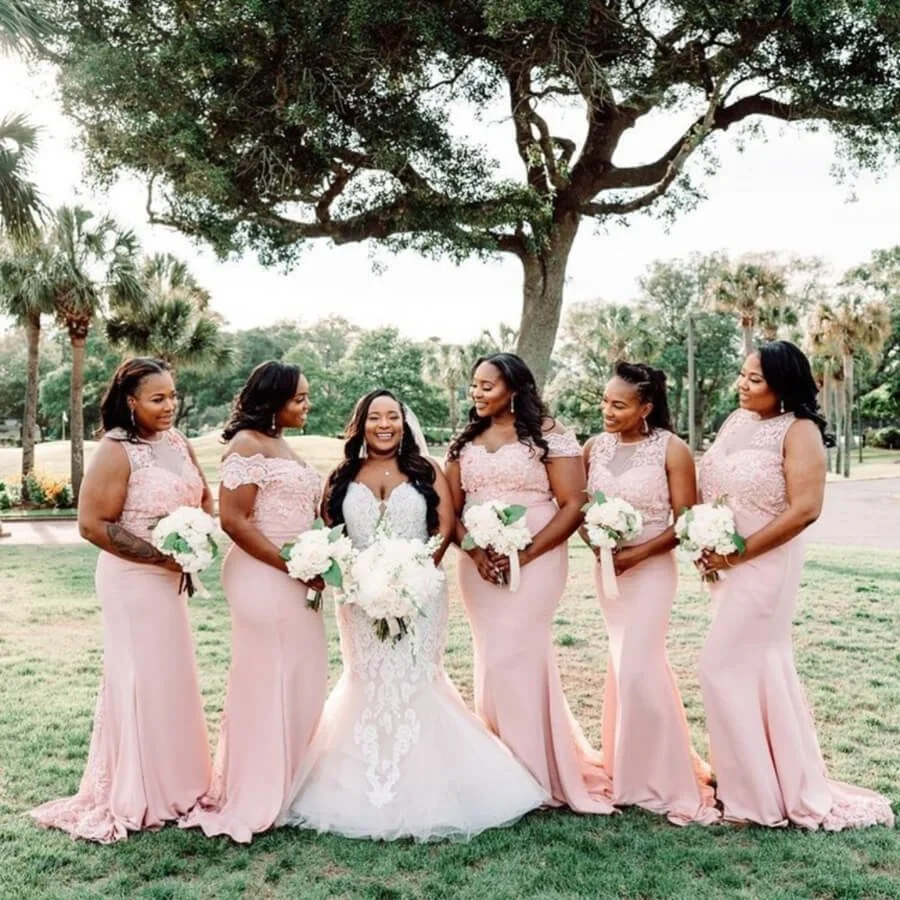
Do All Bridesmaids’ Dresses Have To Match?
No, bridesmaid dresses do not have to match. Many modern brides are opting for mismatched bridesmaid dresses to create a more unique and personalized look. Mismatched dresses can be achieved by using different dress styles in the same color, using the same style of dress in different colors, or mixing and matching different colors and styles of dresses.
Mismatched bridesmaid dresses can create a more individualized look that allows each bridesmaid to choose a dress that fits their personal style and body type. However, it's important to consider the overall aesthetic of the wedding and ensure that the dresses complement each other and fit the overall vision for the wedding. It's also important to communicate with the bridesmaids about the desired color palette and dress code to ensure that everyone is on the same page.
Why Do Bridesmaids Wear Long Dresses?
Bridesmaids traditionally wear long dresses as a way to distinguish themselves from the wedding guests and to create a more formal and elegant look. Long dresses are also thought to be more flattering and formal than shorter dresses, which can be more casual and less traditional.
Long dresses can also create a more cohesive look among the bridesmaids, especially if they are all wearing the same dress style or color. This can create a sense of unity and elegance at the bridal party and add to the overall aesthetic of the wedding. However, in recent years, short dresses and even jumpsuits have become popular choices for bridesmaid attire, especially for more casual or modern weddings.
Do Bridesmaids Have To Wear Matching Jewelry?
No, bridesmaids do not have to wear matching jewelry. It is common for bridesmaids to wear jewelry that complements their dresses and personal style. However, if the bride prefers her bridesmaids to wear matching jewelry, it is her choice. Ultimately, the decision on whether or not to have matching jewelry is up to the bride and the preferences of the bridesmaids.
Can The Bridesmaids Wear Different Dress Styles?
Yes, bridesmaids can wear different dress styles. Many modern brides are choosing to allow their bridesmaids to choose their dress styles within certain guidelines, such as a specific color or length. This can give the bridal party a more eclectic and personalized look. Alternatively, the bride may choose to have her bridesmaids wear dresses that are all the same style, color, and length for a more traditional and uniform appearance. Ultimately, the decision is up to the bride and what she envisions for her wedding day.
Read More: How Much Should Bridesmaids Spend on Their Dresses?

Who Pays For The Bridesmaid Dress?
Traditionally, the bridesmaids are responsible for paying for their dresses, as well as any alterations and accessories. However, in some cases, the bride may choose to pay for the dresses as a gift to her bridesmaids, or the group may agree to split the cost. The bride needs to communicate her expectations with her bridesmaids early on in the planning process to avoid any misunderstandings or surprises. Ultimately, the decision on who pays for the bridesmaid dress is up to the bride and her bridesmaids.
Which Is The Best Bridesmaid Dress Design?
There is no one "best" bridesmaid dress design, as the ideal dress will depend on a number of factors, including the bride's personal style and the overall theme and feel of the wedding. When choosing a bridesmaid dress, it's important to consider the body types and preferences of the individual bridesmaids, as well as the color and style of the bride's gown. Some popular bridesmaid dress designs include A-line, sheath, and mermaid styles, as well as strapless, off-the-shoulder, and V-neck necklines.
Can Wedding Dresses For Bridesmaids Be Custom-Made?
Yes, Custom-made bridesmaid dresses can be a great option if the bride wants each bridesmaid to have a unique dress that complements the overall style and color palette of the wedding. When opting for a custom wedding dress, the bride will work closely with a designer to select the fabric, style, and details of the dress.
The process of creating a custom-made bridesmaid dress typically involves taking measurements, creating a mock-up or sample dress, and making adjustments to ensure a perfect fit. Custom dresses can be made in a variety of styles and colors to match the bride's gown and the overall theme of the wedding.
While custom bridesmaid dresses can be more expensive than off-the-rack options, they offer a unique and personalized touch to the wedding day. Custom dresses also allow bridesmaids to be involved in the design process and to have a dress that they will be able to wear and cherish for years to come.