
Finding a seamstress for wedding dress alterations is the step most brides think about last and worry about most. The gown arrives, the date gets closer, and suddenly the whole fit of the dress depends on someone you have not met yet.
This guide covers when to book, how many fittings to expect, how to tell a capable seamstress from a risky one, what can and cannot be changed on a gown, and the warning signs that alterations are going off track. It is written from inside the fitting room, where these decisions actually get made.
Quick Summary
Book your seamstress two to three months before the wedding and plan for two to three fittings, with the final one about two weeks out. Choose someone who has worked with your fabric and construction before, who will put the scope in writing, and who assesses the gown on your body rather than on a hanger.
- Book early, start later. Reserve the slot months ahead, but begin fitting about eight to twelve weeks out so your measurements are current.
- Two to three fittings is normal. Heavily beaded or structured gowns need more.
- Construction sets the limit, not the fabric. Boning, allover beading and illusion backs are the hard cases.
- Bring your shoes and undergarments to every fitting. Hem length is set from heel height.
- Get the scope in writing before any work begins, including what happens if your size changes.
- Record the bustle on video at the final fitting, and have the person who will tie it there.
| Time before the wedding | What happens | Why it matters |
|---|---|---|
| 4 to 6 months | Book the seamstress and reserve fitting dates | Good seamstresses fill up in peak season |
| 8 to 12 weeks | First fitting, scope agreed and work begins | Close enough that your measurements still hold |
| 4 to 6 weeks | Second fitting, main adjustments checked | Time remains to correct anything that is off |
| 2 to 3 weeks | Final fitting, bustle taught and recorded | Late enough to be accurate, early enough to fix |
| 1 week | Collection, pressing and steaming | The gown should be hanging, not still being worked on |
Want an honest assessment of what your gown needs before you commit? Book a private appointment and bring the dress with you.
What does a wedding dress seamstress actually do?
A wedding dress seamstress adjusts a gown that was made to a size chart so that it fits one specific body. That usually means taking in side seams, shortening the hem, adjusting straps and cups, and building a bustle. On more involved jobs it can mean rebuilding a bodice or re engineering the back support.
Almost every gown needs this work. Bridal sizing is a manufacturing standard rather than a fit, so a gown that is correct on paper still arrives needing to be shaped to you. Alterations are the normal finish of the process rather than a sign something went wrong.
Is a wedding dress seamstress different from a regular tailor?
In practice, yes. Bridal work involves boning, multiple layers, delicate lace, beading that must be removed and reapplied, and trains that need bustling. A tailor who alters suits beautifully may not have worked with any of that. Experience with bridal construction is the thing to ask about.
What are the standard alterations on a gown?
- Hemming, set from the exact shoes you will wear.
- Taking in the side seams through the bodice and waist.
- Strap and shoulder adjustment, which changes how the whole bodice sits.
- Cup and bust shaping, including adding or repositioning internal support.
- Bustling the train, with the number of points set by the train length.
- Adding a modesty panel or sleeves, where coverage is needed.
When should you book and start alterations?
Book the seamstress four to six months before the wedding, and plan the first fitting for eight to twelve weeks out. Those are two different things, and confusing them is the most common scheduling mistake. Booking reserves the slot, fitting starts the work.
Starting too early is a real problem rather than a safe margin. A gown fitted six months out may not fit at three months, and the work often has to be redone. Skilled seamstresses push back on very early fittings for exactly this reason.
What if your gown arrives late?
Tell the seamstress the moment you know, not when the gown lands. Someone who has reserved time for you can often protect the slot if they are warned. Finding out on the day the gown arrives leaves them no room to help.
Can alterations be done in two weeks?
Simple work can, if the gown is close to fitting already. A hem and a modest take in are achievable at short notice. Rebuilding a beaded bodice or re engineering an illusion back is not, and no amount of urgency changes that.
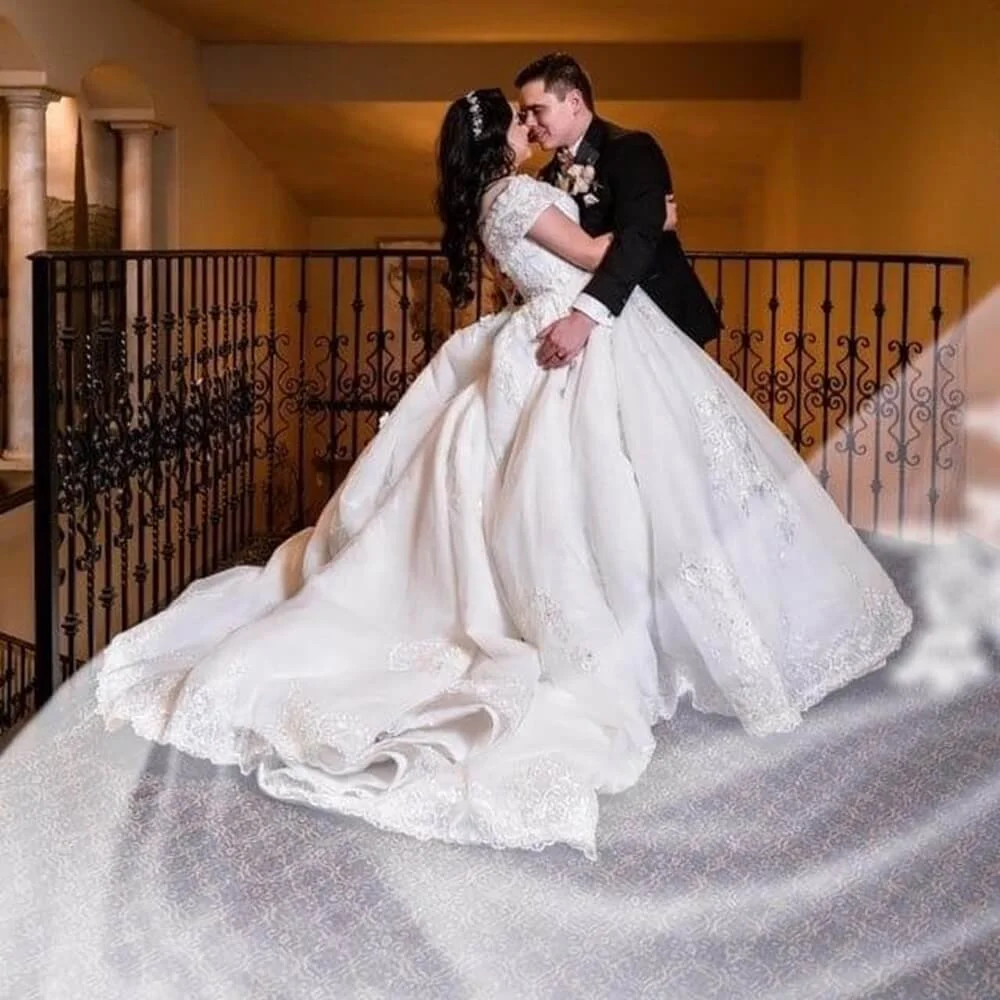
How long do wedding dress alterations take?
Most gowns take six to twelve weeks from first fitting to collection, spread across two or three appointments with working time in between. The calendar time matters more than the hours of work, because each fitting needs the previous round of changes finished and settled.
Peak season stretches everything. Spring and early summer are the busiest months for alteration studios, and a job that takes eight weeks in November can take twelve in April.
What makes the timeline longer?
- Allover beading or sequins, which must be removed by hand along every altered seam and reapplied afterwards.
- Lace appliqué crossing the seams, where the pattern has to be cut and rematched.
- A corseted or boned bodice, because the boning channels move with the seams.
- Multiple layers and linings, each of which is hemmed separately.
- Any change to the back or straps, which shifts the fit of everything below it.
How many fittings will you need?
Plan for two to three fittings on a typical gown, and three to four on a heavily beaded or structured one. A single fitting is almost never enough, and brides who accept one often find the bodice sits wrong in photographs. Each appointment has a distinct job.
| Fitting | Purpose | What you should leave with |
|---|---|---|
| First | Full assessment, gown pinned to shape, scope agreed | A written list of the work and a realistic finish date |
| Second | Main alterations checked, hem set with your shoes | Confirmation the fit is right before finishing work starts |
| Third or final | Finished gown tried, bustle taught, last adjustments | A video of the bustle and the gown ready to collect |
| Extra fitting | Added for beaded, corseted or heavily reworked gowns | Confidence that a complex change has settled correctly |
Should you bring someone to the final fitting?
Bring whoever will tie your bustle on the day. Learning it from a video afterwards is far harder than being shown in person, and the bustle is the thing most likely to go wrong at the reception. Film it as well, with the seamstress narrating.
Should you use the shop's seamstress or an independent one?
Both work well, and the choice comes down to accountability and experience rather than cost. An in house seamstress knows the gowns that shop sells and keeps the whole process under one roof. An independent seamstress may have broader experience across designers and more flexible scheduling.
What matters more than either is whether the person has handled your specific construction before. Ask that question directly in both cases.
| Consideration | Boutique in house | Independent |
|---|---|---|
| Familiarity with your gown | High if bought there | Varies, ask about your designer and fabric |
| Accountability if something goes wrong | Single point of contact | Depends on the agreement you set up |
| Scheduling flexibility | Tied to the shop's calendar | Often more flexible |
| Breadth of experience | Deep on that shop's stock | Often wider across designers |
| Best for | Gowns bought at that boutique | Gowns bought online, secondhand or at a sample sale |
What if you bought your gown online or secondhand?
An independent seamstress or a studio that does custom work is usually the better fit. Gowns bought online often arrive needing more than standard alterations, and someone who builds garments from scratch will be more comfortable reworking one. The same applies to a gown bought at a sample sale.
How do you vet a seamstress before handing over your gown?
Vet a seamstress the way you would any specialist: ask to see real work, confirm experience with your construction, and get the scope in writing. A first conversation should leave you knowing exactly what will be done, by whom, and by when.
The question most brides skip is who actually sews. In a busy studio the person you meet may not be the person doing the work, and that is fine as long as you know it.
- Have you altered this type of construction before? Name the beading, boning or illusion back specifically.
- Can I see photographs of gowns you have altered? Finished gowns on real people, not stock images.
- Who will do the sewing? And will the same person handle every fitting.
- What is the full scope and the finish date, in writing? Including what is not included.
- What happens if my measurements change? Agree this before it becomes a problem.
- How many fittings are included? And what triggers an extra one.
- What is your policy if something is damaged? A straightforward answer here is reassuring.
Should the seamstress see the gown on you first?
Always. Any assessment given from a hanger or a photograph is a guess. A gown behaves differently once it is on a body, and the real scope of work only becomes visible then. Decline any firm commitment made before that happens.
What makes a gown simple or complex to alter?
Construction decides complexity, not price or designer. A plain crepe sheath with clean seams is straightforward. A corseted, fully beaded gown with an illusion back and a cathedral train is at the other end, and every change to it touches several layers at once.
| Feature | Added difficulty | Effect on fittings |
|---|---|---|
| Plain seams, crepe or satin | Low | Two fittings is usually enough |
| Lace appliqué across seams | Moderate | Pattern rematching adds time |
| Corseted or boned bodice | High | Often needs an extra fitting |
| Allover beading or sequins | Highest | Hand work along every altered seam |
| Illusion or low back | High | Support must be rebuilt, not just taken in |
| Horsehair or structured hem | Moderate | Hem edge is rebuilt rather than turned |
| Cathedral train | Moderate | More bustle points and a longer teaching session |
| Multiple skirt layers | Moderate | Each layer hemmed separately |
Does fabric matter as much as construction?
Less than people expect. Delicate fabric needs a careful hand, but it is the structure underneath that sets how far a gown can move. Our guide to wedding dress fabrics explains how each behaves under the needle.
What can and cannot be changed on a wedding dress?
Most gowns can be taken in about one to two sizes and shortened freely, and can gain sleeves, a modesty panel or a bustle. What usually cannot be done is letting a gown out significantly, changing its silhouette, or rebuilding a fully beaded bodice into a different shape.
Letting out is the hard limit everyone meets. Gowns are made with very little spare seam allowance inside, so there is often simply no fabric to release.
- Straightforward: hemming, taking in, strap adjustment, bustling, adding cups.
- Possible with time: adding sleeves, raising a neckline, lining a sheer panel, rebuilding a bodice.
- Difficult: letting out more than a little, reworking an illusion back, altering across allover beading.
- Not realistic: changing the silhouette, moving a waist seam substantially, making a fitted gown into a ball gown.
What if your size changes during the process?
Tell the seamstress as soon as you notice rather than at the next fitting. Small changes are absorbed easily. Larger ones may mean redoing work, which is exactly why the written scope should say what happens in that case.
Does the gown need cleaning before alterations?
Usually not, unless it is visibly soiled or has been stored badly. Most gowns are cleaned after the wedding rather than before. If a gown is secondhand or came from a sample rail, ask the seamstress whether she wants it cleaned first. Our guide to gown cleaning and preservation covers the after side.
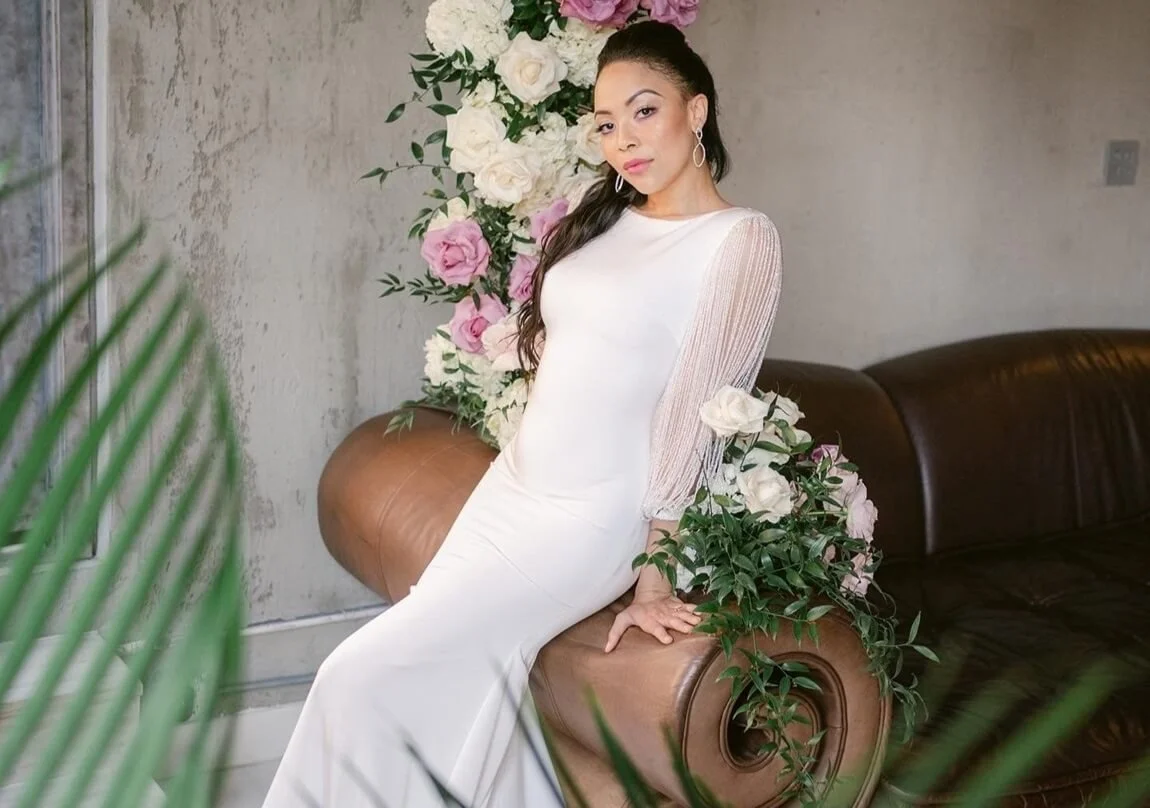
What should you bring to every fitting?
Bring the shoes and undergarments you will actually wear on the day, every time, without exception. Hem length is set from heel height and the whole bodice fit depends on what is underneath. A change of either after the final fitting undoes the work.
- Your wedding shoes, or an identical heel height if they have not arrived.
- The exact undergarments and shaping you plan to wear.
- Your veil and any accessories that affect how the gown sits.
- The person who will tie your bustle, at the final fitting.
- A phone to film the bustle demonstration.
- Your written scope, so each fitting can be checked against it.
What if your shoes have not arrived yet?
Bring any shoe at the same heel height and say so. The seamstress can work to the height, but she needs to know it is a stand in. Arriving in flats and planning to wear a high heel is how a hem ends up wrong.
What are the warning signs that alterations are off track?
The clearest warning sign is work that has not started close to the date. If your gown has been with a seamstress for weeks and no fitting has happened, that is a problem now rather than later. A straightforward conversation at that point is far better than waiting.
- No written scope, or vague answers when you ask for one.
- Reluctance to let you try the gown on at a fitting.
- Your timeline questions treated as unreasonable rather than answered.
- No fitting booked within a month of the wedding.
- Changes you did not approve, however minor.
- A bodice that still does not sit right at the second fitting with no plan to fix it.
Can you change seamstress partway through?
Yes, though it is easier earlier than later. Collect the gown, get clarity on exactly what has been done so far, and take it to someone who can assess it fresh. The sooner you act, the more options the next person has.
What if the bust still does not fit after two fittings?
Say so plainly, and ask specifically what will be done differently. A bodice that sits below the bust line or ripples at the straps is a construction issue, not something to live with. It is a common problem and a solvable one, but only if it is named.
Why Houston Brides Choose Estelle Bridal
Estelle Bridal builds gowns from scratch as well as altering them, and that shapes how we approach fit. When a gown cannot reasonably become what a bride needs, we say so rather than taking on work that will disappoint.
- Custom construction since 2016, including gowns built around fabric brides bring to us.
- Experience with beaded, corseted and illusion back gowns, the three hardest cases.
- Written scope before work begins, so there are no surprises at collection.
- Honest timelines, including turning down a date we cannot meet properly.
See our wedding gowns, read our full alterations guide, or contact the studio about your gown.
Frequently asked questions
When should you book a seamstress for wedding dress alterations?
Book four to six months before the wedding to reserve the slot, then start the first fitting eight to twelve weeks out. Booking and fitting are separate steps, and starting the actual work too early often means redoing it as your measurements shift.
How long do wedding dress alterations take?
Most gowns take six to twelve weeks from first fitting to collection, across two or three appointments. Heavily beaded, corseted or illusion back gowns take longer, and peak spring season stretches every timeline.
How many fittings does a wedding dress need?
Two to three for a typical gown and three to four for a complex one. The first pins and scopes the work, the second checks the main alterations, and the final one confirms the finished fit and teaches the bustle.
Can a wedding dress be taken in two sizes?
Usually yes, depending on construction. A plain seamed gown takes in one to two sizes comfortably. A fully beaded or corseted bodice is harder because beading must be removed and reapplied and boning channels have to move.
What parts of a wedding dress cannot be altered?
A gown cannot usually be let out much, because there is little spare seam allowance inside. Changing the silhouette, substantially moving a waist seam, or reworking a fully beaded bodice into a different shape are also not realistic.
More questions from Houston brides
Should you use the bridal shop's seamstress or an independent one?
Both work. An in house seamstress knows that shop's gowns and keeps everything under one roof, while an independent often has wider experience and more flexible scheduling. For a gown bought online, secondhand or at a sample sale, an independent or custom studio is usually the better match.
What should you bring to your first fitting?
Bring the shoes and undergarments you will wear on the day, your veil, and anything else that affects how the gown sits. Hem length is set from heel height, so arriving in different shoes is the most common cause of a wrong hem.
Can wedding dress alterations be done in two weeks?
Simple work can, if the gown already fits closely. A hem and a modest take in are achievable. Rebuilding a beaded bodice or re engineering an illusion back cannot be rushed into that window safely.
What happens if you lose or gain weight during alterations?
Tell the seamstress as soon as you notice rather than waiting for the next fitting. Small changes are absorbed easily, while larger ones may mean redoing finished work. Agree in writing beforehand how that situation will be handled.
Who should learn how to bustle your dress?
Whoever will tie it on the wedding day, and they should be at the final fitting in person. Film the demonstration with the seamstress explaining each point, because a cathedral train can have several and they are easy to confuse.
For related reading, our guides to bustle types, when to buy your gown and how to take your measurements all feed directly into a smoother alterations process.
About the Author
Florence Adeboye is the founder and lead designer of Estelle Bridal in Houston, Texas. Since 2016 she has designed and fitted gowns for hundreds of Houston brides, with particular experience in custom construction, lace and embellished work, and gowns built around fabric that brides bring to her themselves.
To talk through your garment, your cloth and your ceremony plan, book a private appointment at 2428 S Hwy 6, Houston, TX 77077, or call (281) 208-7805.