
Wedding Dress Sample Sale: What to Know Before You Go
A wedding dress sample sale is one of the few ways to walk out of a boutique with a designer gown the same day. It is also the fastest way to end up with a dress that never quite fits, if you go in without a plan. The difference is almost entirely preparation.
This guide covers what a sample gown actually is, how sample sizing works, how far a gown can realistically be altered, what to inspect before you commit, and how to tell whether a sample is right for your timeline at all. It is written from the fitting room side of the process rather than the sales floor.
Quick Summary
A wedding dress sample sale is an event where a boutique sells the gowns brides have been trying on in store, off the rack and usually as final sale. The gowns are real designer pieces in sample sizes, sold as is, with no option to reorder. You save on the gown and take on the fit work yourself.
- Sample gowns are store try on stock, not seconds, so expect light wear rather than damage.
- Sizing is narrow. Most sample runs sit in a small band of sizes, so availability decides more than preference does.
- Alterations are the real variable. A gown can usually come in further than it can go out, and construction decides the limit.
- Nearly all sample sales are final. No returns, no exchanges and no reorder if the style has been discontinued.
- Inspect before you commit, because as is means you accept the marks you did not spot.
- Samples suit short timelines, which is their biggest advantage over a special order gown.
| Feature | Sample sale gown | Special order gown |
|---|---|---|
| Condition | Tried on in store, sold as is | Brand new, never worn |
| Sizing | Whatever sample sizes exist that day | Ordered to your measurements band |
| Availability | One gown only, first come | Reorderable while the style is current |
| Timeline | Leave with it, then alter | Production time, then alter |
| Returns | Final sale | Usually non refundable once in production |
| Best for | Short timelines and flexible brides | Specific style, size or customisation needs |
Want a realistic view of what a gown can and cannot become before you buy it? Book a private appointment and we will talk through the fit work honestly.
What is a wedding dress sample sale?
A wedding dress sample sale is a boutique event where the store sells its floor samples, the gowns brides have been trying on, directly off the rack. You buy the physical gown in front of you rather than ordering a new one. The gown leaves with you that day and is sold as is.
The phrase sample does not mean prototype or second. These are the same production gowns the designer sells, used as fitting stock. What you are buying is a gown that has been zipped, pinned and walked in by other brides, which is exactly why it is discounted.
Are sample gowns damaged?
Usually not damaged, but rarely pristine. Expect the signs of repeated try ons: a greyed hem, makeup near the neckline, a few loose beads or a zip that has been worked hard. Most of it cleans or repairs, and the boutique should point out anything it already knows about.
Anything structural is a different conversation. A warped bodice, a broken boning channel or torn lace at a seam is worth walking away from, however good the gown looks on the hanger.
How is a sample sale different from a clearance rack?
A sample sale clears current or recent fitting stock, usually to make room for a new season. A permanent clearance rack tends to hold older discontinued pieces that have been passed over repeatedly. Both are final sale, but the sample sale generally has fresher styles.
Why do boutiques sell their sample gowns?
Boutiques sell samples because fitting stock has a working life. A gown that has been tried on for a season stops photographing well and stops representing the designer properly, and the space it occupies is needed for the next collection. Selling it recovers value and clears the rail.
It is a practical decision rather than a sign that anything is wrong with the gown. Understanding that makes it easier to judge a specific dress on its actual condition rather than assuming the discount hides a problem.
When do sample sales usually happen?
Most boutiques run them when collections change over, which clusters them around the start and end of the main bridal buying seasons. Some stores hold one or two a year, others clear samples continuously. Asking to be told when the next one is scheduled costs nothing.
What sizes are sample gowns, and will one fit you?
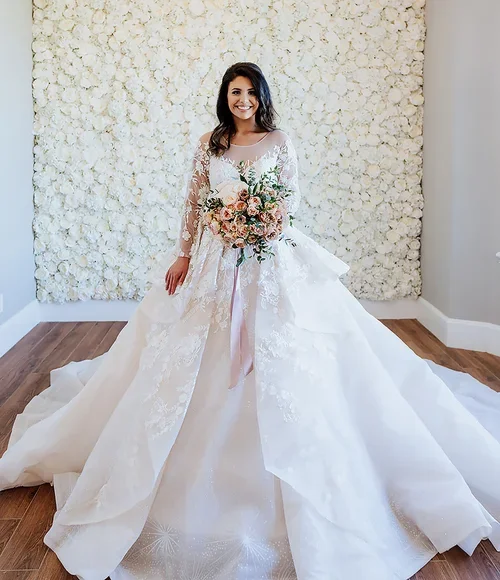
Sample gowns come in whatever sizes the boutique ordered as fitting stock, and that band is usually narrow. Bridal sizing also runs smaller than street sizing, often by one to two sizes, so your usual number is not a reliable guide. The honest answer is that availability decides, not preference.
This is the part brides find hardest, and it is worth knowing before you arrive rather than discovering it in the fitting room. Walking in with a fixed idea of a size is the quickest route to a disappointing appointment.
What if nothing in the sample range is close to your size?
Then a sample sale is not the right route for that gown, and a good boutique will say so. Forcing a gown that is several sizes away rarely ends well, and the alteration work can cost more time and money than the saving justifies.
If you are outside the common sample band, ask the store what it actually carries before you travel in. Our guides to plus size wedding dresses and gowns for petite brides cover the fit issues that matter most in each case.
Should you measure yourself before you go?
Yes, and bring the numbers written down. Bust, waist and hip, plus hollow to hem with your shoes on, tells a consultant in seconds whether a gown is worth pulling. Our measuring guide walks through how to take each one properly.
How much can a sample gown be altered?
A gown can usually be taken in by about one to two sizes, and let out far less, because most gowns are made with very little spare seam allowance. What decides the limit is construction rather than fabric: a simple seamed bodice is flexible, and an allover beaded or boned one is not.
Before you buy, ask what specifically would need to change and whether the seamstress has seen the gown. An estimate given over a rail without the gown on your body is a guess.
| Construction feature | Effect on alterations | Realistic flexibility |
|---|---|---|
| Plain seams, crepe or satin | Straightforward to take in or shorten | Good, usually one to two sizes down |
| Corseted or boned bodice | Boning channels must be moved and rebuilt | Possible but slow |
| Allover beading or sequins | Beading is removed and reapplied by hand along each altered seam | Limited, and the longest job on the list |
| Lace appliqué across seams | Pattern has to be cut and rematched | Limited, needs a skilled hand |
| Horsehair or structured hem | Shortening means rebuilding the hem edge | Possible, adds time |
| Illusion back or low back | Support has to be re engineered, not just taken in | Hardest, often the limiting factor |
| Letting out any gown | Depends entirely on seam allowance left inside | Usually very little room |
Can a sample gown be shortened and bustled normally?
Yes, in almost all cases. Hemming and bustling are standard work on any gown, sample or not, and the number of bustle points depends on the train rather than the sale. Our guide to wedding dress bustle types explains the options.
Who should do the alterations?
Someone who has seen the gown and worked with its fabric before. Heavy beading, fine lace and structured bodices all behave differently, and experience with your specific construction matters more than general sewing skill. Our wedding dress alterations guide covers how the process runs from first fitting to final.
What should you check before you say yes?
Because sample sale gowns are sold as is, anything you miss becomes yours. Ten minutes of careful checking in good light is the single highest value thing you can do at a sample sale. Take the gown to a window if the fitting room light is soft.
- Hem and underside of the train for grey marks, snags and worn edging.
- Underarms and neckline for makeup, foundation and deodorant marks.
- Zip or button placket, worked fully up and down twice under light tension.
- Beading and appliqué, tugged gently in several places to find loose threads.
- Boning and bodice structure, checked for warping, popped channels or pressure points.
- Lining and inner seams, turned out to see how much seam allowance is left.
- Odour, which tells you more about storage than anything visible does.
What questions should you ask before paying?
Ask four things: what is already known to be marked or damaged, whether the style can still be reordered, what the return or exchange terms are in writing, and whether a seamstress can assess the gown before you commit. The answers decide whether the saving is real.
Will marks come out in cleaning?
Often, but not always, and nobody can promise it before the gown is treated. Fresh makeup and general greying usually respond well. Old set stains, especially on silk, may not. Our guide to gown cleaning and preservation covers what is realistic.
What should you plan for beyond the gown itself?
The gown is the start of the budget, not the whole of it. Every sample gown needs some combination of alterations, cleaning, pressing and accessories before it is wearable, and those are the items brides most often forget when comparing a sample against a special order.
None of this makes a sample a bad choice. It just means the comparison should be made on the finished gown rather than the ticket.
- Alterations, which on a sample are usually more extensive than on a gown ordered closer to your measurements.
- Cleaning or spot treatment before the day, since the gown has been worn repeatedly.
- Pressing or steaming, particularly on anything that has been on a rail for months.
- Undergarments and shaping, which a sample fit may depend on more than a made to measure gown would.
- Rush work if your date is tight, which is the item that moves the total most.
What should you bring to a sample sale appointment?
Bring the practical items that let you judge the gown on your body rather than imagining it. Shoes at your intended heel height matter most, because hem length and posture both change with them. Everything else is about speed, since samples go to whoever decides first.
- Shoes at the heel height you plan to wear, or something very close.
- Nude seamless underwear and any shaping you expect to use.
- Your measurements written down, so consultants can pull realistically.
- One person whose opinion you trust, not a committee.
- Hair tied back and light makeup, out of respect for the next bride trying the gown.
- A walk away rule agreed in advance, so the decision is not made purely on adrenaline.
If this is your first bridal appointment of any kind, our guide to what to expect at a first bridal appointment is worth reading first.
Sample sale or special order: which are you shopping?
A sample sale sells you an existing gown off the rack today. A special order has a new gown made and delivered to you over several months. The right choice depends far more on your timeline and your flexibility than on the saving.
| If this is true for you | Lean toward | Why |
|---|---|---|
| Your wedding is inside six months | Sample | You skip production time entirely |
| You are flexible on style and designer | Sample | You shop what exists rather than what you pictured |
| You sit close to common sample sizing | Sample | Alterations stay within easy range |
| You want a specific style, colour or customisation | Special order | Samples cannot be changed in any fundamental way |
| You need a size well outside the sample band | Special order | Fit work would outweigh the saving |
| You want the option to change your mind | Neither is flexible | Both are effectively final once committed |
Can you negotiate at a sample sale?
Sometimes, and politely. If a gown has a flaw that was not disclosed, raising it reasonably is fair. Haggling on a gown in good condition at an advertised event rarely works, because the price is already set for the event.
How late in your planning can a sample gown still work?
A sample gown can work much later than a special order, because production time disappears. What remains is alteration time, and that is what sets the real cut off. Simple fit work needs weeks, heavy beading or structural changes need considerably longer.
| Time until the wedding | Is a sample realistic? | What to expect |
|---|---|---|
| Nine months or more | Yes, with no pressure | You could also special order, so compare both properly |
| Four to eight months | Yes, this is the sweet spot | Comfortable room for full alterations and cleaning |
| Two to four months | Yes, if the fit is close | Choose a gown needing simple work, book alterations immediately |
| Four to eight weeks | Only with a near fit | Rush work likely, limited to hem and simple take in |
| Under four weeks | Rarely | Needs a gown that fits almost as is |
If you are earlier in the process and weighing your options, our guide to when to buy a wedding dress sets out the full timeline.
How do you decide on the spot without regretting it?
Sample sales compress a decision that normally takes weeks into about twenty minutes, and that pressure is the main reason brides regret the purchase rather than the gown itself. The fix is to make the hard decisions before you walk in, while you are calm.
Write down, in advance, the ceiling you will not go past, the alterations you are willing to take on, and the one feature the gown must have. If a gown fails any of the three, you leave. That rule is easier to follow when it was set at home.
What does regret usually come from?
Three things, in our experience: buying a gown several sizes away and hoping alterations will solve it, missing a mark that cleaning could not lift, and buying a style that photographs as dated because it came from a discontinued collection. All three are avoidable in the fitting room.
Is it worth attending if you are not ready to buy?
Yes, as long as you know that is why you are there. Trying sample gowns is a fast way to learn which silhouettes suit you before you commit to anything. Say so to the consultant, and the appointment becomes useful rather than tense.
Why Houston Brides Choose Estelle Bridal
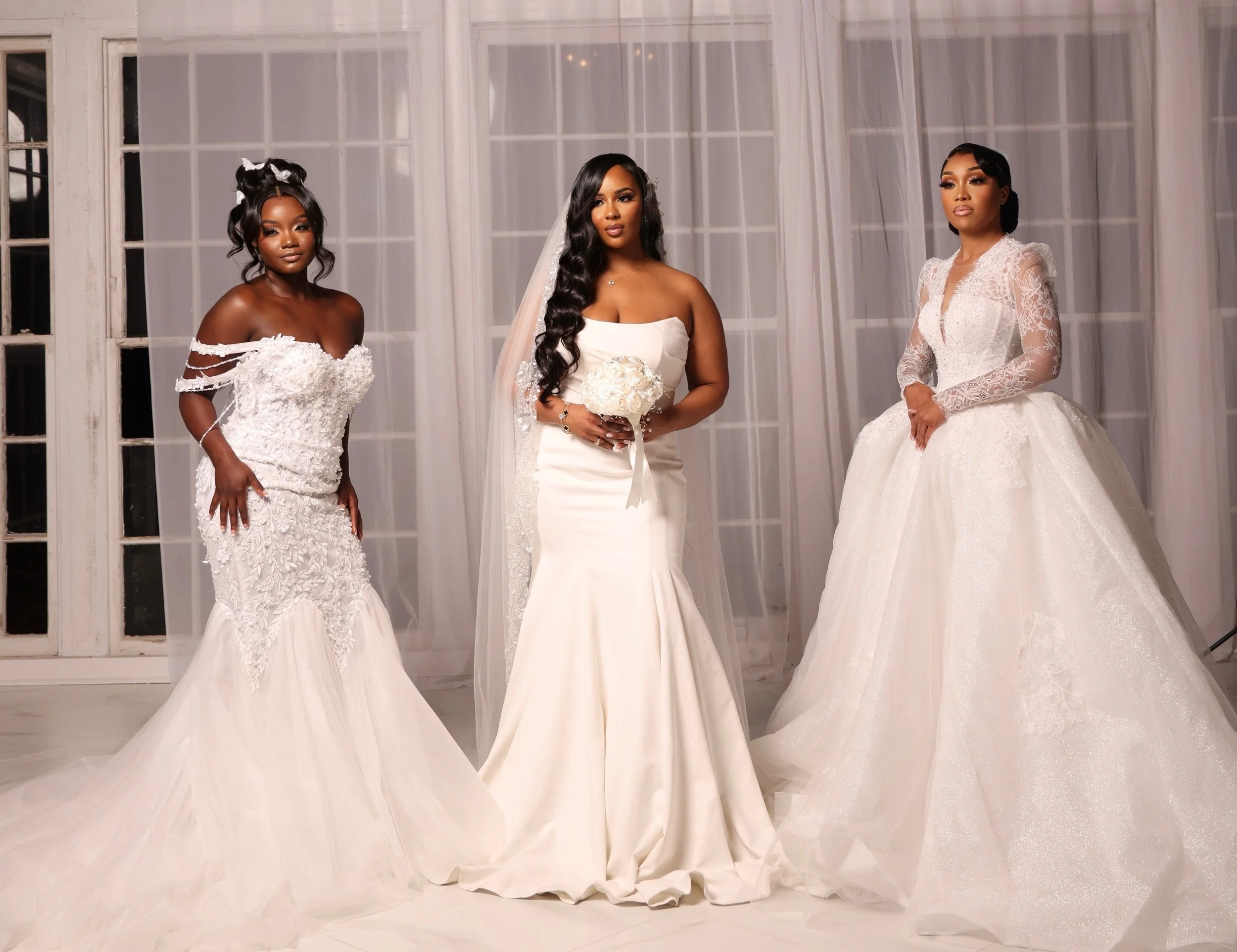
Estelle Bridal has fitted Houston brides since 2016, including many who arrive with a gown bought elsewhere and a short timeline. That gives us an unusually direct view of which sample gowns alter well and which ones fight back.
- Honest fit assessments, including telling you when a gown is too far from your measurements to be worth the work.
- Custom construction when altering an existing gown is not the better answer.
- Experience with beaded and structured gowns, which are the hardest samples to alter well.
- Private appointments so you can take your time over a decision that usually gets rushed.
Browse our wedding gowns, see the full collection, or contact the studio with a question about a gown you are considering.
Frequently asked questions
What is a wedding dress sample sale?
A wedding dress sample sale is a boutique event where the store sells its floor sample gowns off the rack, as is and usually as final sale. The gowns are genuine designer pieces that brides have tried on in store. You take the gown home the same day rather than ordering a new one.
Are sample sale wedding dresses worth it?
They are worth it when your timeline is short, you are flexible on style and you sit close to common sample sizing. They are a poor choice when you need a specific style or a size well outside the sample band, because the alteration work outweighs the saving.
Can you return a sample sale wedding dress?
Almost never. Sample sales are sold as final, with no returns and no exchanges, and a discontinued style cannot be reordered if the gown turns out wrong. Always ask for the terms in writing before you pay.
What size are sample wedding dresses?
Sample gowns come in whatever fitting stock the boutique ordered, which is usually a narrow band of sizes. Bridal sizing also runs smaller than street sizing, often by one to two sizes. Ask what the store actually carries before travelling in.
How many sizes can a sample wedding dress be altered?
Most gowns can be taken in by about one to two sizes and let out far less, because there is little spare seam allowance inside. Construction decides the limit: plain seams are flexible, while allover beading, boning and illusion backs are not.
More questions from Houston brides
Are sample wedding dresses dirty?
They are used rather than dirty. Expect a greyed hem, makeup near the neckline and some loose beading after a season of try ons. Most of it cleans or repairs, but old set stains on silk may not lift completely.
Can you try on a sample gown before buying it?
Yes, and you should never buy one you have not worn. Trying it on is the only way to judge fit, condition and how the gown actually moves. Bring shoes at your intended heel height so the hem length means something.
How close to your wedding can you buy a sample gown?
Four to eight months is comfortable, and two to four months works if the fit is close. Inside four weeks you need a gown that fits almost as is, because alteration time, not production time, is the real constraint.
Should you get an alterations estimate before buying a sample?
Yes, and ask whether a seamstress can look at the gown on you before you commit. An estimate given without the gown on your body is a guess, and alteration scope is the single biggest variable in whether a sample saves you anything.
What should you bring to a sample sale?
Bring shoes at your intended heel height, seamless nude underwear and any shaping you plan to use, your measurements written down, and one person whose opinion you trust. Agree a walk away rule before you arrive so the decision is not made on adrenaline alone.
If you are still choosing where to shop, our guide to choosing a bridal shop in Houston covers what to ask, and our guide to wedding dress fabrics explains why some gowns alter far more easily than others.
About the Author
Florence Adeboye is the founder and lead designer of Estelle Bridal in Houston, Texas. Since 2016 she has designed and fitted gowns for hundreds of Houston brides, with particular experience in custom construction, lace and embellished work, and gowns built around fabric that brides bring to her themselves.
To talk through your garment, your cloth and your ceremony plan, book a private appointment at 2428 S Hwy 6, Houston, TX 77077, or call (281) 208-7805.