
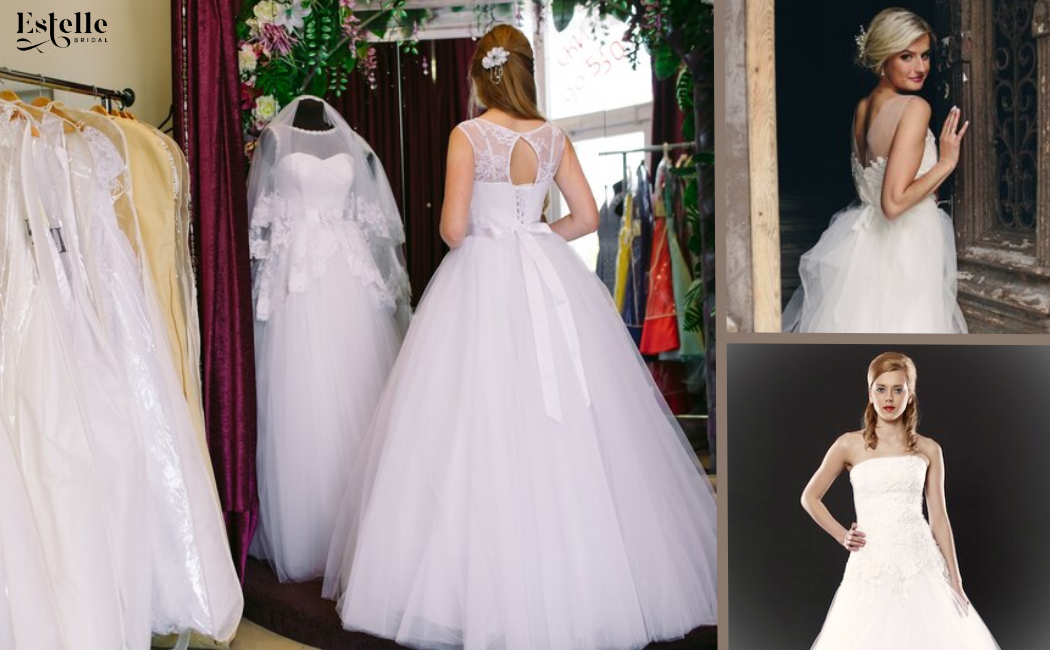
A bridal gown bustle is a must-have alteration that ensures your train is lifted off the ground after the ceremony, giving you the freedom to move gracefully during the reception. Bustles are not only practical but also enhance the elegance of your custom wedding dress. With various styles available, choosing the right one depends on your gown's design and your personal preference. Here are the most common wedding dress bustle types to consider for your big day, plus what they cost, how many points you need and how to make sure yours holds all night.
Key Observations
- Most bridal shops work with six bustle types: American (over), French (under), ballroom, Austrian, bow and royal (Victorian). American and French are the two you will be offered most often.
- Your silhouette and fabric decide the shortlist. Heavy satin and Mikado suit American or ballroom bustles. Soft chiffon and organza suit Austrian or French bustles.
- Train length decides the number of points. A short sweep train may need 1 to 2 points, chapel and cathedral trains usually need 4 to 6, and royal trains or heavy fabrics can need 8 or more.
- A bustle is usually added near the end of alterations, then demonstrated so your helper can practice before the wedding.
- Most bustles fail at the fastener, not the fabric. Ask your seamstress which fastener suits your gown and test it by walking, sitting and dancing at the final fitting.
- At Estelle Bridal, alterations are included in every custom gown price, so the bustle is part of your fittings rather than a separate bill.
Quick answer: A wedding dress bustle is a set of hooks, buttons or ribbon ties that lifts the train off the floor after the ceremony. The main types are American (lifted over the skirt), French (tucked under), ballroom (hidden so the gown looks floor length), Austrian (gathered with a drawstring), bow and royal (many points down a long train).
Here is how the six bustle types compare at a glance.
| Bustle type | How it looks | Best for | Ease on the day |
|---|---|---|---|
| American (over bustle) | Train lifted up and pinned on top in soft cascades | A-line, ball gown, heavier fabrics | Easiest, 1 to 3 points |
| French (under bustle) | Train tucked under in folds or a soft pouf | Fitted, mermaid, A-line, lace backs | Moderate, ribbons need a helper |
| Ballroom | Train fully hidden, gown looks floor length | Long, full trains and dancing | Most points, needs practice |
| Austrian | Ruched vertical gathers down the back | Chiffon, organza, light fabrics | Quick pull of a drawstring |
| Bow | Train tied up with a decorative bow | Shorter trains, light fabrics | Easy |
| Royal (Victorian) | Many layered pickups down the train | Cathedral and royal trains | Complex, allow extra time |
In this guide
- What is a bustle on a wedding dress?
- What are the different types of wedding dress bustles?
- French bustle vs American bustle
- Which bustle suits your silhouette?
- Which bustle suits your fabric?
- How many bustle points do you need?
- How much does a bustle cost?
- When is the bustle added?
- Who bustles the dress, and how long does it take?
- How to bustle a wedding dress step by step
- Why bustles break and how to prevent it
- Alternatives to a bustle
- How to choose the right bustle
- Why choose Estelle Bridal
- Wedding dress bustle FAQs
What Is a Bustle on a Wedding Dress?
A bustle on a wedding dress is a set of small fasteners sewn into the skirt and train. Your helper uses them to lift and secure the train after the ceremony. Hooks, buttons, loops or ribbon ties hold the fabric up and keep the hem off the floor while you mingle, eat and dance.
Brides bustle for three practical reasons. Guests step on trains, trains collect dirt and grass, and a loose train makes dancing hard. A good bustle solves all three while keeping the back of the gown pretty in photos.
Not every dress needs one. A gown that stops at the floor or has only a short sweep train can often skip the bustle or use a simple wrist loop instead. If your train touches the floor behind you by more than a few inches, plan for a bustle.
What Are the Different Types of Wedding Dress Bustles?
The six wedding dress bustle types are the American, French, ballroom, Austrian, bow and royal bustle. They differ in three ways: where the train is fastened (over or under the skirt), how many attachment points they use, and how the back looks once the train is up.
1. What Is an American Bustle (Over Bustle)?
The over-bustle, or American bustle, is a classic and popular choice. In this style, the train is gathered and secured on the outside of the dress using hooks or buttons, typically at the waistline.
- Appearance: This bustle creates a cascading effect, giving the dress a romantic and flowing look.
- Best For: A-line, ballgown, or any dress with a full train.
- Pros: Easy to set up and secure; works well with many dress silhouettes.
- Cons: Since the fabric is gathered on top, it may obscure intricate train details like lace or embroidery.
An American bustle with one to three points is the fastest style to put up on the day. If your train has beading or lace you want to show off, ask for more points spread across the back so the detail sits in view instead of being bunched into a single pickup.
Read More: 10 Beautiful Bouquets for a Fall Wedding
2. What Is a French Bustle (Under Bustle)?
The under bustle, also known as the French bustle, gathers the train underneath the dress, creating a clean and elegant draped effect. This style is achieved by attaching the train to loops or ties under the gown.
- Appearance: Creates a soft, voluminous look, often resembling folds or pleats.
- Best For: Fitted or mermaid-style dresses, as they complement the gown's natural curves.
- Pros: Keeps the train hidden, showcasing the back of the dress while maintaining its elegance.
- Cons: Can be more complicated to secure and may require assistance to set up.
French bustles usually use ribbons that are color coded or numbered so the helper knows which tie goes where. A two-tier or three-tier version, sometimes called a double or triple French bustle, adds rows of pickups for longer trains.
3. What Is a Ballroom Bustle?
The ballroom bustle is designed to completely lift the train, tucking it under the skirt to create the illusion that the gown has no train at all. It's achieved with multiple points of attachment, which can involve hooks, buttons, or ribbons.
- Appearance: Seamless and sophisticated, giving the dress a floor-length appearance.
- Best For: Dresses with long, voluminous trains; ideal for a bride who wants to move freely.
- Pros: Eliminates the worry of stepping on the train; great for dancing.
- Cons: Requires precise tailoring and multiple points of attachment, which can be time-consuming.
Because it uses the most points, a ballroom bustle is usually the most work for the seamstress and often the most expensive bustle to add.
4. What Is an Austrian Bustle?
The Austrian bustle is a unique and dramatic option, using a drawstring mechanism to gather the train vertically into ruched folds.
- Appearance: Creates an eye-catching, draped effect with ruching that looks artistic and elegant.
- Best For: Gowns with lightweight or flowy fabrics, such as chiffon or organza.
- Pros: Adds texture and dimension to the gown while being easy to adjust.
- Cons: Not suitable for heavier fabrics, as the drawstring may not hold securely.
5. What Is a Bow Bustle?
The bow bustle is a whimsical and feminine style that secures the train by tying it into a decorative bow.
- Appearance: Adds a playful and charming touch to the gown, perfect for brides who love unique details.
- Best For: Dresses with shorter trains or lightweight fabrics.
- Pros: Functions as both a bustle and a decorative element; easy to adjust.
- Cons: Less practical for longer trains or heavier materials.
Read More: Perfect Wedding Veil Guide: Find Your Veiled Elegance
6. What Is a Royal (Victorian) Bustle?
A royal bustle, also called a Victorian bustle, uses several pickup points stacked down the length of a long train. Each point lifts a section of fabric, so the bustled back falls in layered cascades rather than one gather.
- Best For: Cathedral and royal-length trains, especially in tulle or layered skirts.
- Pros: Spreads the weight of a long train across many points, so no single hook takes all the strain.
- Cons: Takes the longest to put up, so your helper must practice it before the day.
What Is the Difference Between a French Bustle and an American Bustle?
The difference between a French bustle and an American bustle is where the train is fastened. An American bustle lifts the train up and hooks it on the outside of the skirt. A French bustle folds the train under and ties it inside the skirt, so the fasteners stay hidden.
| Feature | American bustle | French bustle |
|---|---|---|
| Where the train is fastened | Outside, on top of the skirt | Underneath the skirt |
| Typical fasteners | Hooks and eyes, buttons and loops | Ribbon ties, often numbered or color coded |
| Look in photos | Soft cascades or puffs over the back | Folds or a pouf below the waist |
| Number of points | Often fewer, larger pickups | Often more points, in one or more tiers |
| Time to put up | Fastest of all bustle types | A few minutes with a helper |
| Watch out for | Can cover back lace or beading | Ties can loosen if knotted badly |
Can't decide? Ask your seamstress to pin both styles at a fitting and take photos from behind. Seeing your own gown both ways settles the choice faster than any guide.
Which Bustle Is Best for Your Wedding Dress Silhouette?
The best bustle for an A-line wedding dress is usually an American or French bustle. Ball gowns suit American, ballroom or royal bustles, and mermaid gowns suit French bustles. Use this table as a starting point, then confirm with your seamstress once the gown is on your body.
| Silhouette | Bustles that usually work | Why |
|---|---|---|
| A-line | American, French | The skirt is wide enough to carry a gathered train either over or under |
| Ball gown | American, ballroom, royal | Full skirts and long trains need several points to spread the weight |
| Mermaid or trumpet | French, Austrian | Folds tucked under keep the fitted line through the hips |
| Fit and flare | French, American | Depends on how much fabric sits in the flare and the train |
| Sheath | Simple French, wrist loop | Slim skirts carry little train, so one or two points are often enough |
| Lace or beaded back | French or multi-point American | Keeps the decorated back panel visible instead of bunched |
For a deeper look at each shape, see our wedding dress silhouettes guide. Wearing a fitted gown? Our guide on how to walk in a mermaid wedding dress covers the bustle from the bride's side.
Which Bustle Works Best for Your Wedding Dress Fabric?
Fabric weight is the second deciding factor after silhouette. Heavy fabrics need sturdy fasteners and fewer, stronger pickup points, while sheer fabrics need soft gathering that will not tear or pucker.
| Fabric | Good bustle choices | Watch out for |
|---|---|---|
| Satin, Mikado, heavy crepe | American, ballroom | Weight pulls on single points, so use strong hooks or buttons |
| Lace | French, multi-point American | Hooks can snag lace; points are best placed on solid motifs |
| Tulle and layered skirts | French, royal | Each layer may need its own pickup so the hem falls level |
| Chiffon, organza | Austrian, French | Too many points can leave puckers in sheer fabric |
| Beaded or embroidered trains | French, multi-point American | Plan points around the beadwork so it shows in photos |
Not sure what your gown is made of? Our guide to wedding dress fabrics explains how each one drapes and wears.
How Many Bustle Points Does a Wedding Dress Need?
Most wedding dresses need between 1 and 6 bustle points, and very long or heavy trains can need 8 or more. There is no fixed rule. The number depends on train length, fabric weight and the look you want, and the ranges below match what we see in fittings.
| Train length | Typical bustle points | Notes |
|---|---|---|
| Short, sweep or brush train | 1 to 2 | A wrist loop can replace the bustle on light fabrics |
| Chapel or cathedral train | 4 to 6 | American, French or double French bustles all work |
| Royal train, heavy or embellished fabric | 8 or more | Royal or ballroom bustle, allow extra practice time |
Ranges based on the bustle tiers in our wedding dress alterations guide. Your seamstress will set the final number at your fitting.
More points spread the weight, which helps a bustle survive a long night of dancing. Too many points, though, take longer to fasten and can crumple delicate fabric. If you are still choosing your train, our train length guide shows how each length behaves before and after bustling.
How Much Does It Cost to Bustle a Wedding Dress?
Bustling a wedding dress typically costs about $75 to $400 in the US, based on published bridal shop price lists. The price depends on the bustle type, the number of points and the fabric. Simple American bustles and wrist loops cost the least, and many-point ballroom, royal and Austrian bustles cost the most.
| Bustle complexity | Typical styles | Typical price range |
|---|---|---|
| Basic | American, wrist loop and other simple styles | $90 to $150 |
| Intermediate | French, bow, ballroom | $150 to $275 |
| Complex | Royal, Austrian, many-point bustles | $300 to $400 or more |
Price tiers as published by Moonlight Bridal. Other bridal shops quote similar ranges, for example $75 to $350 at The Valley Bride.
Three things push the price up: more points, delicate or beaded fabric that has to be worked by hand, and layered skirts where each layer needs its own pickup. At Estelle Bridal, alterations are included in every custom gown price for gowns bought from our collection. Your bustle is planned and fitted during your alterations, not added as a separate line item.
When Is the Bustle Added During Wedding Dress Alterations?
Seamstresses usually add the bustle near the end of alterations, once the hem is set with your wedding shoes. The hem length decides where every pickup point sits. In our standard fitting schedule, we build and demonstrate the bustle at the second fitting, about 4 to 6 weeks before the wedding.
- First fitting: Fit through the bodice and waist. Mention which bustle styles you like.
- Second fitting (4 to 6 weeks out): Hem with your actual shoes, then build and demonstrate the bustle. Bring the person who will bustle you.
- Final fitting (1 to 2 weeks out): Your helper puts the bustle up and takes it down without help. Walk, sit and dance to test it.
Changing shoes after the hem is cut changes the hem and can move the bustle points, so settle on shoes early. The full schedule is in our wedding dress alterations guide.
Who Bustles the Bride's Dress, and How Long Does It Take?
The maid of honor, a bridesmaid or the mother of the bride usually bustles the bride's dress after learning the steps at a fitting. A simple American bustle can take under a minute. Multi-point French or ballroom bustles need about 10 to 15 minutes, so most brides bustle during cocktail hour or right after portraits.
Timing as reported by The Valley Bride and True Society.
Pick one main helper and one backup. Your venue coordinator or photographer may offer to help, but they will not know your gown's system, so a trained helper is safer.
How Do You Bustle a Wedding Dress Step by Step?
To bustle a wedding dress, spread the train out behind you and find the pickup points your seamstress marked. Then fasten each point to its matching hook, button or ribbon in the order you practiced. These steps work for most American and French bustles.
- Stand still on a clean, flat floor and let your helper spread the train out fully behind you.
- Find the first pickup point on the train. Seamstresses often mark points with a small thread, numbered tag or colored ribbon.
- For an American bustle, lift that point up and hook or button it to its partner on the outside of the skirt.
- For a French bustle, flip the skirt edge up, find the matching ribbon underneath and tie it with a double knot or a secure bow.
- Work from the center outward, one point at a time, so the train rises evenly.
- Step back and check the hem from all sides. It should sit level, just off the floor, with no fabric dragging.
- Walk a few steps, then sit down once. Adjust any point that pulls or droops.
What Should Be on Your Helper's Bustle Card?
A bustle card is a short written guide for whoever bustles you. Tuck it in the emergency kit so nobody has to remember the system under pressure.
- Bustle type and number of points
- Color codes or numbers, matched to each point, in fastening order
- Which knot to use for ribbon ties
- A link to a short phone video of the seamstress demonstrating it
- Backup supplies: safety pins in white or ivory, a needle with matching thread, and clear tape
Our bridal emergency kit checklist lists everything else to pack for the day.
Why Do Wedding Dress Bustles Break, and How Can You Prevent It?
Wedding dress bustles usually break for three reasons: a fastener is too weak for the train, a ribbon tie was knotted loosely, or a guest steps on the hem. Choosing the right fastener for your fabric and testing the bustle under real movement prevents most failures.
Brides on wedding forums describe the same problems again and again: ribbon ties slipping loose after a few hours, hooks pulling free from heavy satin, and points tearing delicate organza. The fastener comparison below shows the trade-offs.
| Fastener | Strength | Visibility | Best use |
|---|---|---|---|
| Hook and eye | Good for light to medium trains | Hidden if placed under a fold | American bustles on satin or crepe |
| Button and loop | Strong, hard to pop open | Button can show | Heavy trains and ballroom bustles |
| Ribbon tie | Depends on the knot | Fully hidden | French bustles and delicate fabrics |
| Drawstring | Holds well on light fabric | Hidden in a channel | Austrian bustles on chiffon or organza |
- Test it properly: At the final fitting, walk, sit, climb a step and dance for a few minutes with the bustle up.
- Use secure knots: A double knot or a bow tied twice holds better than a single bow.
- Spread the weight: If one point carries most of the train, ask for an extra point.
- Pack a fix: Two white safety pins can rescue a failed point in seconds.
Can You Dance in a Bustled Wedding Dress?
Yes, you can dance in a bustled wedding dress, and that is the main reason to bustle. A ballroom or multi-point French bustle is the most secure choice for a full night on the dance floor. The weight of the train is spread across several points, and nothing trails on the floor for guests to step on.
If you plan a high-energy reception, say so at your fitting. Your seamstress can add points or switch fasteners so the bustle stays put during fast songs and dips.
What Are the Alternatives to a Bustle?
The main alternatives to a bustle are a wrist loop, a detachable train or overskirt, a reception dress, or hemming the train shorter. Each one suits a different gown and budget.
- Wrist loop (wristlet): A fabric loop sewn to the train that you slip over your wrist. Simple and cheap, but it ties up one hand.
- Detachable train or overskirt: Unhooks completely after the ceremony. Popular for long trains and two-look brides.
- Reception dress: A second, shorter dress for the party. See our reception dress guide.
- Shorter train: If you love the dress but not the train, it can be hemmed shorter during alterations.
How Do You Choose the Right Bustle for Your Dress?
Choose your bustle by matching it to your silhouette, fabric and train length first. Then think about how you want the back of the gown to look and how much you plan to dance. These four points from our stylists cover the basics.
- Consider Your Dress Style: The silhouette, fabric, and train length play a significant role in determining the best bustle type. Discuss your options with your seamstress or bridal consultant.
- Think About Movement: If you plan on dancing the night away, prioritize functionality and ease of use. A secure bustle like the ballroom or underbustle is a smart choice.
- Account for Alterations: Bustles require customization, so factor in the cost and time needed for tailoring.
- Practice Makes Perfect: Ensure someone in your bridal party learns how to bustle your dress before the big day to avoid last-minute stress.
Two more checks make a big difference. First, look at the back of the bustled gown in a mirror and in a phone photo, since that is how guests and your photographer will see it all night. Second, if your reception is outdoors on grass or a patio, choose a bustle that lifts the hem fully clear of the ground.
Why Choose Estelle Bridal for Your Wedding Gown and Bustle in Houston?
Estelle Bridal is a Houston bridal boutique that has dressed brides since 2016. Alterations are included in every custom gown price, and our in-house team fits and bustles gowns from our own collection. Your bustle is designed for your exact gown, train and reception plans.
- Alterations included: Custom gowns include alterations in the price, so there is no separate bustle or hemming bill. Off-the-rack Evelyn Bridal gowns do not include alterations, so brides arrange their own.
- A team that knows your gown: Our in-house alteration team works on gowns from our collection, so they understand each gown's construction before your first fitting.
- Bustles planned from the design stage: With a custom wedding gown, the train and bustle can be planned together during design, including where lace and beading should sit when bustled.
- Fitting schedule managed for you: Fittings are scheduled when you purchase, with the bustle built and practiced before the wedding week.
- Helper training: Bring your maid of honor or mom to the fitting where the bustle is demonstrated so they can practice on your gown.
- Personal service: Private appointments in a relaxed setting, a curated selection of bridal gowns, bridesmaid, flower girl and mother-of-the-bride options, plus virtual consultations for brides outside Houston.
- Trusted locally: A Black-owned, woman-owned Houston boutique featured in Black Brides magazine, located in the West Oaks Village complex at 2428 S Hwy 6, Houston TX 77077.
Want a bustle that holds all night? Try on gowns with long trains, see different bustle styles in person and plan your fittings with our team.
Wedding Dress Bustle FAQs
What is the most popular bustle for wedding dresses?
The American (over) bustle and the French (under) bustle are the most popular choices. The American bustle is the quickest to put up, while the French bustle hides its fasteners and suits fitted gowns and lace backs.
What type of bustle is best for an A-line wedding dress?
An American or French bustle is usually best for an A-line wedding dress. The flared skirt carries a gathered train well in either style, so the choice comes down to whether you prefer cascades over the skirt or folds tucked underneath.
What bustle works best for a mermaid wedding dress?
A French bustle usually works best for a mermaid wedding dress because tucking the train under keeps the fitted line through the hips. An Austrian bustle can also suit mermaid gowns in light, flowing fabrics.
What is a ballgown bustle?
A ballgown bustle, usually called a ballroom bustle, lifts and hides the whole train under the skirt so the gown looks like a floor-length dress all the way around. It uses several attachment points, which makes it secure for dancing.
Can a bustle be added to any wedding dress?
A bustle can be added to almost any wedding dress with a train. Very sheer or heavily beaded trains need more planning, and short sweep trains may only need a wrist loop, but a skilled seamstress can find a solution for most gowns.
Can a cathedral train be bustled?
Yes, a cathedral train can be bustled. It usually needs a multi-point option such as a ballroom, royal or double French bustle so the weight is spread across enough points to hold all night.
Can I bustle my wedding dress myself?
Most brides cannot bustle their own dress because the points sit behind them. A helper who has practiced at your fitting is the safest option, although a simple wrist loop is something you can manage alone.
When should I bustle my dress on the wedding day?
Bustle your dress after the ceremony and any formal portraits, usually during cocktail hour, so you enter the reception with the train already up. Allow about 10 to 15 minutes for a multi-point bustle.
What happens if my bustle breaks during the reception?
If your bustle breaks, step aside and have your helper re-fasten the point or secure it with a white safety pin from your emergency kit. Testing the bustle at the final fitting and using double-knotted ties makes this much less likely.
Will a bustle hide the lace or beading on my train?
An American bustle can bunch lace or beading into the gathers, while a French or multi-point bustle usually keeps more of the detail visible. Ask your seamstress to place points around the decoration so it shows in photos.
Bustling your wedding dress is a practical solution that preserves the beauty of your gown while making it functional for post-ceremony activities. Whether you choose a traditional over bustle or a unique Austrian style, the right bustle will enhance your dress and allow you to move gracefully throughout your special day.