
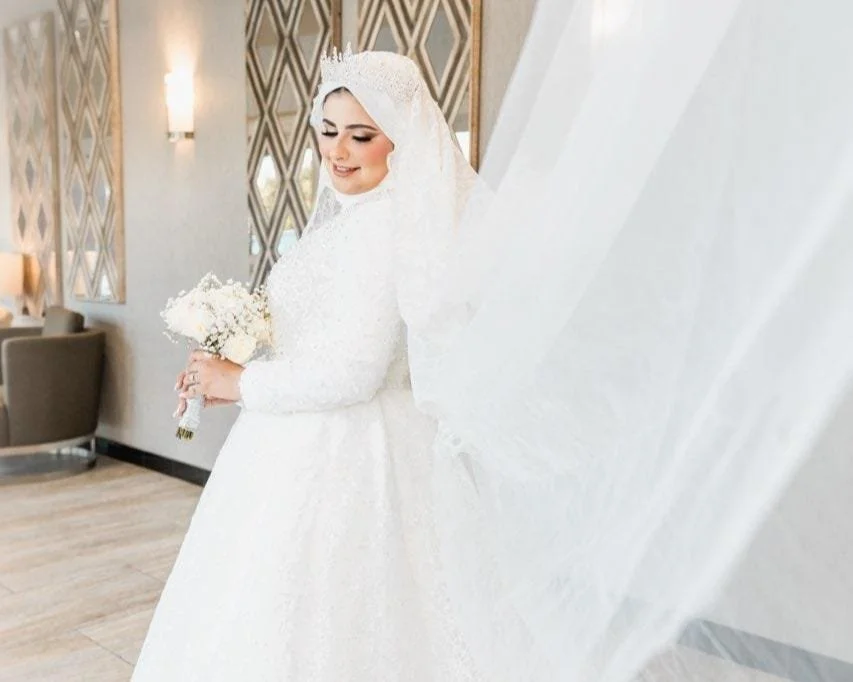
The allure of Muslim wedding dresses transcends time, weaving together tradition, culture, and a profound sense of elegance. These garments, more than mere attire, embody the sanctity of a sacred union, reflecting the rich tapestry of Islamic heritage while embracing the evolving landscape of contemporary styles. In exploring the timeless beauty of Muslim bride wedding dresses, we delve into the intricate details, cultural significance, and the enduring charm that makes these dresses so captivating.
Key Observations
- A Muslim wedding dress is any bridal gown or traditional outfit that follows the bride's own idea of modesty. Many choose long sleeves, a high neckline and a full-length skirt, but there is no single required style.
- Brides dress according to culture, family and personal practice. Styles range from white gowns to red lehengas, velvet bindalli and Palestinian embroidered thobs.
- Scholars give different answers on white, red and hijab at a wedding. We name each source below and share them as one view only, so please ask your own imam or scholar.
- Check coverage before you buy. Hold the fabric up to daylight and take a phone flash photo, because unlined sheer fabric may not give enough coverage.
- Bring the scarf or veil you plan to wear to your fitting, so the neckline and fabric weight can be matched to it.
- A custom modest gown at Estelle Bridal starts at $2,000, and we suggest allowing 6 to 8 months.
Quick answer: A Muslim wedding dress is a bridal gown or traditional outfit shaped by the bride's culture, family and idea of modesty. It often has long sleeves, a high neckline and a full-length skirt in lined, breathable fabric. White, red, gold and green are all common, depending on tradition. Check coverage in daylight, bring your hijab or veil to the fitting, and start custom work 6 to 8 months ahead where you can.
In this guide
- What makes a Muslim wedding dress different?
- How does culture shape Muslim wedding dresses?
- What do brides wear for the nikah, walima and henna night?
- What do scholars say about white, red and hijab?
- What colors do Muslim brides wear?
- What embroidery and beadwork are used?
- Which fabrics work best?
- Which silhouettes, sleeves and necklines work?
- How do you pair a hijab or veil with a gown?
- How do you add sleeves or a higher neckline?
- Traditional or modern?
- Henna, veils and accessories
- Custom cost and timeline
- Why choose Estelle Bridal
- FAQs
What Makes a Muslim Wedding Dress Different From Other Wedding Dresses?
The main difference is coverage. Many Muslim brides choose gowns with long sleeves, high necklines and full-length skirts, in fabrics that are lined and not see-through. Style, color and detail still vary widely, so a Muslim bridal dress can be as simple or as ornate as the bride wishes.
One of the defining features of the Muslim bride's wedding dress is the emphasis on modesty and grace. Rooted in religious values, these dresses are designed to cover the body in a tasteful and refined manner. Long sleeves, high necklines, and flowing skirts are common elements that not only adhere to Islamic principles of modesty but also lend an air of sophistication to the overall ensemble. The beauty lies not only in the external aesthetics but in the embodiment of virtues held dear in Islamic teachings.
| Design element | Common modest choice | What to check |
|---|---|---|
| Sleeves | Long, three-quarter or sheer lace over lining | Wrist length when you raise your arms |
| Neckline | High, bateau, square or illusion with lining | That the lining is opaque in daylight |
| Skirt and hem | Full length, A-line or ball gown | Hem length in the shoes you will wear |
| Fabric | Crepe, satin, lined chiffon, lined lace | Coverage with a phone flash photo |
| Head covering | Hijab, veil, dupatta or none, by personal choice | Neckline and fabric weight with your scarf on |
These are Estelle Bridal styling suggestions, not religious rules. Every bride decides what modesty means for her.
How Does Culture Shape Muslim Wedding Dresses?
Muslim brides come from many cultures, and each has its own wedding garments, colors and embroidery. A bride from South Asia, Turkey, Palestine, West Africa or the United States may all dress differently for the same ceremony.
Cultural diversity is another facet that contributes to the timelessness of these dresses. The Muslim world is a mosaic of cultures, each with its unique traditions and styles. From the ornate and vibrant designs of South Asian dresses to the understated elegance of Middle Eastern attire, Muslim wedding dresses encapsulate the diverse heritage of the communities they represent. The choice of colors, patterns, and fabrics becomes a canvas upon which the cultural identity of the bride is painted.
Museum collections show how long this variety has existed. The Metropolitan Museum of Art notes that Ottoman Muslim brides, especially in the Balkans, traditionally wore red entari robes trimmed in gold. The bindalli, meaning "a thousand branches," appeared in the mid-19th century as a transitional gown. By 1910, the same essay says, wealthy brides in Istanbul wore cream silk dresses almost identical to those worn in New York.
| Tradition | Garment or look | Details |
|---|---|---|
| Ottoman and Balkan | Red entari, later the bindalli | Gold trim and gold embroidery; a wine-colored silk velvet bindalli at the Met is worn by Muslim and Jewish women alike |
| Palestinian | Thob al-malak | Worn by Muslim and Christian brides with a jacket, coin headdress, silver jewelry and a veil |
| South Asian | Lehenga, sharara or gharara | Heavy embroidery, often red or gold, with a dupatta |
| Middle Eastern | Kaftan or flowing gown | Regal drape, beading and rich fabric |
| Western style | White or ivory gown | Long sleeves, high neckline and lined fabric are common choices |
Sources: The Met, Ottoman wedding dresses essay; The Met, bindalli object record; Royal Ontario Museum, Bethlehem Bride exhibition. The South Asian, Middle Eastern and Western rows are general descriptions, so follow your own family's tradition.
Read More: Modern Trends in Muslim Bridal Fashion and Style
What Do Muslim Brides Wear for the Nikah, Walima and Henna Night?
Many brides plan more than one look. The nikah is the marriage contract ceremony, the walima is the wedding celebration, often hosted by the groom's family, and the henna night is a cultural event before the wedding. Customs differ by family and region, so some brides wear one gown for everything and others plan two or three outfits.
| Event | What it is | Look many brides choose |
|---|---|---|
| Nikah | The marriage contract ceremony, at a mosque, home or venue | A modest gown or traditional outfit, often softer in shade, with sleeves and a scarf or veil if desired |
| Walima | The wedding celebration or reception | A more elaborate gown, lehenga or kaftan with beading or embroidery |
| Henna or mehndi night | A cultural gathering, usually before the wedding | A colorful, comfortable outfit that is easy to sit in while henna is applied |
| Bridal portraits | Photos before or after the ceremony | The main gown, with extra layers or a veil for variety |
Event outfits are Estelle Bridal styling suggestions. Traditions differ by culture and family, so ask your elders and your venue about customs.
Want one custom design to cover two events? Ask your stylist about detachable sleeves, an overskirt, a jacket or a cape. One gown can then change from a quiet ceremony look to a full celebration look.
What Do Scholars Say About White, Red and Hijab at a Wedding?
Scholars give conditional and sometimes different answers, and families follow different schools of thought. The views below are each attributed to one named source and are shared for information. They are not a ruling from Estelle Bridal, so please ask your own imam or scholar.
What does Islam Q&A say about a white wedding dress?
Islam Q&A, citing Shaykh Ibn Uthaymeen, says a woman may wear a white wedding dress, with conditions such as full coverage and not showing herself to unrelated men.
What does Mufti Ebrahim Desai say about a red wedding dress?
Mufti Ebrahim Desai, writing from the Hanafi school on Albalagh, says women may in principle wear red, with modesty conditions, and cautions where red is a distinct marker of another faith locally.
What does AboutIslam say about hijab at a wedding?
Writing for AboutIslam, Sadaf Farooqi says hijab applies wherever men who are not close relatives are present, and that a bride can dress more elaborately when she is among women only.
Sources: Islam Q&A, white wedding dress; Albalagh via IslamQA.org, red wedding dress; AboutIslam, hijab at a wedding.
What Colors Do Muslim Brides Wear?
Muslim brides wear white, ivory, red, gold, green, blush and deeper jewel tones. Color often follows the family's culture more than any single rule.
Colors, with their symbolic connotations, infuse Muslim bride wedding dresses with emotional depth and cultural resonance. White, representing purity and innocence, is a popular choice, but other colors, such as red, gold, and green, hold specific cultural and religious significance in various regions. The careful selection of color is a personal statement, reflecting the bride's style, cultural background, and familial traditions.
| Color | Where you see it | Styling tip |
|---|---|---|
| White or ivory | Western-style gowns and many nikah looks | Compare white, ivory and cream near your face in daylight |
| Red | Ottoman and Balkan robes and South Asian bridal wear | Pair with gold embroidery and simple jewelry |
| Gold | Trims, embroidery and full gowns | Use matte gold for a softer look on camera |
| Green | Henna night and celebration outfits | Emerald suits satin and velvet |
| Wine or burgundy | Velvet bindalli and winter weddings | Velvet gives warmth for cooler months |
| Blush and champagne | Modern nikah and walima gowns | Soft shades keep the look light and elegant |
Source for the red and wine rows: The Met essay and object record linked above. Other rows are general styling guidance.
Read More: Ornate Beginnings: Redefining Muslim Bridal Couture
For a deeper look at shade and undertone, see our guide to white vs ivory wedding dresses.
What Embroidery, Beadwork and Craftsmanship Go Into Muslim Bridal Gowns?
Hand embroidery, beading and appliqué are central to many bridal traditions. These details can carry cultural meaning, so choose motifs that matter to your family.
The artistry and craftsmanship displayed in Muslim wedding dresses are truly remarkable. Intricate embroidery, delicate beadwork, and meticulous detailing adorn these garments, creating a visual feast for the eyes. These embellishments not only serve an aesthetic purpose but also carry deep cultural and symbolic significance. Traditional motifs, inspired by centuries-old designs, are interwoven into the fabric, telling a story that transcends generations.
If you want embroidery on a custom gown, read our guide to embroidered custom wedding dresses.
Which Fabrics Are Best for a Modest Muslim Wedding Dress?
Crepe, satin, lined chiffon and lined lace are reliable choices. Choose lined, opaque layers for coverage, and breathable fabrics if the ceremony is long or the weather is warm.
Luxurious fabrics play a pivotal role in enhancing the beauty of Muslim bride wedding dresses. Silk, satin, chiffon, and lace are often chosen for their sumptuous texture and ability to drape gracefully. The choice of fabric not only adds a touch of opulence but also contributes to the overall comfort and movement of the dress. The tactile experience of these materials becomes an integral part of the sensory allure associated with Muslim wedding attire. Explore more luxurious fabrics for custom gowns.
| Fabric | Coverage and feel | Best for |
|---|---|---|
| Crepe | Matte, opaque and structured | Clean, modern gowns and sleeves that hold their shape |
| Satin | Smooth and formal, shows every line | Walima gowns, ball gowns and kaftans |
| Chiffon | Light and flowing, sheer unless lined | Sleeves, overlays and veils over a lining |
| Lace | Textured and romantic, sheer unless lined | Sleeves, necklines and overlays |
| Velvet | Warm and rich, heavier to wear | Winter weddings and traditional looks |
Before you decide, try the fabric in daylight and take a phone flash photo. Unlined sheer layers may not give coverage on their own, so ask your stylist to show the dress with its full lining. For more, see our guide to wedding dress fabrics and our lace wedding dresses guide.
Want to see fabrics and sleeves in person? Book a private appointment and bring your hijab or veil, your inspiration and your event date.
Which Silhouettes, Sleeves and Necklines Work for a Modest Wedding Gown?
An A-line, ball gown or sheath with long or sheer sleeves and a high or illusion neckline suits most modest brides. The right silhouette depends on your body shape, your venue and how much you want to move.
| Silhouette | Why brides choose it | Read more |
|---|---|---|
| A-line | Flattering, easy to move in, covers hips and legs | A-line wedding dresses |
| Ball gown | Dramatic and full, a regal look for the walima | Ball gown wedding dresses |
| Sheath | Sleek and modern, works well with a long sleeve | Sheath wedding dresses |
| Kaftan or flowing gown | Loose, regal drape with an elegant line | Ask about custom designs |
| Lehenga or sharara | Traditional South Asian look with a dupatta | Ask about custom designs |
| Sleeve or neckline | Look | Good to know |
|---|---|---|
| Long fitted sleeve | Classic and clean | Check that you can raise your arms comfortably |
| Sheer lace sleeve over lining | Soft and romantic | Needs a skin-toned lining for full coverage |
| Bishop or puffed sleeve | Statement and modern | Fabric weight changes the shape |
| High illusion neckline | Elegant, keeps the collarbone covered | Ask for a lined, opaque illusion panel |
| Square or bateau neckline | Clean and simple | Works well with a hijab |
These are Estelle Bridal styling suggestions. Always confirm coverage at your fitting.
How Do You Pair a Hijab or Veil With a Wedding Dress?
Choose the dress neckline and fabric weight with your scarf or veil on. Bring the exact hijab, dupatta or veil you plan to wear to your fitting. A high neckline can bunch under a scarf, and a heavy fabric can pull a light one out of place. Whether and how to cover is a personal and family decision, and many brides wear a veil or a styled scarf instead of, or alongside, a traditional hijab.
| Neckline | Pairs well with | Tip |
|---|---|---|
| High or illusion | A soft, draped scarf or veil | Keep embellishment away from where the scarf sits |
| Square or bateau | A pinned hijab or turban style | Try pins and the dress together |
| Off-the-shoulder with sleeves | A long veil or dupatta | Add a lined layer for coverage |
| Embroidered collar | A simple, plain scarf | Let one of the two be the focus |
For more on veils, see our guide to veil styles for wedding dresses.
How Do You Add Sleeves or a Higher Neckline to a Wedding Gown?
You can design sleeves and a higher neckline into a custom gown from the start. You can also add detachable sleeves or a jacket to a gown you own, or ask a stylist whether alterations are possible. Complex changes take more time, so plan early.
| Option | Best for | Good to know |
|---|---|---|
| Custom design from the start | Exact sleeves, neckline and lining | Allow 6 to 8 months at Estelle Bridal (rush service available) |
| Detachable sleeves | One gown for two looks | Easy to plan at the design stage |
| Lace or illusion overlay | A soft, covered look | Match the lace and the lining to the gown |
| Jacket, bolero or cape | A quick, removable layer | Good for a walima change of look |
| Alterations to an existing gown | A gown you already love | Ask your stylist what is possible for your design |
At Estelle Bridal, alterations are included with every custom gown. Off-the-rack Evelyn Bridal gowns do not include alterations, so brides arrange their own. Read our wedding dress alterations guide to see how fittings work.
How Can a Muslim Wedding Dress Be Both Traditional and Modern?
Keep the elements that matter to your family, such as color, motifs and coverage, and update the silhouette, fabric or finish. Many designers now blend heritage with modern cuts.
Versatility in design is a testament to the adaptability of Muslim wedding dresses. While deeply rooted in tradition, these dresses span a broad spectrum of styles, catering to diverse tastes and preferences. From the opulent and heavily embellished lehengas of South Asia to the flowing and regal kaftans of the Middle East, designers skillfully blend heritage with contemporary trends. This fusion allows Muslim brides to express their individuality while still honoring cultural norms.
What Role Do Henna, Veils and Accessories Play in Muslim Bridal Looks?
Henna, veils and jewelry link the bride to family customs. Many brides add them as the finishing touch, so plan the dress around them and not the other way around.
Beyond the aesthetic elements, Muslim wedding dresses incorporate time-honored traditions that add to their allure. The use of henna, veils, and accessories becomes a bridge connecting the present to the past. These traditions not only enhance the visual appeal of the attire but also imbue it with a sense of continuity, linking the bride to the timeless customs that have been passed down through generations.
- Henna: plan sleeve length and fabric so the designs stay visible and the fabric is not stained.
- Veil or dupatta: choose the length and weight with your neckline and hairstyle in mind.
- Jewelry: keep it simple with heavy embroidery, or go bold with a plain gown.
- Shoes: choose comfortable pairs, because ceremonies and photos can last for hours.
How Much Does a Custom Muslim Wedding Dress Cost and How Long Does It Take?
At Estelle Bridal, custom gowns start at $2,000, and the final price depends on fabric, construction complexity and embellishment. We suggest allowing 6 to 8 months, so start early if you want sleeves, lining and embroidery designed to your measurements.
| Step | What happens |
|---|---|
| Consultation | Share your event plan, cultural details, coverage needs and budget |
| Fabric and design choice | Choose fabric, sleeves, neckline, lining and embroidery |
| Muslin fitting | Check shape and fit with your veil or scarf before the final fabric is cut |
| Construction | Dress made in the final fabric |
| Final fittings | Adjust fit, length and details |
Source: Estelle Bridal custom gown pricing and timeline, see how the custom design process works.
Plan your wedding dress timeline with our guide on when to buy a wedding dress.
Why Choose Estelle Bridal for a Muslim Wedding Dress in Houston?
Estelle Bridal is a Houston boutique that has dressed brides since 2016. You can try different necklines, sleeves and fabrics with a stylist and design a custom gown with founder Flo A., built around the coverage and cultural details that matter to you.
- Custom design: choose your fabric, sleeves, neckline and silhouette with the founder and stylists.
- Bring your own details: share your family's colors, motifs and veil or hijab plans at the consultation.
- Honest advice: we tell you if a fabric will be see-through or a neckline will not sit well with your scarf.
- Alterations included: included in every custom gown, handled by our in-house team.
- All sizes and styles: petite, tall, plus size, long sleeve and modest requests are welcome.
- Private appointments: plus virtual consultations and nationwide shipping, so you can start from anywhere.
- Trusted locally: a Black-owned, woman-owned boutique featured in Black Brides magazine, at 2428 S Hwy 6, Houston TX 77077. Call (281) 208-7805.
Ready to start your modest wedding gown? Book a private appointment and tell us about your event, your culture and your coverage needs.
Muslim Wedding Dress FAQs
What is a Muslim wedding dress called?
There is no single name. Garments depend on culture, such as the bindalli in Ottoman tradition, the thob in Palestinian tradition, the lehenga or sharara in South Asia and the kaftan in parts of the Middle East. Many brides also wear a modest long-sleeve gown in a Western style.
What is the dress code for a Muslim wedding?
Most hosts appreciate modest, elegant clothing with covered shoulders, arms and knees, and many guests bring a scarf. Guests are usually advised to avoid white unless the hosts say otherwise. Check with the family or the venue, because customs differ. See our guide to the 5 colors to avoid wearing as a wedding guest.
Can a Muslim bride wear a white wedding dress?
Many do. Islam Q&A, citing Shaykh Ibn Uthaymeen, says a white wedding dress is permitted with conditions such as full coverage. Views differ, so ask your own imam or scholar.
Does a Muslim bride have to wear hijab at her wedding?
This is a personal and family decision. Sadaf Farooqi, writing for AboutIslam, says hijab applies wherever men who are not close relatives are present. Many brides choose a styled scarf, a veil or a dupatta. Bring your choice to the fitting.
What color dress do Muslim brides wear?
White, ivory, red, gold, green, blush and jewel tones are all common. The choice depends on culture, family and personal style.
What should a bride wear for the nikah?
Many brides choose a modest gown or traditional outfit, often in a softer shade. Some wear the same dress for the walima and others plan a second, more elaborate look. Ask your family about local customs.
Can I add sleeves to a wedding dress?
Often yes, through detachable sleeves, a lace overlay, a jacket or alterations, depending on the gown. Ask your stylist what is possible for your dress. For a custom gown, sleeves and lining are designed in from the start.
What fabrics are best for a modest wedding dress?
Crepe, satin, lined chiffon and lined lace are common choices. Check coverage in daylight and with a phone flash photo, and choose breathable layers for warm weather.
How much does a custom Muslim wedding dress cost?
At Estelle Bridal, custom gowns start at $2,000, and the final price depends on fabric, construction and embellishment.
How far ahead should I order a custom Muslim wedding dress?
We suggest 6 to 8 months, and rush service is available. We suggest allowing 6 to 8 months for an Estelle Bridal custom gown, with rush service available for shorter timelines, and more time helps if you want detailed embroidery or two outfits.
Can I buy a Muslim wedding dress near me or online?
If you are in Houston, you can book a private appointment at our boutique. If you live elsewhere, we offer virtual consultations and nationwide shipping.
What Makes a Muslim Wedding Dress Timeless?
A Muslim wedding dress feels timeless because it combines modesty, cultural heritage, fine craftsmanship and personal style. It adapts to each bride and each era while keeping the values that give it meaning.
In conclusion, the timeless beauty of Muslim wedding dresses lies in their ability to weave together a myriad of elements: modesty, cultural diversity, craftsmanship, luxurious fabrics, versatility in design, symbolic colors, and time-honored traditions. These dresses are not just garments; they are a celebration of love, a manifestation of cultural identity, and a testament to the enduring elegance that transcends the passage of time. In donning a Muslim wedding dress, a woman steps into a legacy, carrying with her the stories of the past while embarking on a new chapter of her life.