
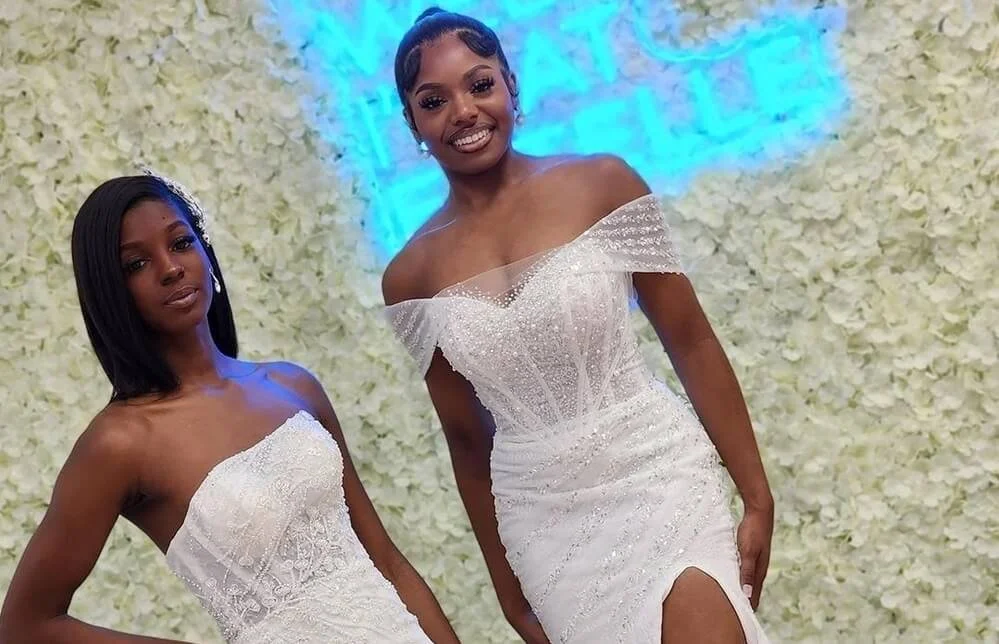
Your wedding day is a celebration of love and a reflection of your unique style and personality. Among wedding dresses, there's something truly special about the intricate beauty of embroidered custom wedding dresses. These dresses are not only a symbol of timeless elegance but also a canvas for artistry. In this guide, we'll explore the world of embroidered custom wedding dresses, looking at what makes them so captivating and why they're the perfect choice for brides who appreciate exquisite detailing.
Key Observations
- An embroidered wedding dress has designs stitched onto the fabric with needle and thread, by hand or by machine. Embroidery sits on top of the fabric, while lace is a fabric of its own.
- The main types are floral, threadwork, lace appliqué, beaded, whitework or tonal, 3D, goldwork, colored and monogram embroidery.
- Hand embroidery takes far longer and costs more than machine embroidery. Ask your designer which one your gown uses and where.
- Estelle Bridal custom gowns start at $2,000, and the final price depends on fabric, construction and embellishment. Heavy embroidery or beading usually means 8 to 12 months from first consultation.
- Heavily embroidered gowns can feel heavy or scratchy. A soft lining, smooth edges and a bustle fix most comfort problems.
- Embroidered, beaded and appliqué gowns usually take longer to alter and need careful cleaning and storage.
Quick answer: An embroidered wedding dress is a gown decorated with stitched designs such as flowers, vines, beads, threadwork or a monogram. Choose floral or tonal embroidery for a soft romantic look, beaded or 3D embroidery for glamour, and colored embroidery for something personal. For a custom embroidered gown, start planning 8 to 12 months before the wedding.
In this guide
- What is an embroidered wedding dress?
- Embroidery vs lace
- Why embroidery is so special
- Hand vs machine embroidery
- Types of embroidery
- Where the tradition comes from
- Best fabrics and silhouettes
- How to choose your embroidery style
- Colored embroidery
- Comfort: itch and weight
- Cost
- Timeline
- Why go custom
- Alterations
- Cleaning and storage
- Why choose Estelle Bridal
- FAQs
What Is an Embroidered Wedding Dress?
An embroidered wedding dress is a bridal gown with decorative designs stitched onto the fabric using thread, and sometimes beads, sequins or fine metal wire. The stitching can be done by hand or by machine. It can cover the whole bodice and skirt or appear only on a sleeve, hem or train.
Britannica defines embroidery as the art of decorating material, mainly textile fabric, with a needle and thread, and sometimes fine wire. The Knot's embellishment glossary describes it in similar terms, as decorative needlework or stitching done by hand or machine. On a wedding gown, that means your design is built from stitches, not printed or cut from another fabric.
Sources: Britannica, embroidery; The Knot, wedding gown embellishment glossary.
What Is the Difference Between Embroidery and Lace on a Wedding Dress?
Lace is an openwork fabric with its own structure, while embroidery is stitching added on top of a base fabric such as tulle, satin or organza. Many gowns combine both, such as embroidered lace, where flowers are stitched onto a net or lace base. That is why the two words get mixed up in shop descriptions.
| Feature | Embroidery | Lace |
|---|---|---|
| What it is | Stitched design added to a base fabric | A fabric with its own pattern and openwork |
| Where it sits | On top of tulle, satin, organza, crepe or silk | Used as the fabric, an overlay or trim |
| Look | Can be flat, raised, beaded or colored | Delicate, textured, usually patterned |
| Customizing | Motifs, placement and color can be designed for you | Pattern is set by the lace you choose |
| Common mix | Embroidered lace: stitched motifs on a net or lace base | Embroidered lace: stitched motifs on a net or lace base |
For a deeper look at lace types such as Alencon and Chantilly, read our guide to wedding dress fabrics and our lace wedding dresses guide.
What Makes Embroidery on a Wedding Dress So Special?
Embroidery brings opulence, romance and individuality to a gown, and it can be designed to match your story. It is detailed, personal, works on many fabrics and does not go out of style. The four points below explain why brides keep choosing it.
Embroidery is an ancient art form that has been used to adorn clothing for centuries. On wedding dresses, the addition of embroidery brings a sense of opulence, romance, and individuality. Here are some key aspects of embroidery in wedding gowns:
Why Does Embroidery Look So Detailed?
Embroidery involves the use of threads and needles to create intricate patterns and designs on fabric. This allows for a level of detailing that is hard to achieve through other techniques.
Can You Personalize Embroidery on a Wedding Dress?
Custom embroidery takes this art form a step further by allowing brides to add personalized elements to their dresses. Initials, dates, meaningful symbols, and more can be incorporated into the design.
Read More: How do you walk in a mermaid wedding dress?
Which Fabrics Can Be Embroidered?
Embroidery can be applied to various fabrics, including lace, tulle, silk, and satin. This versatility makes it suitable for a wide range of bridal styles, from classic to bohemian to modern.
Does Embroidery Go Out of Style?
Embroidery has a timeless quality that transcends trends. A beautifully embroidered wedding gown will look just as stunning in photographs years down the line as it did on the wedding day.
Hand Embroidery vs Machine Embroidery on a Wedding Gown: What Is the Difference?
Hand embroidery is stitched by an artisan one motif at a time, so it is slower, more costly and more individual. Machine embroidery is stitched by a computerized machine from a digital pattern, so it is faster, more consistent and more affordable. Many gowns use both, with machine work for the base and hand work for focal details.
| Feature | Hand embroidery | Machine embroidery |
|---|---|---|
| How it is made | Stitched by an artisan with needle and thread | Stitched by a computerized machine from a digital pattern |
| Look | Dimensional, slightly unique stitch to stitch | Even, repeatable, crisp |
| Time | Slowest, adds weeks or months | Fastest |
| Cost | Higher | Lower |
| Best for | Focal areas, heirloom or fully custom designs | All-over patterns and larger areas |
| Questions to ask | How many hours? Who stitches it? | Is the pattern original to the gown? |
How Can You Tell Hand Embroidery From Machine Embroidery?
Check the back of the fabric and the stitch detail. Hand work usually looks slightly varied, with thread ends neatly secured, while machine work looks uniform with a flat, repeated backing. If you are unsure, ask the stylist. A good boutique will tell you exactly how each gown is made.
Is Hand Embroidery Worth the Cost?
Hand embroidery is worth it when you want a one-of-a-kind focal point such as a bodice, sleeve or train, or an heirloom gown. If your budget is tight, use machine embroidery for the wide areas and ask for a few hand-finished details where people will see them most.
What Are the Types of Embroidery on Wedding Dresses?
The main types of embroidery on wedding gowns are floral, lace appliqué, beaded, monogram, threadwork, whitework or tonal, 3D and goldwork. Each one gives a different texture and mood, so the right choice depends on your style, your dress shape and how much sparkle you want.
There are several types of embroidery commonly used in wedding dresses, each offering its unique charm:
Floral Embroidery
Floral patterns are a popular choice, adding a romantic and feminine touch to the gown. Roses, peonies, and other flowers can be intricately embroidered for a garden-inspired look.
Lace Appliqué
Lace appliqué involves attaching lace motifs or patterns to the dress's fabric. This creates a textured and dimensional effect that's particularly captivating.
Beaded Embroidery
Beads and sequins can be incorporated into the embroidery for a touch of sparkle. Beaded embroidery can range from subtle shimmer to all-out glamour. For more on beadwork, see our handcrafted beaded couture dresses.
Monogram Embroidery
Brides often choose to include their initials, wedding date, or special words in the dress's design. This personalization adds a sentimental and meaningful aspect to the gown.
What Are Threadwork, Whitework and Tonal Embroidery?
Threadwork uses thread alone, in the same shade as the dress or in softly different tones. The Royal School of Needlework describes whitework as traditionally worked in white thread on white fabric, often for formal wear, and describes silk shading as painting with a needle. Tonal embroidery uses the same idea in ivory, champagne or blush, so the pattern appears in the light instead of announcing itself.
What Is 3D or Raised Embroidery on a Wedding Dress?
Three-dimensional embroidery builds texture that lifts off the fabric, using layered petals, padded stitches or stitched flowers. The Royal School of Needlework describes stumpwork as raised embroidery with three-dimensional elements, and the Victoria and Albert Museum notes that raised work was popular in the 17th century. On a gown, 3D flowers on a bodice or train photograph beautifully.
What Is Goldwork Embroidery?
Goldwork is embroidery made with metal threads. According to the Royal School of Needlework, it has origins in military, ecclesiastical and royal regalia. On a modern bridal gown, gold or silver thread is usually used in small accents such as a cuff, hem or monogram.
Sources: Royal School of Needlework, embroidery techniques; Victoria and Albert Museum, raised embroidery.
| Embroidery type | Look | Best for | Watch out for |
|---|---|---|---|
| Floral | Soft, romantic, garden feel | Bodices, sleeves, tulle skirts | Can read busy if motifs are large and the dress is full |
| Lace appliqué | Textured, dimensional | Bodices, trains, veils | Edges can scratch without lining |
| Beaded | Sparkle, from subtle to glam | Evening and formal weddings | Adds weight and alteration time |
| Threadwork or tonal | Quiet, elegant, shows in the light | Minimalist and modern gowns | Detail may be lost in photos from far away |
| Whitework | White on white, classic | Traditional and formal looks | Needs good light to show |
| 3D or raised | Sculptural, bold | Statement bodices, trains | Can snag, needs careful storage |
| Goldwork | Metallic accent | Cuffs, hems, monograms | Check color against your skin tone and jewelry |
| Monogram | Personal, subtle | Hems, cuffs, inside the bodice | Plan placement before the pattern is cut |
Can an Embroidered Bridal Gown Have Colored Embroidery?
How Do You Care for an Embroidered Wedding Dress?
Where Did the Embroidered Wedding Dress Tradition Come From?
No single country invented the embroidered wedding dress, because embroidered formal clothing developed in many places. Britannica notes that the earliest surviving examples of embroidery are Scythian, dated to roughly the 5th to 3rd century BC, and museums hold embroidered wedding dresses from Turkey, Palestine and the United States.
| Example | What museums say | Where to read more |
|---|---|---|
| Turkish Bindalli wedding dress, mid-19th to early 20th century | Wine silk velvet with extensive gold embroidery in floral designs, worn as wedding formal wear | Metropolitan Museum of Art |
| Palestinian wedding dress, about 1910 | Linen with silk and metal-wrapped thread, embroidered | Metropolitan Museum of Art |
| American wedding dress, 1847 | White silk overlaid with silk chiffon embroidered with silver metallic thread | Smithsonian National Museum of American History |
Sources: Britannica, embroidery summary; Metropolitan Museum, Bindalli wedding dress; Metropolitan Museum, Palestinian wedding dress; Smithsonian, 1847 wedding dress.
The white wedding dress spread after Queen Victoria's 1840 wedding. The V&A says that after 1840, a bride marrying for the first time who could afford it usually chose white. Her own gown was trimmed with Honiton lace, so lace and embroidery have shared the bridal story from early on.
Today, brides often ask a designer to draw from their own heritage, such as a motif, flower or pattern that matters to their family.
Sources: Victoria and Albert Museum, Queen Victoria and the white wedding dress; Fashion Institute of Technology, 1840 Queen Victoria wedding dress.
What Are the Best Fabrics and Silhouettes for Embroidered Wedding Dresses?
Embroidery works best on tulle, organza, silk, satin and lace, and it suits almost every silhouette when the placement is planned with the shape. Sheer fabrics let the stitching float, while smooth satin or crepe gives a clean backdrop for statement motifs.
| Fabric | How embroidery looks | Good to know |
|---|---|---|
| Tulle | Floats, light, romantic | Needs support so heavy motifs do not pull the net |
| Organza | Crisp and structured | Holds raised and 3D embroidery well |
| Silk | Rich, soft sheen | Needs careful handling and a skilled stitcher |
| Satin or mikado | Bold contrast, clean backdrop | Beads and heavy threads show strongly |
| Crepe | Modern, minimal | Use small, placed motifs |
| Lace | Embroidered lace, layered texture | Choose a soft lining under the edges |
For silhouettes, an A-line and a ball gown give plenty of room for skirt embroidery, while a sheath or mermaid looks best with embroidery placed at the bodice, sleeves and train. Not sure which shape suits you? Start with our wedding dress silhouettes guide.
Want to see embroidery in person? Book an appointment to feel the fabrics, compare stitching and talk through a custom design with a stylist.
How Do You Choose the Right Embroidery Style for Your Wedding Dress?
Choose your embroidery style by matching it to your wedding theme, your dress shape and the amount of personalization you want. Then test the idea with swatches and a sketch before the pattern is cut. Selecting the right embroidery style for your custom wedding dress is essential to ensure it reflects your vision and complements your overall wedding theme. Here are some tips for choosing the right embroidery style:
How Does Your Wedding Theme Affect the Embroidery?
Think about the overall theme and mood of your wedding. Classic, rustic, vintage, or modern themes may lend themselves to different embroidery styles.
How Can You Add a Personal Touch With Embroidery?
If you want to add a personal touch to your gown, consider monogram embroidery or adding a meaningful symbol that represents your relationship.
How Much Embroidery Is Too Much?
Your embroidery should complement the dress, not overpower it. The placement and size of the embroidery should work harmoniously with the gown's silhouette.
Who Can Design Custom Embroidery for You?
Consult with a custom dress designer or seamstress who specializes in embroidery. They can provide expert advice and help you bring your vision to life.
Read More: Fairycore-Inspired Custom Wedding Dresses for an Ethereal Look
| If your wedding is... | Try this embroidery |
|---|---|
| Classic or formal | Tonal threadwork, whitework or beaded embroidery on the bodice |
| Garden or romantic | Floral embroidery on tulle or organza, soft colored flowers |
| Boho or outdoor | Lighter floral embroidery and lace appliqué, see our boho wedding dress guide |
| Vintage | Whitework, beaded accents, embroidered lace, see our vintage wedding dresses guide |
| Modern or minimal | Small placed motifs, tonal embroidery or a hidden monogram |
| Winter or evening | Beading, goldwork accents and raised embroidery on heavier fabrics |
Can a Wedding Dress Have Colored Embroidery?
Yes. A wedding dress can have colored embroidery in soft blush, sage, blue, gold or any shade you choose. Brides use color for flowers on the hem, a small accent near the heart, or a full garden of stitched blooms. Keep the colors close to your bouquet and wedding palette so the look feels planned.
- Subtle: blush, champagne or pale blue on an ivory gown.
- Statement: deeper greens, reds or gold for a bold, personal look.
- Hidden: a colored motif inside the hem or bodice that only you know about.
- Matching: embroidery that echoes your bridesmaid dresses or florals.
For ideas beyond ivory, read our colored wedding dresses guide.
Are Embroidered Wedding Dresses Comfortable? How Do You Handle Itch and Weight?
Embroidered wedding dresses can be comfortable when the lining, edge finishing and weight are planned from the start. Beaded and raised embroidery adds weight, and scalloped or stiff edges can scratch at the neckline and underarms. Try the gown on for at least 20 minutes and move your arms, sit and walk before you decide.
| Problem | Why it happens | Fix |
|---|---|---|
| Itching | Stiff thread, beads or lace edges touching skin | Soft lining, smooth edge trim, illusion tulle at the neckline |
| Heavy bodice | Dense beading or raised embroidery | Built-in support, a lighter skirt fabric, strategic placement |
| Snagging | Raised or beaded details catching on fabric | Smooth lining, careful handling when you sit and hug |
| Hot in summer | Layers plus heavy stitching | Choose lighter fabrics and place embroidery on the bodice only |
| Hard to dance in | Weight at the train and skirt | A bustle that lifts the train, see our bustle guide |
How Much Does a Custom Embroidered Wedding Dress Cost?
At Estelle Bridal, custom designs start at $2,000, and the final price depends on fabric, construction complexity and embellishment. Embroidery pushes the price up when it is hand stitched, covers a large area, uses beads or metal thread, or needs special fabric. Ask for a written quote that lists the embroidery and alterations.
| Cost factor | Lower cost | Higher cost |
|---|---|---|
| Method | Machine embroidery | Hand embroidery |
| Coverage | Accent areas such as cuffs and hem | Full bodice, sleeves, skirt and train |
| Materials | Thread only | Beads, crystals, metallic thread, imported fabric |
| Design | Existing pattern adapted | Original motif drawn for you |
| Time | Standard timeline | Extra weeks or months of handwork |
Source: Estelle Bridal custom gown pricing, see how the custom design process works and our Houston wedding dress price guide.
How Long Does a Custom Embroidered Wedding Dress Take?
We suggest allowing 6 to 8 months for a custom gown at Estelle Bridal, and rush service is available for shorter timelines. For complex designs with heavy embroidery, beading or imported fabrics, eight to twelve months is more realistic. Start your consultation about 12 months before the wedding for the most relaxed experience.
| Stage | Typical time at Estelle Bridal |
|---|---|
| Design consultation and finalizing the design | 2 to 4 weeks |
| Pattern creation and first muslin fitting | 6 to 8 weeks |
| Muslin adjustments, if needed | 3 to 4 weeks |
| Gown construction in the final fabric | 6 to 10 weeks |
| Final fittings | 2 to 3 appointments, about 2 weeks apart |
Heavy embroidery stretches the construction stage, so build in extra time. Read our guide on when to buy a wedding dress to plan the whole timeline.
Why Choose a Custom Embroidered Wedding Dress?
A custom embroidered gown lets you choose the motif, placement, fabric and fit, so the dress is yours alone. It costs more and takes longer than ready-to-wear. Custom embroidered wedding dresses offer brides a truly one-of-a-kind experience. Here's why they're worth considering:
Is a Custom Embroidered Dress a Unique Expression of You?
A custom-embroidered wedding dress is a unique expression of your style and love story. It's a gown that no one else will ever wear.
Can an Embroidered Gown Become an Heirloom?
The added personalization, whether it's initials, dates, or symbols, infuses sentimental value into your gown, making it an heirloom.
Will a Custom Embroidered Dress Fit Better?
Custom dresses are tailored to your body, ensuring a perfect fit that's both comfortable and flattering.
Is Embroidery a Form of Artistry?
Embroidered wedding dresses are a canvas for artistry. Talented designers and artisans can create intricate and breathtaking designs that become part of your wedding's visual legacy.
If you want to start from scratch, read our guide to custom wedding dresses built from scratch.
Can You Alter an Embroidered Wedding Dress?
Yes, an embroidered wedding dress can usually be altered, but it takes more skill and time than a plain gown. A seamstress may need to remove embroidery or appliqué at the seams, take in the dress, then reattach the motifs so the pattern still lines up. Ask about alteration time and cost before you order.
| Alteration | With embroidery | Good to know |
|---|---|---|
| Hem | Possible, depends on where the embroidery sits | Hem embroidery may need to be removed and replaced |
| Taking in sides or bust | Motifs may be detached and reattached | Allow extra fitting time |
| Straps and sleeves | Possible, with matching thread or lace | Plan this at the first fitting |
| Bustle | Possible with the right fastener placement | Embroidery should not block bustle points |
| Adding embroidery to an existing dress | Sometimes, with matching fabric and thread | Ask a designer to review the dress first |
At Estelle Bridal, alterations are included with every custom gown. Off-the-rack Evelyn Bridal gowns do not include alterations, so brides arrange their own. Read our wedding dress alterations guide to see how fittings work.
How Do You Clean and Store an Embroidered Wedding Gown?
Have a professional cleaner who knows bridal fabrics handle your embroidered gown, and store it clean, cool, dark and dry in a breathable acid-free box. Avoid attics and basements, and avoid vacuum sealing. Embroidery, beads and metal thread are easier to damage than plain fabric, so do not spot clean at home.
The Canadian Conservation Institute explains that textiles are susceptible to damage from heat, light, incorrect humidity, pests and pollutants, as well as improper handling, storage and display. Textile conservator Jonathan Scheer advises acid-free, chemically inert materials for archiving a gown, no vacuum sealing, and a cool, dark, dry space.
Sources: Canadian Conservation Institute, textiles and costumes; The Bridal Council, tips from textile conservator Jonathan Scheer.
- Before the wedding: keep the gown in its garment bag, steam from a distance and keep jewelry and bouquet pins away from stitching.
- During the day: have someone help you sit and use a bustle to protect the train.
- After the wedding: clean it soon after, because stains set over time.
- Long-term: store flat or as your preservationist advises, in a cool, dark, dry place.
For local cleaning and preservation options, read our guides on gown cleaning and preservation in Houston and wedding dress preservation.
Why Choose Estelle Bridal for an Embroidered Custom Wedding Dress in Houston?
Estelle Bridal is a Houston boutique that has dressed brides since 2016. Our founder, Flo A., designs custom gowns to your measurements, so you can plan the embroidery, fabric and fit together and see samples before you commit.
- Custom design: you choose the motifs, placement, fabric and silhouette with the founder and stylists.
- A clear process: consultation, design, muslin fitting, construction and final fittings, with timelines explained up front.
- Honest planning: we tell you early if heavy embroidery or beading needs 8 to 12 months.
- Alterations included: included in every custom gown, handled by our in-house team.
- Feel it in person: compare fabrics, stitching and weight with a stylist instead of guessing from photos.
- Private appointments: plus virtual consultations and nationwide shipping.
- Trusted locally: a Black-owned, woman-owned boutique featured in Black Brides magazine, at 2428 S Hwy 6, Houston TX 77077. Call (281) 208-7805.
Ready to design your embroidered gown? Book a private consultation and bring your inspiration, your wedding date and your budget.
Embroidered Wedding Dress FAQs
1. What is an embroidered wedding dress?
It is a wedding gown decorated with stitched designs such as flowers, vines, beads, threadwork or monograms. The stitching can be done by hand or by machine and can cover the whole dress or only part of it.
2. Is embroidered the same as lace?
No. Lace is a fabric with its own pattern, while embroidery is stitching added on top of a base fabric. Many gowns use embroidered lace, which combines both.
3. What are the main types of wedding dress embroidery?
The main types are floral, lace appliqué, beaded, monogram, threadwork, whitework or tonal, 3D and goldwork. Each gives a different texture and level of sparkle.
4. How much does an embroidered wedding dress cost?
It depends on the designer, method and coverage. At Estelle Bridal, custom gowns start at $2,000, and the final price depends on fabric, construction complexity and embellishment.
5. How long does a custom embroidered gown take?
We suggest 6 to 8 months, and up to twelve months for heavy embroidery, beading or imported fabrics. Book your consultation about 12 months before the wedding.
6. Is hand embroidery better than machine embroidery?
Hand embroidery is more individual and costs more. Machine embroidery is more consistent and affordable. Many gowns use both, so ask where each is used.
7. Can I wear colored embroidery on a wedding dress?
Yes. Soft blush, sage, blue or gold embroidery on an ivory gown is a popular way to add personality. Match it to your flowers and wedding palette.
8. Are embroidered wedding dresses itchy or heavy?
They can be if the edges are stiff or the beading is dense. A soft lining, smooth trim and a supportive bodice usually solve it. Try the dress on and move for at least 20 minutes.
9. Can you alter a gown with embroidery or beading?
Usually yes, but it takes longer. Motifs near seams may need to be removed and reattached, so ask about time and cost before you order.
10. How do I store an embroidered wedding dress?
Have it professionally cleaned, then store it in a breathable acid-free box in a cool, dark, dry place. Avoid attics, basements and vacuum sealing.
Which Embroidered Wedding Dress Should You Choose?
Choose the embroidery that fits your wedding theme, your silhouette and your comfort. Decide how much hand work you want, set your timeline and budget early, and try fabrics in person before you order.
To sum up, embroidered wedding dresses offer a beautifully intricate look that's perfect for brides who appreciate detail, artistry, and personalization. Whether you're drawn to floral embroidery, lace appliqué, beaded details, or personalized monograms, the world of embroidered wedding gowns is full of possibilities. Your embroidered custom wedding dress will not only make you feel like the most beautiful bride but will also be a lasting symbol of the love and artistry that went into creating it.