

Choosing the right custom wedding dress fabrics is one of the most important parts of designing a bridal gown. Fabric determines much more than appearance. It influences how your dress drapes, whether the bodice holds its shape, how comfortable you feel, and how the gown moves when you walk down the aisle.
Imagine two wedding dresses with the same sketch. One is made with structured mikado and a firm inner foundation. The other uses fluid silk charmeuse with a soft lining. Although their designs begin in the same place, the finished gowns will look and behave very differently.
This guide explains the wedding dress fabrics and custom materials used in bridal design, how different layers work together, and what to consider before selecting fabric for your dream gown. You will also learn how to evaluate swatches, match fabrics with silhouettes, plan for Houston weather, and avoid costly mistakes during the custom design process.
Quick Summary: Custom Wedding Dress Fabrics
Choose your wedding dress fabric based on your preferred silhouette, venue, comfort, and design details. Lace adds texture, satin creates a smooth finish, tulle provides airy volume, chiffon and georgette flow softly, organza offers crisp lightness, crepe creates clean lines, and mikado supports structured gowns. For a custom design, the lining, interfacing, boning, and fabric combinations are just as important as the outer layer. Always compare actual samples in different lighting and test the fabric's weight, opacity, movement, and feel before making your final decision.
Why Does Fabric Matter So Much in a Custom Wedding Dress?
Fabric controls how a dress responds to movement and how accurately a design can be translated from a sketch into a finished garment.
A fabric with a fluid drape falls into soft folds. A firmer material can hold pleats, sculpted skirts, or architectural shapes. A sheer fabric may require a lining, while a heavily embellished textile may need additional support.
These characteristics influence the construction process and the result you see in the mirror.
How Can Two Gowns With the Same Design Look Different?
Consider an A-line wedding dress with a fitted bodice and sweeping skirt. In chiffon, the skirt may appear soft and flowing. In mikado, the same shape can look structured and formal. A lace overlay changes the texture again.
That is why fabric selection should happen alongside silhouette planning rather than after every other design decision has been made.
Does Fabric Affect Wedding Dress Comfort?
Yes. Comfort depends on fabric weight, fiber composition, lining, breathability, stretch, and how closely the gown fits.
A soft outer material can still feel warm when placed over several heavy layers. Similarly, a structured gown may be comfortable when its internal construction distributes weight properly.
When exploring Estelle Bridal's wedding gown collection, consider the feel of the complete dress, not just the outer material.
What Is the Difference Between Wedding Dress Fabric and Custom Gown Material?
Brides often use fabric and material interchangeably. During custom design, however, it helps to understand the differences.
Fiber refers to what a textile is made from, such as silk, cotton, polyester, or nylon.
Fabric construction describes how those fibers become a textile, including weaves, knits, lace structures, and netting.
Finish describes treatments or surface qualities that change shine, texture, hand feel, or appearance.
Internal materials include linings, interfacing, boning, cups, and supporting layers that help the gown hold its intended shape.
Is Satin Always Made From Silk?
No. Satin is a type of weave, not a fiber. It can be made from silk, polyester, acetate, or other fibers.
This distinction matters because two satin fabrics can have different weights, breathability, prices, and care requirements.
Is Lace a Single Type of Fabric?
No. Lace describes an openwork textile that comes in many constructions, patterns, weights, and fiber compositions.
Chantilly lace, guipure, and corded lace do not behave exactly alike. Each requires different construction and handling decisions.
Wedding Dress Fabrics and Materials Compared
The following table offers a quick starting point for choosing materials for your custom design.
| Fabric | Appearance | Common Bridal Use | Main Consideration |
|---|---|---|---|
| Lace | Textured and decorative | Bodices, sleeves, overlays | Pattern placement and support |
| Satin | Smooth, often lustrous | Structured or fluid gowns | Weight and fiber vary |
| Tulle | Fine netting, airy appearance | Skirts, veils, overlays | Layers affect volume |
| Chiffon | Soft and sheer | Flowing skirts, sleeves | Often needs lining |
| Organza | Crisp, sheer, light-looking | Structured overlays and volume | Can crease or snag |
| Crepe | Textured, often matte | Sheath and fitted gowns | Weight and stretch differ |
| Mikado | Firm with a subtle sheen | A-line and ball gowns | Can feel substantial |
| Georgette | Fine texture and soft movement | Draped skirts and sleeves | May require several layers |
| Silk charmeuse | Fluid and luminous | Bias-cut and draped gowns | Requires precise fitting |
If you want a broader introduction to silk, lace, crepe and mikado as standalone fabric types, Estelle Bridal also has a wedding dress fabric types guide. The sections below focus on how to use these materials in a custom design.
Lace Wedding Dress Materials: Romantic Detail and Custom Pattern Placement
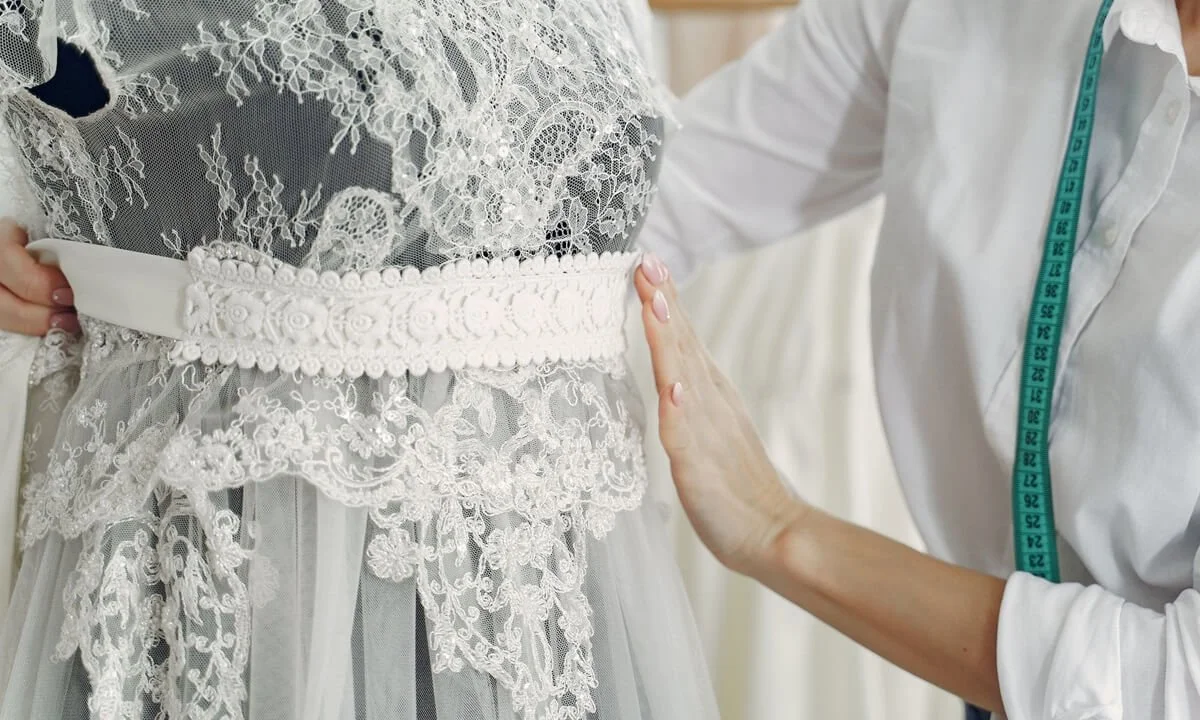
Lace adds texture and visual detail to bridal gowns. It may cover an entire dress or appear selectively on the sleeves, bodice, back, neckline, or train.
Because lace is often openwork, designers commonly use it over a supportive base or lining.
Chantilly Lace
Chantilly lace typically has delicate floral patterns and a fine, lightweight appearance. It works well when you want an intricate, soft finish rather than heavy texture.
Its delicacy makes careful handling and thoughtful placement important.
Alençon Lace
Alençon lace is known for prominent motifs often outlined with corded detail. It can give a bridal gown a more defined decorative pattern.
Designers may position the motifs around the neckline, waist, or train to create a deliberate effect.
Guipure Lace
Guipure is generally denser, with connected motifs rather than a fine supporting net. It can create a bold decorative surface for selected bridal designs.
Its structure and weight should be considered before using it across a closely fitted gown.
How Should Lace Patterns Be Matched?
In custom construction, lace motifs should be planned around major seams and design features.
A motif interrupted awkwardly at the center front may look less polished than one deliberately positioned across the bodice.
Before approving your lace, ask how the pattern will be placed around the neckline, waist, sleeves, and closure.
For further examples, read Estelle Bridal's lace wedding dress guide.
Satin Wedding Dress Fabric: Smooth Finish and Elegant Structure
Satin is prized for its smooth face and graceful light reflection. Depending on the fiber, weight, and construction, it can produce a fluid gown or a more structured silhouette.
A softly draped satin works beautifully for elegant, understated designs, while a heavier satin can support fuller skirts or formal architectural details.
What Is the Difference Between Silk Satin and Polyester Satin?
Silk satin uses silk fibers in a satin weave. Polyester satin uses synthetic fibers. Both can look beautiful, but their drape, feel, care requirements, and price can differ.
It is best to compare actual samples rather than assuming the more expensive option is automatically right for every design.
Is Satin Suitable for a Custom Ball Gown?
Yes. A suitable structured satin can create elegant folds and a full skirt. However, the final volume may also depend on petticoats, lining, and internal support.
If you prefer a lightweight dress, discuss the total weight of the complete construction before choosing a heavy satin.
Does Satin Show Wrinkles or Seams?
Some smooth satin surfaces make creases, seam tension, and fabric impressions more noticeable.
This makes professional fitting and careful undergarment selection especially valuable.
Tulle Wedding Dress Fabric: Airy Volume and Layered Design
Tulle is a lightweight netting used in veils, overlays, and bridal skirts. It can create the appearance of softness and volume, especially when layered.
A single layer may be quite sheer, while multiple layers can change color depth and the fullness of the skirt.
How Many Layers of Tulle Does a Wedding Dress Need?
There is no fixed number. It depends on the fabric's stiffness, the intended silhouette, the lining, and the amount of volume desired.
Too many layers can create unwanted weight or bulk. Too few may not produce the skirt shape shown in the design sketch.
What Is the Difference Between Soft and Stiff Tulle?
Soft tulle drapes more gently and can create a romantic appearance. Stiffer tulle can hold volume more effectively, particularly in fuller skirts.
During the design consultation, ask to see a layered sample rather than judging only a single piece of netting.
Does Tulle Snag Easily?
Fine netting can catch on jewelry, rough surfaces, and embellishments.
When planning a gown with a long tulle skirt, consider venue flooring and how the hem and train will be managed throughout the day.
Chiffon Wedding Dress Fabric: Soft Movement for Romantic Gowns
Chiffon is a lightweight, sheer fabric that creates graceful movement. It is commonly used for flowing skirts, overlays, sleeves, and softer bridal designs.
Because chiffon is often translucent, the lining color and construction can strongly affect its finished appearance.
Is Chiffon Good for Summer Weddings?
Chiffon can be an attractive option for warm-weather weddings, particularly when the gown has a comfortable lining and does not contain unnecessary layers.
However, the fiber composition, number of layers, and bodice construction influence comfort just as much as the fabric name.
Can You Use Chiffon for a Structured Gown?
Chiffon is usually chosen for its softness rather than its ability to hold a rigid shape.
It can still be combined with an internal foundation or more structured material when the design calls for a fitted bodice and flowing skirt.
How Does Chiffon Photograph?
Chiffon can produce beautiful motion in walking photographs, particularly when the skirt has enough volume to move freely.
Ask to see the material in daylight and indoor lighting because the lining may change how the shade appears.
Organza Wedding Dress Fabric: Lightweight Appearance With Crisp Structure
Organza is a sheer fabric with a crisp hand feel. Unlike chiffon, which generally falls into soft folds, organza can support more defined shapes and layers.
It is often used in structured skirts, sleeves, ruffles, overlays, and architectural bridal details.
What Is the Difference Between Chiffon and Organza?
Chiffon generally drapes softly, while organza retains more shape.
If your design includes sculpted volume or prominent ruffles, organza may be worth considering. If you prefer flowing movement, chiffon could be more appropriate.
Can Organza Create a Full Skirt Without Heavy Fabric?
Organza can create visible volume without the same substantial weight as some heavy structured fabrics.
However, multiple layers and supporting materials still add to the total gown weight.
Ask how the skirt will be constructed and whether the final design requires an additional petticoat or foundation.
Crepe Wedding Dress Fabric: Clean Lines and Contemporary Elegance
Crepe is a broad textile category known for its characteristic surface texture. Bridal crepes range from lightweight and fluid to firmer, more structured options.
The understated finish makes crepe appealing for minimalist gowns and designs that emphasize tailoring rather than heavy decoration.
Is Crepe Good for Fitted Wedding Dresses?
Yes, when the weight and construction suit the silhouette.
Some stretch crepes can provide flexibility in fitted skirts. Others have little stretch and require a different fitting approach.
A fitted crepe gown should be evaluated while standing, walking, sitting, and turning.
Does Crepe Show Underwear Lines?
Some smooth, closely fitted crepe dresses can reveal waistband and seam impressions.
The solution may involve adjusting the dress lining, changing the undergarment, or improving the gown's fit.
Read Estelle Bridal's bridal undergarments guide for detailed fit considerations.
How Does Crepe Compare With Satin?
Many crepes have a more matte appearance, while satin typically reflects more light.
Crepe may emphasize clean construction, whereas satin can highlight folds and surface shine.
For a deeper comparison of crepe styles, visit the crepe wedding dress guide.
Mikado Wedding Dress Fabric: Structure for Custom Bridal Silhouettes
Mikado is a substantial fabric known for its smooth texture, subtle sheen, and ability to hold structured shapes.
It can be made in different fiber blends, so weight and performance vary from one material to another.
Why Do Designers Use Mikado for A-Line and Ball Gowns?
Mikado can support defined pleats, sculpted waistlines, and fuller skirt shapes.
This makes it suitable for brides seeking a formal, architectural appearance.
Is Mikado Too Heavy for a Summer Wedding?
Not automatically, but heavier mikado designs may feel warm during outdoor celebrations.
For Houston summer ceremonies, consider the venue's air conditioning, the number of lining layers, and how much of the wedding takes place outdoors.
If you love the structured look but want a lighter gown, ask whether a different fabric or reduced skirt volume can achieve a similar effect.
Georgette, Silk Charmeuse, and Other Specialty Bridal Materials
Custom design is not limited to the most familiar wedding dress fabrics.
Specialty materials can help achieve particular draping, texture, or finishing effects.
Georgette
Georgette is typically lightweight with a slightly grainy surface. It drapes softly and can suit relaxed, flowing gowns.
Depending on the specific fabric, it may require lining for comfortable coverage.
Silk Charmeuse
Silk charmeuse offers fluid movement and a lustrous surface. It is often associated with softly draped, bias-cut bridal designs.
Because the fabric responds strongly to fit and movement, accurate construction and seam placement are important.
Embroidered and Beaded Fabrics
Embroidered tulle, decorated lace, sequined materials, and beaded panels introduce detail, but can also add weight and affect alteration possibilities.
Discuss motif placement and seam positioning before selecting a heavily embellished material.
Can You Bring Your Own Fabric for a Custom Gown?
Some custom projects incorporate family, heirloom, or culturally significant materials. Estelle Bridal has discussed such custom construction in its published guides.
The fabric must still be assessed for condition, quantity, strength, and suitability for the intended design.
Do not cut an heirloom textile until a designer has evaluated the construction plan and explained the risks.
How Do You Match Wedding Dress Fabric to Your Silhouette?
Silhouette and material should be considered together because they influence each other.
A full ball gown needs different structural planning from a soft column gown, even if both are made in a similar color.
| Silhouette | Materials to Explore | Design Consideration |
|---|---|---|
| Ball gown | Mikado, satin, tulle, organza | Volume and inner skirt support |
| A-line | Chiffon, satin, lace, crepe | Balance between drape and structure |
| Mermaid | Crepe, lace, structured satin | Comfort through hips and thighs |
| Sheath | Crepe, charmeuse, georgette | Clean fit and fluid movement |
| Fit-and-flare | Crepe, lace, satin, tulle | Transition from fitted skirt to flare |
What Fabric Makes a Wedding Dress Look More Structured?
Substantial mikado, selected satins, and carefully supported organza can hold defined shapes.
However, an inner foundation may also be necessary for the intended result.
Which Fabric Creates a Softer Silhouette?
Chiffon, georgette, and selected silk fabrics are often chosen for softer movement.
The finished effect depends on lining, the cut of the skirt, and the construction of the bodice.
If you are still comparing dress shapes, Estelle Bridal's wedding dress silhouettes guide
How Do Lining, Interfacing, and Internal Structure Affect a Custom Gown?
The outer fabric may be the first thing a bride notices, but the internal construction often determines how securely the dress fits and how comfortably it can be worn.
Custom gown materials may include lining, interfacing, boning, cups, netting, waist stays, and carefully positioned support panels.
Why Is Lining Important?
Lining can improve coverage, protect skin from rough embellishments, and change how the outer fabric falls.
It also affects opacity and color. Ivory lace over a nude lining creates a different look from the same lace over white.
What Does Interfacing Do?
Interfacing adds support to selected areas such as waistbands, necklines, or closures.
The type and placement should suit the outer material. Excessively stiff support can change the intended drape.
Why Does Boning Matter?
Boning can help a fitted bodice maintain its shape and distribute support.
It is particularly useful in some strapless or structured gowns, but not every wedding dress requires the same construction.
Can the Lining Make a Dress Too Warm?
Yes. Heavy or poorly chosen lining can increase warmth even when the outer fabric looks lightweight.
When planning a Houston wedding, ask about the complete layer system rather than judging only the fabric swatch.
How Can You Combine Different Fabrics in a Custom Wedding Dress?
Combining materials can create a gown that balances structure, comfort, and visual detail.
However, the fabrics must work together physically, not just look beautiful beside one another.
Lace Over a Structured Base
Lace can provide romantic detail while the base fabric and internal foundation supply support.
This arrangement can be useful when a delicate lace alone would not provide enough structure for a fitted bodice.
Structured Bodice With a Chiffon Skirt
A supportive bodice can be paired with soft chiffon for movement and a romantic appearance.
The transition at the waist should be planned carefully so the skirt hangs naturally.
Mikado With Organza Details
Mikado can hold the main silhouette while organza provides lighter decorative volume around sleeves, bows, or overskirts.
The combined weight should be checked before finalizing the design.
Crepe With Lace Accents
Crepe provides a clean foundation, while selected lace panels can introduce detail to sleeves, backs, or necklines.
Motif placement and stretch compatibility matter when lace is applied to a fitted crepe gown.
Custom design tip: Ask to see combinations of the actual outer fabric, lining, and embellishments together. Individual swatches can look beautiful yet behave differently when layered.
Which Wedding Dress Fabrics Work Best for Different Venues and Seasons?
Your wedding location influences how a material feels, moves, and performs throughout the day.
Houston's warm and humid conditions make fabric weight and ventilation particularly relevant for outdoor ceremonies.
Summer Garden Wedding
Chiffon, lightweight crepe, and selected lace designs can be practical choices when constructed with appropriate linings.
Consider how the skirt moves across grass or pathways and whether the gown contains multiple heavy layers.
Indoor Ballroom Wedding
Formal ballrooms may accommodate structured satin, mikado, heavily embellished lace, or full layered skirts.
Air-conditioned interiors give brides more flexibility, but comfort should still be assessed during dancing and movement.
Beach or Destination Wedding
Softly draped fabrics such as chiffon or georgette may provide a relaxed appearance.
Consider wind, sand, humidity, and the practicality of transporting and steaming the gown.
Fall and Winter Wedding
Heavier satin, mikado, and selected textured materials may suit cooler conditions, particularly indoors.
However, the temperature of the actual venue matters more than the calendar season alone.
How Should You Choose for Houston Heat?
Ask how many layers the gown contains and whether the material offers comfortable movement.
Try sitting and walking in the sample rather than relying only on the feel of a single fabric swatch.
How Does Fabric Affect White, Ivory, Champagne, and Colored Bridal Gowns?
Fabric construction and finish can change how the same color appears.
A matte crepe may make ivory look soft and understated. Glossy satin may reflect light and emphasize highlights. Sheer tulle layered over a colored lining can create depth.
Should You Compare Colors in Daylight?
Yes. Natural light can reveal undertones that may be less obvious in a showroom.
Compare swatches beside your skin and against any other fabrics used in the gown.
Can Different White Fabrics Look Mismatched?
They can. A bright white lace applied over a warmer ivory lining may create noticeable contrast.
That contrast can be intentional, but it should be approved during the design process rather than discovered after construction.
For nontraditional shades, see Estelle Bridal's colored wedding dresses guide.
How Do Beading, Embroidery, and Appliqués Change Fabric Selection?
Decorative details can make a custom wedding gown distinctive, but they also affect weight, movement, construction, and care.
Does Heavy Beading Affect Comfort?
It can. Dense beading adds weight and may create pressure if the gown is not properly supported.
Discuss where the embellishments will be concentrated and how the weight will be distributed.
Can Embroidery Be Added to Every Fabric?
Not always without additional support.
Fine, lightweight materials may require stabilization or a separate embroidered overlay. The technique should be chosen according to fabric strength and the design.
How Do You Prevent Appliqués From Looking Random?
Plan placement around seams, waistlines, necklines, and major skirt features.
A custom gown benefits from an intentional arrangement rather than adding decoration without considering the overall silhouette.
How Do You Test Fabric Samples Before Approving a Custom Wedding Dress?
Fabric testing is one of the most useful parts of a custom bridal consultation.
A small swatch cannot show every detail of a finished gown, but it can reveal important differences in texture, shine, opacity, weight, and movement.
What Should You Check First?
- Touch: Does the material feel comfortable against your skin?
- Drape: Does it fall softly or hold a defined shape?
- Opacity: Can you see through it without lining?
- Weight: Will several layers make the gown heavy?
- Stretch: Does the design require flexibility?
- Color: How does the shade look in daylight and indoor lighting?
- Texture: Will seams and embellishments appear smooth?
- Care: Does the material require specialist cleaning or pressing?
Should You Compare a Large Fabric Sample?
When possible, a larger sample or sample gown can help you see how the material behaves over curves and across a skirt.
Small swatches are useful, but cannot fully demonstrate movement, volume, or the finished construction.
Can You Bring Inspiration Photos?
Yes. Photos of gowns, fabric textures, lace patterns, and preferred silhouettes can help communicate your vision.
However, the exact fabric in a photograph may be difficult to identify. A designer can use the visual reference to explain practical alternatives.
How Do You Know a Fabric Will Hold the Design?
Ask whether the planned gown requires interfacing, lining, boning, netting, or another internal support system.
If the design relies on a very specific structural effect, the fabric should be tested for that purpose before production begins.
How Do Wedding Dress Materials Affect Custom Gown Cost and Production Time?
Fabric choice can influence the overall cost of a custom gown, but it is only one part of the calculation.
Construction complexity, pattern matching, hand embroidery, lining, additional support, alterations, and fabric availability can all affect the project.
Is Silk Always More Expensive?
Pure silk can be a premium material, but the total gown cost depends on the particular textile, quantity, design, and labor involved.
A heavily embellished synthetic fabric may also require substantial investment due to detailed construction.
Can Lace Increase the Cost?
Yes, especially when the design requires hand placement of motifs, extensive matching, or careful work around seams.
Ask how much lace is required and whether the pattern introduces additional construction time.
Does Changing Fabric Delay Production?
It can, particularly after cutting or construction has begun.
A replacement fabric may drape differently, require a new lining, or need structural changes.
Finalize material choices as early as practical and confirm the order schedule with the boutique.
What Should You Confirm Before Paying?
- Exact fabric and fiber composition when available.
- Outer fabric, lining and supporting materials.
- Color and finish.
- Custom embellishments and motif placement.
- Expected construction and fitting schedule.
- What is included in the quoted price.
- Fabric substitution and change policies.
For a more detailed explanation of the design process, read Estelle Bridal's custom wedding dress design process guide.
How Do You Keep a Custom Wedding Gown Comfortable and Protect Its Fabrics?
Choosing a fabric is only the first step. Your gown should remain comfortable during photographs, the ceremony, dinner, and dancing.
Does the Dress Need Special Undergarments?
Some structured bodices provide their own support. Other designs may require selected undergarments to achieve the desired fit.
Test the complete gown with your intended underlayers before the final fitting.
Can a Train Damage Delicate Fabric?
A long train can collect dust and may snag on rough surfaces.
The best approach depends on fabric, train length and the bustle design. Delicate lace and tulle require particular care during outdoor movement.
Estelle Bridal's wedding dress train length guide
How Should You Clean a Custom Wedding Dress?
Follow the gown's care instructions and choose a professional familiar with bridal fabrics and embellishments.
A dress containing silk, beading, delicate lace or mixed materials may need specialist treatment.
Do not apply household cleaning products or stain-repellent sprays without appropriate professional guidance.
How Should You Store the Gown After the Wedding?
Long-term storage depends on gown weight, fabric and construction. Some dresses are better supported in archival boxes rather than hanging indefinitely.
For detailed care instructions, read Estelle Bridal's wedding dress preservation guide.
Common Mistakes When Choosing Custom Wedding Dress Fabrics
- Choosing only by appearance: The fabric must also work with the design.
- Assuming satin is always silk: Satin describes a weave, not a fiber.
- Ignoring lining: Lining changes comfort, opacity and color.
- Overlooking total weight: Multiple layers and embellishments add weight.
- Selecting a delicate textile for heavy structure: Additional support may be required.
- Ignoring venue conditions: Heat, humidity and flooring affect practicality.
- Skipping natural-light comparisons: Fabric colors may appear different indoors.
- Changing materials after production begins: This can affect cost and timing.
- Forgetting movement tests: A beautiful sample should also feel comfortable.
- Overlooking cleaning requirements: Some textiles need specialist care.
Working through these considerations during the design stage can prevent avoidable surprises later.
Custom Wedding Dress Fabric Selection Checklist
- Decide which gown silhouette you prefer.
- Identify the wedding venue and expected conditions.
- Choose whether you want flowing or structured fabric.
- Compare several real fabric samples.
- Check the exact fiber composition when available.
- Evaluate fabric weight and softness.
- Compare opacity with the proposed lining.
- Review the color in daylight and indoor lighting.
- Discuss seam and lace motif placement.
- Confirm embellishment weight and attachment methods.
- Ask about bodice support and internal structure.
- Test a sample gown for comfort and movement.
- Review alterations and fitting requirements.
- Discuss the train and bustle design.
- Confirm care instructions and preservation needs.
- Approve the materials, budget and production timeline.
Brides should also have accurate measurements ready before ordering a custom gown. Estelle Bridal's bridal measurement guide
Choosing Custom Wedding Dress Fabrics at Estelle Bridal in Houston
Estelle Bridal offers custom wedding gowns and personalized bridal consultations in Houston, Texas.
Fabric selection is an important part of bringing a custom design to life. The ideal material should complement the bride's preferred silhouette, measurements, ceremony setting and personal style.
Custom design: Discuss your gown vision, preferred fabrics, and the details that matter most to you.
Silhouette planning: Consider whether the dress needs a softly flowing skirt or firm architectural structure.
Fabric and lining: Review material combinations, color, coverage and comfort.
Embellishments: Explore how lace, embroidery and decorative details can be incorporated into the design.
Fittings: Discuss measurements, movement and any adjustments required by the construction.
Houston location: Estelle Bridal is located at 2428 S Hwy 6, Houston, TX 77077.
Available materials, custom construction possibilities, prices and production timelines should be confirmed with the boutique before ordering.
If you are beginning a custom gown project, learn more about the complete custom wedding gown process.
Frequently Asked Questions About Custom Wedding Dress Fabrics
What Are the Best Fabrics for Custom Wedding Dresses?
Lace, satin, chiffon, tulle, organza, crepe, mikado, georgette and silk are common options. The best material depends on the gown silhouette, desired structure, venue, comfort and budget.
What Fabric Is Best for a Structured Wedding Dress?
Mikado, selected substantial satins and supported organza can create defined shapes. Internal construction may also be necessary to hold the intended silhouette.
What Fabric Is Best for a Flowing Wedding Gown?
Chiffon, georgette and selected silk fabrics can provide soft movement. The finished drape depends on the cut, lining and overall design.
Is Satin the Same as Silk?
No. Satin is a weave, while silk is a natural fiber. Satin may be made from silk, polyester or other fibers, and its characteristics vary accordingly.
Is Crepe Good for a Summer Wedding Dress?
Some lightweight crepes can be comfortable for warm-weather weddings. Fabric weight, fiber, lining and gown construction matter more than the fabric name alone.
Which Wedding Dress Fabric Is Most Comfortable?
Comfort depends on softness, weight, breathability, lining, stretch and fit. Try on a sample gown and test walking and sitting before choosing.
Can You Combine Lace With Satin or Crepe?
Yes. Lace can be applied over a suitable base or used as a decorative accent. The materials must be compatible with the intended construction and silhouette.
Does Tulle Make a Wedding Dress Heavy?
Individual tulle layers are often lightweight, but a full skirt with many layers, lining and supporting materials can add weight.
Can You Bring Your Own Fabric for a Custom Wedding Dress?
Some custom projects can incorporate client-supplied or heirloom fabric. The designer must assess its condition, quantity, strength and suitability before approving the design.
How Do You Choose Fabrics at a Custom Bridal Appointment?
Compare real samples for drape, weight, opacity, color, comfort and structure. Discuss lining, embellishments, venue conditions and the expected construction before making a final choice.
Final Thoughts: Choosing Wedding Dress Fabrics and Custom Materials
Choosing custom wedding dress fabrics is about finding the right combination of beauty, structure and comfort for your individual design.
Lace adds decorative texture, satin offers a smooth finish, tulle brings airy volume, chiffon and georgette create movement, organza supports crisp shapes, crepe delivers understated elegance, and mikado can provide architectural structure.
For a custom gown, the materials underneath are equally important. Lining, boning, interfacing and thoughtful construction help the outer fabric achieve the intended result.
Before approving your fabric, compare real samples, consider your venue and weather, review the entire layer system, and discuss movement and maintenance with your designer.
With careful planning, you can create a wedding gown that reflects your style and feels comfortable throughout your celebration.
Explore Custom Wedding Gown Fabrics at Estelle Bridal
Planning a custom wedding dress in Houston? Discuss your preferred fabrics, silhouettes, colors and design details with the Estelle Bridal team.
Book a Bridal AppointmentAbout this guide: This article provides general bridal fabric and custom construction guidance. Fabric composition, availability, care instructions, design feasibility, pricing and production timelines should be confirmed with the boutique and qualified garment professionals before ordering.