
Brides searching for latter day saints modest wedding dresses are usually asking two questions at once: what does the temple actually require, and which of the things people say online are real rules rather than common practice. Those are very different lists, and most guides blur them together.
This guide separates them. It covers the published guidance on colour, sleeves, neckline, lining and trains, what the temple itself provides if a dress falls short, how to convert a non modest gown, what the recent garment changes do and do not affect, and how to plan the timeline.
Quick Summary
A temple ready wedding dress is white, modest in cut, with long or three quarter sleeves, a high neckline, no sheer unlined fabric, and a train that can be removed or bustled. Anything beyond that is usually local practice rather than published guidance, and your own temple is the authority to confirm with.
- White, modest, sleeved and lined are the published expectations, with trains removable or bustled.
- Long or three quarter sleeves are both acceptable under the current General Handbook wording.
- Sheer fabric must be lined, which catches more gowns than any other requirement.
- Temples keep dickeys, sleeve extensions and packet dresses for brides whose gowns fall short.
- Many gowns can be converted, and sleeve build ups and neckline raises are routine alterations.
- Confirm with your own temple, because that is the only answer that counts for your day.
| Requirement | Expectation | Source status |
|---|---|---|
| Colour | White | Published Church guidance |
| Sleeves | Long or three quarter | General Handbook wording |
| Neckline | High, not low cut | Published Church guidance |
| Sheer fabric | Must be lined | Published Church guidance |
| Train | Removable or able to be bustled | Published Church guidance |
| Ornamentation | Not elaborately ornamented | Published Church guidance |
| Exact shade of white | Varies in practice | Common practice, confirm locally |
| Pre approval of the dress | Often suggested | Common practice, not a published rule |
Need a gown built with coverage designed in rather than added later? Book a private appointment and bring your requirements with you.
What does temple ready mean for a wedding dress?
Temple ready describes a wedding dress that meets the standards for wear inside a temple: white, modest in cut, with sleeves and a high neckline, no unlined sheer fabric, and a train that can be removed or bustled. It is a specific standard rather than a general sense of modesty.
The published guidance also asks that dresses not be elaborately ornamented, and it tells brides to contact their own temple for further instruction. That last point is the most important sentence in the whole guidance, because practice varies.
Who decides whether a dress is acceptable?
Your temple. Published guidance sets the standard, and the temple applies it. Brides sometimes hear conflicting accounts online because they are comparing experiences at different temples, and both accounts can be accurate.
Does this apply to the reception too?
No. The standard applies to the ceremony inside the temple. What you wear to a reception afterwards is entirely your choice, which is why many brides plan two looks or one convertible dress.
Is a modest wedding dress the same as a temple ready one?
Not quite. Every temple ready dress is modest, but not every modest dress is temple ready. A modest gown might have cap sleeves, an ivory tone or an unlined illusion panel, and any one of those can fall short of the temple standard while still being genuinely modest.
This is the distinction that causes most of the confusion when brides shop. A boutique describing a gown as modest is making a style statement, not a compliance one.
| Feature | Modest dress | Temple ready dress |
|---|---|---|
| Colour | Any, including ivory and blush | White |
| Sleeves | Any coverage, including cap | Long or three quarter |
| Neckline | Generally higher | High, not low cut |
| Sheer panels | Often unlined | Must be lined |
| Train | Any | Removable or bustled |
| Ornamentation | Any | Not elaborately ornamented |
What should you tell a consultant?
Say temple ready rather than modest, and list the specific requirements. A consultant who has not worked with this before will understand a concrete list immediately, where modest alone leaves too much room for interpretation.
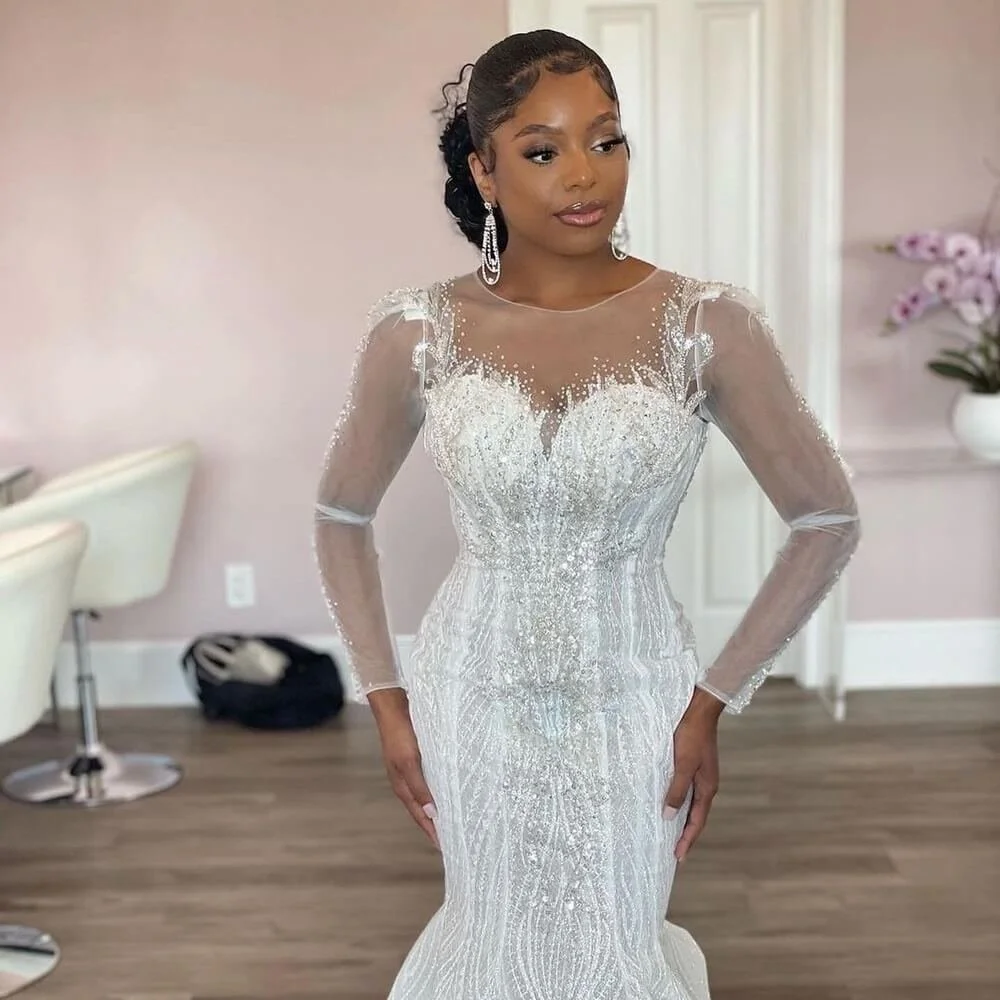
Which requirements are published, and which are common practice?
The published guidance covers colour, neckline, sleeves, lining of sheer fabric, trains and ornamentation, and it directs brides to contact their temple. A good deal of what circulates online beyond that is accumulated community practice, which may well be useful but is not the same thing.
Knowing which is which saves a lot of anxiety. You can follow common practice because it is sensible without believing you have broken a rule if you do not.
- Published: white, high neckline, sleeves, sheer fabric lined, train removable or bustled, not elaborately ornamented.
- Published: contact your temple for further instruction.
- Common practice: comparing the fabric against printer paper to judge whiteness.
- Common practice: taking the dress in for approval weeks in advance.
- Common practice: preferring built in lace sleeves over a separate bolero.
- Common practice: the two dress pattern, one for the sealing and one for the reception.
Why do brides get different answers?
Because they are asking different people at different temples, and because a lot of advice online is a confident retelling of someone else's experience. Going to the source for your own temple settles it in one phone call.
Does the dress have to be pure white?
The published guidance says the dress should be white. In practice brides report some variation in how shades close to white are treated, which is exactly the kind of question your temple can answer directly and nobody online can answer for you.
Ivory, champagne and blush are the shades that raise the question. If you love one of them, ask before you buy rather than after, because colour is not something alterations can fix.
How do you judge the shade?
Look at the fabric in daylight rather than under shop lighting, which flatters almost everything. Many brides compare a swatch against a sheet of white paper as a rough check. That is a community practice rather than a published test, but it is a useful sanity check.
What about white on white embroidery?
Generally fine, provided the gown is not elaborately ornamented overall. Subtle tonal lace and light beading sit comfortably within the guidance. Heavy allover crystal work is the area where the ornamentation wording becomes relevant.
What sleeve and neckline coverage is expected?
Long or three quarter sleeves are both acceptable under the current General Handbook wording, and the neckline should be high rather than low cut. Those two features define the silhouette more than anything else, and they are the first things to check on any gown.
Sleeve length should be judged with your arms raised, not down at your sides. A sleeve that covers when still can ride up considerably when you lift your arms, which you will do repeatedly through the day.
| Feature | Works | Needs changing |
|---|---|---|
| Sleeve length | Long, three quarter | Cap, short, sleeveless |
| Sleeve fabric | Crepe, lined lace, lined illusion | Unlined sheer mesh alone |
| Neckline | Jewel, bateau, high stand collar | Sweetheart, deep V, strapless |
| Back | Closed, buttoned, lined illusion | Open or low back |
| Shoulder | Covered | Off shoulder, cold shoulder |
Can lace sleeves count as coverage?
Usually, when the lace is dense enough or lined. A heavily patterned lace sleeve reads as covered, while a very open mesh with scattered appliqué may not. This is a good question for your temple if you are unsure, because it sits at the edge of the written guidance.
Is a bolero or jacket acceptable?
Brides report different experiences, and built in sleeves are generally the safer route for the ceremony itself. A bolero is an excellent option for other parts of the day, and some brides use one specifically so the gown reads differently at the reception.
Why does fabric opacity matter more than brides expect?
Sheer fabric must be lined, and this requirement catches more gowns than any other. Illusion panels, unlined skirts and fine tulle all look more opaque in a fitting room than they are, and photography makes the difference obvious.
Test it before you buy. Stand in front of a bright window and have someone photograph you, then take a flash photograph in a dim room. Those two images tell you more than any amount of looking in a mirror.
- Check illusion panels at the neck and back, which are designed to be semi sheer.
- Check the skirt with light behind it, not just in front.
- Take one flash photograph in a dim room, which is the real test.
- Ask whether lining can be added, because it usually can.
- Confirm the lining colour matches, so it does not shift the gown's shade.
Does adding lining change the look?
Rarely by much. A light crepe or fine mesh lining behind a sheer panel keeps the design intact while solving the coverage question. Raise it at the first fitting so it is part of the agreed scope rather than a late addition.
Can you make a non modest gown temple ready?
Often yes. Sleeve build ups, neckline raises, panel lining and back extensions are all established alterations, and a skilled seamstress does them regularly. What decides feasibility is the gown's construction rather than how far it currently is from the standard.
The gowns that convert badly are strapless, allover beaded, open backed ones, because every change touches structure, beading and support at the same time.
| Change | Typical approach | Difficulty |
|---|---|---|
| Adding sleeves | Lace or lined illusion set into the armhole | Routine on a plain bodice |
| Raising a neckline | Lined illusion or lace panel added above the bodice | Routine |
| Lining a sheer panel | Light crepe or mesh added behind | Straightforward |
| Closing an open back | Panel added, support rebuilt behind it | Harder, affects fit throughout |
| Converting a strapless bodice | Straps or sleeves added, boning may need moving | Harder |
| Working across allover beading | Beading removed and reapplied by hand | Hardest and slowest |
| Making a train bustle | Standard bustle points added | Routine |
How much time should you add for conversion work?
Plan for noticeably more than standard alterations, and more fittings. Sleeve and neckline work changes how the whole bodice sits, so each stage needs checking before the next one starts. Our alterations guide covers how that sequence runs.
Is it better to start modest or convert?
Starting with a gown designed for coverage usually gives a better result, because the proportions were drawn that way. Converting works well when you love a specific gown, and less well when you are trying to rescue a gown that is wrong in several ways at once.
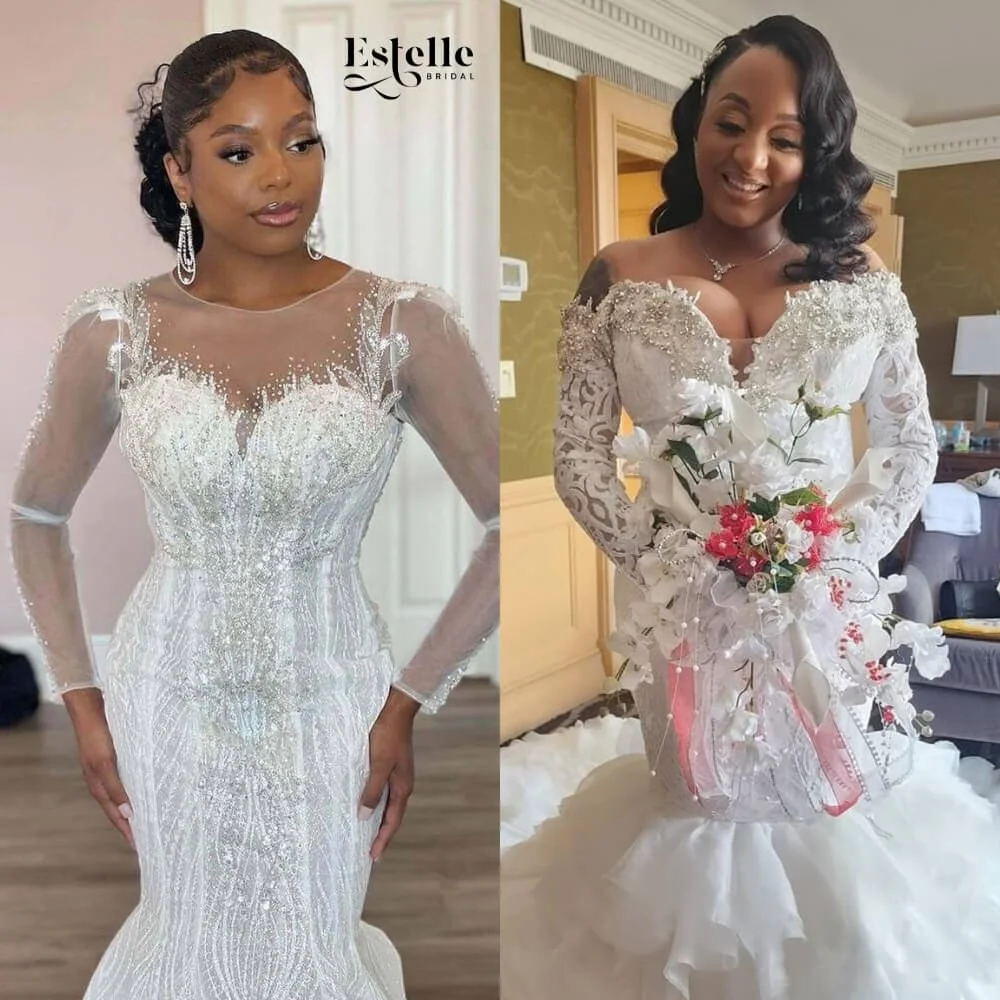
What does the temple provide if a dress falls short?
Temples keep items on hand for brides whose dresses do not fully meet the standard, including dickeys and fabric inserts for necklines, sleeve extensions, and packet dresses available to borrow. This is a routine provision rather than an awkward exception.
Knowing this takes a great deal of pressure off the decision. It is not ideal to rely on it, but it means a last minute problem is solvable rather than catastrophic.
Should you rely on it?
No, plan properly instead. Borrowed inserts rarely match your fabric exactly and will show in photographs. Treat it as a safety net rather than a plan, and solve coverage in the gown itself where you can.
Who should you ask?
Contact your own temple directly. The published guidance tells brides to do exactly that, and the staff answer this question regularly. One short call removes every uncertainty this guide cannot resolve for you.
Should you wear one dress or two for the sealing and reception?
Many brides wear one dress for the sealing and change for the reception, and many wear one dress throughout. Neither is more correct. The practical question is whether you want the reception look to differ, and whether your budget and timeline allow two gowns.
A middle route is one gown designed to change. A removable overskirt, detachable sleeves or a bolero that comes off can make a single dress read as two looks across the day.
| If this is true | Consider | Why |
|---|---|---|
| You want a different reception look | Two dresses | Full freedom on the second, no coverage constraints |
| Budget or time is tight | One dress | One set of alterations and one fitting schedule |
| You want both without two gowns | Convertible dress | Detachable pieces change the look substantially |
| The reception follows immediately | One or convertible | Changing takes time you may not have |
| You love a non modest gown | Two dresses | Wear it at the reception without converting it |
Should you tell your seamstress the plan?
At the first fitting, yes. Detachable pieces have to be planned into the construction rather than retrofitted, and a seamstress who knows about both events will build the gown differently from the start.
How early should you start shopping?
Start nine to twelve months out if the gown needs conversion work, and six to nine if you are buying something already designed for coverage. Our measuring guide is worth reading before a first appointment.
Sleeve and neckline work adds fittings as well as weeks, which is the part brides underestimate most.
| Months before | What to do |
|---|---|
| 10 to 12 | Contact your temple to confirm expectations, then start shopping |
| 8 to 10 | Choose the gown, confirm any conversion work is feasible before ordering |
| 4 to 6 | Gown arrives, first fitting, full scope agreed in writing |
| 2 to 3 | Second fitting, sleeves and neckline checked with arms raised |
| 1 | Final fitting, opacity checked under flash, bustle taught and filmed |
| 2 weeks | Press and steam, confirm anything the temple asked you to check |
What about the recent garment changes?
New garment styles announced in late 2024 and rolled out through 2025 changed what works under everyday and reception clothing for many members. They did not change the published standard for dress worn inside the temple. Treat those as separate questions, and confirm anything specific with your own temple.
Why Houston Brides Choose Estelle Bridal
Estelle Bridal builds gowns rather than only selling them, which matters when coverage is a requirement rather than a preference. Sleeves, linings and raised necklines are construction decisions here, not afterthoughts.
- Custom construction so coverage is designed in from the first sketch.
- Honest advice on what is feasible, whether you choose a gown from our collection or a custom design.
- Opacity and lining checks done under photography conditions rather than shop lighting.
- Private appointments, convenient for brides planning around the Houston Texas Temple.
See our wedding gowns and full collection, or contact the studio to talk through your requirements.
Frequently asked questions
What does temple ready mean for a wedding dress?
A temple ready wedding dress is white, modest in cut, with long or three quarter sleeves, a high neckline, sheer fabric lined, and a train that can be removed or bustled. Published guidance also asks that dresses not be elaborately ornamented.
Does a temple wedding dress have to be white?
The published guidance says white. Brides report some variation in how shades close to white are treated in practice, so if you are considering ivory or champagne, ask your own temple before buying rather than after.
Do the sleeves have to be long?
Long or three quarter sleeves are both acceptable under the current General Handbook wording. Check sleeve length with your arms raised rather than down, because a sleeve can ride up considerably when you lift your arms.
Does sheer fabric need to be lined?
Yes. Sheer fabric must be lined, and this requirement catches more gowns than any other because illusion panels and unlined skirts look more opaque in a fitting room than they do in photographs.
Can a non modest gown be made temple ready?
Often yes. Sleeve build ups, neckline raises, panel lining and back extensions are established alterations. Strapless, open backed and allover beaded gowns are the hardest cases because every change touches structure and beading at once.
More questions from Houston brides
What does the temple provide if your dress does not meet the standard?
Temples keep dickeys and fabric inserts for necklines, sleeve extensions, and packet dresses available to borrow. It is a routine provision, though borrowed pieces rarely match your fabric exactly, so it is better treated as a safety net than a plan.
Is a modest wedding dress the same as a temple ready one?
No. Every temple ready dress is modest, but a modest dress may have cap sleeves, an ivory tone or an unlined illusion panel, any of which falls short of the temple standard. Say temple ready to a consultant rather than modest.
Can you wear a bolero or jacket over a sleeveless gown?
Brides report different experiences, and built in sleeves are generally the safer route for the ceremony itself. A bolero works very well for other parts of the day, and some brides use one to change the look at the reception.
Do LDS brides wear two dresses?
Many do, wearing one for the sealing and changing for the reception, while many wear one throughout. A single gown with a removable overskirt or detachable sleeves is a middle route that gives two looks without two gowns.
How early should you start shopping for a temple wedding dress?
Nine to twelve months out if conversion work is needed, and six to nine if you are buying a gown already designed for coverage. Sleeve and neckline work adds fittings as well as weeks, which is the part most brides underestimate.
For related reading, our guides to defining your coverage in a modest gown, long sleeve wedding dresses and church wedding dresses all cover the coverage side in more detail.
About the Author
Flo A. is the founder and lead designer of Estelle Bridal in Houston, Texas. Since 2016 she has designed and fitted gowns for hundreds of Houston brides, with particular experience in custom construction, lace and embellished work, and gowns built around fabric that brides bring to her themselves.
To talk through your garment, your cloth and your ceremony plan, book a private appointment at 2428 S Hwy 6, Houston, TX 77077, or call (281) 208-7805.