
A traditional Nigerian wedding dress is not one outfit but a set of looks, one for each event of the celebration, and the fabric, color and silhouette of each look carry real meaning for the bride and her family.
Nigerian wedding celebrations in Houston typically involve two or three events with distinct dress codes: the traditional engagement ceremony (introduction), the white wedding (church or registry ceremony), and the reception. Aso-Oke is the defining fabric of Yoruba traditional ceremonies, worn as the iro (wrapper), buba (blouse), and gele (headwrap) in a coordinated color. The white wedding uses a Western bridal gown, typically formal, full-coverage, and white or ivory. The reception owanbe look is often the most glamorous: bold color, statement headwrap, and traditional fabric in a dramatic silhouette. Estelle Bridal in Houston designs custom Nigerian wedding gowns and fusion bridal attire made to measure, including fusion designs that bring Nigerian fabric into a Western silhouette.
Most Nigerian weddings in Houston include a traditional engagement, a white wedding at a church or registry, and a reception, and each one has its own dress code, fabric tradition and visual language. Knowing what each event asks of the bride is the first step in planning. This guide walks through Yoruba, Igbo, Hausa and Edo bridal attire, fusion gowns, color, timing, what guests and bridesmaids wear, and how a consultation works.
At Estelle Bridal, a Black-owned, woman-owned Houston boutique since 2016, custom gowns are made to measure, so your white wedding gown, reception look or a fusion of Nigerian textiles with a Western bridal silhouette can be planned at your appointment. For the full custom gown process, see our custom gown design guide.
3 events
Traditional, white wedding, and reception owanbe, each has a distinct dress code
Aso-Oke
The defining fabric of Yoruba traditional ceremony, iro, buba, and gele in coordinated color
Custom fusion
Estelle Bridal designs Nigerian-Western hybrid gowns from individual measurements
Key Observations
A traditional Nigerian wedding dress is chosen event by event. Yoruba brides wear Aso-Oke iro, buba, gele and ipele at the traditional engagement, Igbo brides wear George wrapper with coral beads, and Hausa brides wear richly embroidered, covered looks. A white or ivory gown follows for the church or registry wedding, then a bold owanbe look for the reception.
- Each event has its own dress code. The traditional engagement, the white wedding and the reception each call for a different outfit.
- Fabric carries the meaning. Aso-Oke, George and embroidered northern fabrics signal heritage, and families often choose the color together.
- The white wedding gown follows church rules. Many Nigerian church ceremonies expect sleeves, a modest neckline and a full-length skirt.
- Fusion gowns blend both traditions. Aso-Oke or George works best when it is built into the bodice, skirt or trim at the pattern stage.
- Several looks need an early start. Plan about 12 to 14 months ahead so each outfit has its own design, fabric and fitting time.
| Event | What the bride usually wears | Typical fabric | Planning tip |
|---|---|---|---|
| Traditional engagement (Yoruba) | Iro, buba, gele and ipele | Aso-Oke | Families often choose the color |
| Traditional engagement (Igbo) | Wrapper and blouse with coral beads | George | Coral beads are often family heirlooms |
| Traditional engagement (Hausa) | Covered, richly embroidered outfit with headwear | Embroidered fabric | Plan full sleeve and neckline coverage |
| White wedding | White or ivory gown with church coverage | Satin, crepe or lace | Confirm your church rules first |
| Reception (owanbe) | Second traditional look, fusion gown or bold modern gown | Aso-Oke, George, lace or beading | Choose a look you can dance in |
What Does a Nigerian Bride Wear at Each Wedding Event?
What Does the Bride Wear to the Traditional Engagement?
The traditional engagement ceremony, often called the introduction, the traditional wedding, or the engagement, is the culturally defining event of a Nigerian wedding. It is the ceremony where the groom's family formally presents gifts to the bride's family, where the traditional marriage rites are performed according to the couple's ethnic tradition, and where the bride typically wears her most culturally significant outfit of the entire celebration. For Yoruba traditional ceremonies, the bride wears Aso-Oke in a coordinated color chosen either by the families or by the couple, typically in a rich tone: deep blue, emerald green, burgundy, gold, or coral. The Aso-Oke is styled as the iro (a wrapped skirt), the buba (a loose blouse), and the gele (a dramatic headwrap). The gele is often the most visually impactful element of the entire traditional ceremony look, built to impressive height and architectural complexity by a professional gele stylist. For Igbo traditional ceremonies, the bride typically wears George wrapper, a richly embroidered and embellished fabric in warm tones, in a structured wrapper-and-blouse combination. For Hausa ceremonies, the bridal attire reflects northern Nigerian textile traditions in rich embroidery and covered silhouettes.
What Does the Bride Wear to the White Wedding?
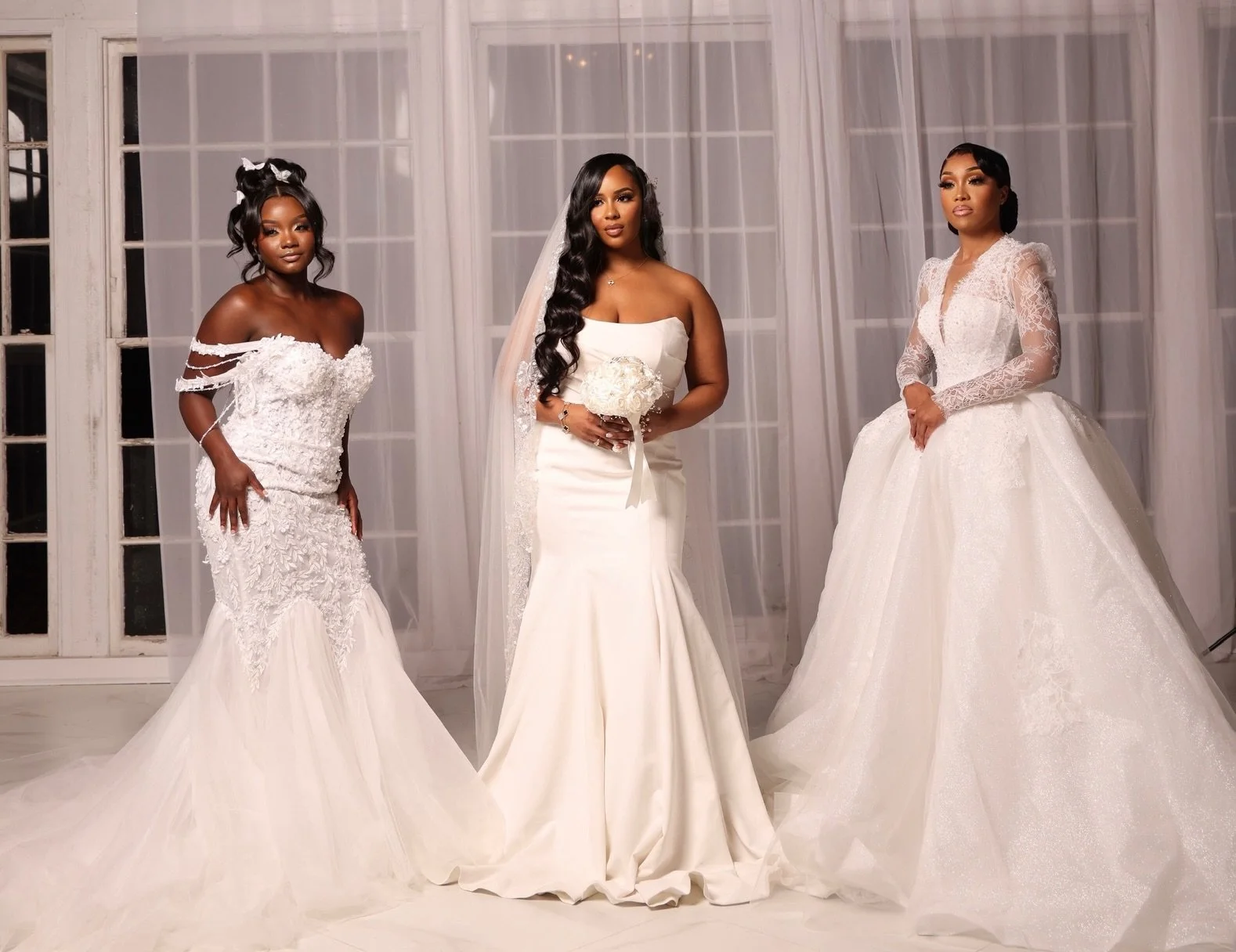
The white wedding is the Western-format ceremony, typically a church service, a registry wedding, or a venue ceremony conducted in the Western tradition. The bride wears a Western bridal gown: white or ivory, formal, typically with full coverage for the church setting, and traditional in silhouette. The white wedding gown for a Nigerian bride in Houston is often specifically chosen to meet the coverage requirements of the church denomination, since Baptist, Catholic, Pentecostal and RCCG congregations each have their own expectations regarding sleeve coverage, neckline modesty, and train length. At Estelle Bridal, the white wedding gown for Nigerian brides is designed with the church's specific requirements and the bride's personal aesthetic working together rather than in tension. Custom sleeves, higher necklines, modest back coverage, and full-length skirts can all be incorporated into a beautiful, formally appropriate white wedding gown that fully meets the ceremony's requirements while reflecting the bride's vision.
Which Silhouette Suits a Nigerian White Wedding Gown?
A ball gown, an A-line or a fit and flare suits most Nigerian white weddings, because each one works with sleeves and a modest neckline. A ball gown wedding dress fills a large church aisle, while a mermaid wedding dress shows the figure but needs a slit or a bustle for a long reception. For the coverage rules most churches ask about, see our church wedding dress guide.
What Is the Reception Owanbe Look?
The reception is the owanbe, the most glamorous and most celebratory event of the Nigerian wedding. The reception look is where Nigerian brides in Houston have the most creative freedom and where the most visually spectacular looks of the entire celebration typically appear. The reception outfit may be a second traditional look in a different color or fabric from the introduction, a fashion-forward fusion of Nigerian textiles with Western bridal silhouettes, or a completely modern gown in a bold color with traditional headwrap accessories. Owanbe fashion in Houston is a sophisticated, competitive, and deeply creative cultural expression, and the bride's reception look is central to it. At Estelle Bridal, reception looks for Nigerian brides are designed with the same care and customization as the white wedding gown, often incorporating Aso-Oke, kente, or other cultural textiles into modern silhouettes that the bride would not find in any standard bridal catalog.
What Are the Nigerian Wedding Dress Traditions by Ethnic Group?
What Do Yoruba Brides Wear?
Yoruba traditional ceremony bridal attire is built around Aso-Oke, a hand-woven fabric made specifically for ceremonial occasions, available in every color imaginable, and typically produced in three matching pieces that coordinate across the iro, buba, and gele. The color selection for a Yoruba traditional ceremony is a significant family decision: the families may choose a single color that all guests from a specific side will wear (making the bride's attire a heightened version of the coordinated color), or the couple may choose an entirely distinct color that sets the bride apart from all guests. The bride's Aso-Oke is typically the finest quality available, often with additional embroidery, beading, or machine embellishment on the buba and iro that elevates it above the guest versions of the same fabric. The gele for the bride is built significantly larger and more architecturally complex than guest geles, requiring a professional gele stylist and often taking 30 to 60 minutes to construct. At Estelle Bridal, Aso-Oke fabric can be incorporated into custom fusion designs that combine the traditional fabric with modern bridal construction techniques. For the complete guide to our Black-owned boutique's cultural design expertise, see our Estelle Bridal story guide.
What Do Igbo Brides Wear?
Igbo traditional bridal attire centers on George fabric, a richly embroidered cotton or silk fabric that comes in vibrant colors and elaborate embellishment, worn as a wrapper-and-blouse combination. The Igbo bride's George wrapper is typically heavily embellished with beadwork, embroidery, or applique in a coordinating or contrasting color, and the wrapper is styled in specific ways that vary by family tradition. Igbo brides also wear elaborate coral bead jewelry, necklaces, bracelets, and crowns, that carries cultural and often spiritual significance within the Igbo wedding tradition. The coral beads are often family heirlooms passed down through generations and are among the most meaningful material elements of the Igbo traditional ceremony. Many Igbo brides also change outfits during the wine carrying ceremony (igba nkwu), starting in a lighter wrapper and bead look and finishing in a fuller George outfit. The Igbo reception look is typically a more elaborate version of the traditional attire in a different color or a fusion of traditional George fabric with a modern silhouette.
What Do Hausa Brides Wear?
Hausa traditional bridal attire reflects northern Nigerian textile traditions and Islamic dress practices, typically featuring richly embroidered fabrics in warm jewel tones, covered silhouettes with full sleeve and neckline coverage, and elegant headwear. The Hausa bride's traditional look is among the most formally conservative of the three major Nigerian ethnic traditions, prioritizing full coverage and rich embroidery as the primary design expressions. For Houston's Muslim Nigerian brides, the white wedding gown (when the ceremony is a nikah rather than a church ceremony) is designed specifically for the Islamic dress requirements, full arm coverage, high neckline, and modest construction, within a beautiful and formally appropriate bridal silhouette.
What Do Edo Brides Wear?
Edo brides from Benin are known for coral beads worn as a beaded cap or crown, layered necklaces and beaded accents worn over a wrapper. The coral work is usually the focal point, so the fabric underneath is often a rich, solid color that lets the beads stand out. A custom fusion gown can echo this with a neckline shaped to sit under layered beads.
What Does the Groom Wear to Match the Bride?
The groom usually wears his own traditional outfit in the same fabric or color as the bride. A Yoruba groom often wears agbada with a fila cap, an Igbo groom often wears an isiagu top with a red cap, and a Hausa groom often wears a flowing babban riga with a cap. Bring a swatch of his fabric to your consultation so the bridal look and the groom's look read as a pair.
What Is a Nigerian and Western Fusion Wedding Dress?
A Nigerian and Western fusion wedding dress is a gown that incorporates traditional Nigerian textiles, construction techniques, or design elements into a Western bridal silhouette. This is one of the most specific and most technically demanding categories in custom bridal design because it requires genuine knowledge of both design traditions and how they interact at the construction level. A fusion gown that is simply a Western silhouette with a swatch of Aso-Oke sewn onto the bodice reads as an afterthought. A fusion gown where the Aso-Oke is integrated into the construction at the pattern stage, where the traditional fabric's weight and behavior are accounted for in the silhouette choice, and where the resulting look is both structurally sound and visually cohesive reads as exactly what it is: a designed garment that honors both traditions simultaneously.
How Does an Aso-Oke Bodice With a Western Skirt Work?
One of the most popular Nigerian-Western fusion configurations is an Aso-Oke bodice paired with a Western full skirt, typically in a complementary shade of tulle or chiffon that allows the Aso-Oke's color and texture to remain the primary visual element. The Aso-Oke bodice carries the cultural weight and the hand-woven artisanal quality of the traditional fabric while the Western skirt provides the formal bridal scale appropriate for a church ceremony or a formal reception venue. For Nigerian brides who want a single gown that works for both the white wedding ceremony and a modern reception without a full outfit change, this configuration provides the cultural integration that makes both halves of the celebration feel coherent with a single garment.
Can Kente or George Fabric Trim a Western Gown?
For Ghanaian-Nigerian couples, Nigerian-Ghanaian heritage brides, or Nigerian brides who want to incorporate kente fabric as a cultural textile accent on an otherwise Western gown, the kente-trimmed silhouette creates a visually striking and culturally rich result that photographs extraordinarily well. Kente's distinctive geometric pattern and jewel-tone color in narrow bands at the hem, the sleeves, or the back of a white or ivory gown creates a specific visual effect of cultural pride and artisanal beauty that standard bridal embellishment cannot replicate. At Estelle Bridal, fabric incorporation of kente, Aso-Oke, Ghanaian wax print, or other traditional West African textiles into custom Western bridal silhouettes is a standard design conversation rather than a special request. For the complete silhouettes guide that informs the Western half of fusion design, see our silhouettes guide.
Can a Whole Gown Be Made in Nigerian Fabric?
Some Nigerian brides prefer a gown that is entirely in traditional fabric, Aso-Oke, George, or another Nigerian textile, but constructed in a Western silhouette: a fitted A-line, a structured ball gown, or a flowing column rather than the traditional wrapper-and-blouse construction. This approach creates a look that is fully traditional in fabric and color but formally appropriate for the scale and setting of a large venue reception or a church ceremony where the wrapper construction of a traditional iro might read as informal relative to the setting's scale. For Nigerian brides who want to honor their heritage without the traditional silhouette's styling constraints, this fully cultural fabric in a Western construction is the most complete integration available.
What Colors Do Nigerian Brides Wear?
Color plays a fundamentally different role in Nigerian wedding celebrations than in Western bridal traditions where white and ivory dominate. In Nigerian traditional ceremonies, color is the primary visual expression of cultural identity, family affiliation, and celebratory joy. Deep jewel tones, rich earth tones, and bold saturated colors are the most common and most celebrated choices for Aso-Oke and traditional fabric. No color is off-limits in a traditional ceremony context, and the selection is typically driven by family tradition, personal preference, and the symbolic associations of specific colors within the family's cultural practice.
Who Chooses the Traditional Ceremony Color?
For the traditional engagement ceremony, the color of the Aso-Oke or traditional fabric is one of the most significant decisions in the entire celebration and is often made by the families rather than by the couple alone. The bride's color is typically the defining coordinating color for the entire ceremony: family members from both sides wear variations or the same color, and the overall visual impression of the celebration is shaped by this color choice more than by any other single element. Estelle Bridal consults on traditional ceremony color selection with awareness of the cultural associations that specific colors carry in different family backgrounds and regions of origin. For the complete guide to wedding dress colors and shade selection, see our wedding dress colors guide.
Which White Shade Suits a Nigerian White Wedding Gown?
For the white wedding gown, the shade selection follows both the conventional Western bridal color principles and the bride's specific complexion. At Estelle Bridal, you can compare shades in person at your appointment. For deep complexions, champagne, warm ivory, and rich cream typically create the most luminous and photographically beautiful results at Houston's indoor church and formal reception venues. Optical white on a very deep complexion can create a high-contrast result that reads as stark in photographs rather than luminous. For the complete shade and complexion guide, see our white vs ivory guide.
How Many Dresses Does a Nigerian Bride Wear?
Many Nigerian brides wear three or more looks: a traditional outfit for the engagement, a white gown for the church or registry ceremony, and one or two reception looks. Some couples hold the traditional engagement and the white wedding on different days, which spreads the outfit changes out and gives each look its own moment.
What Does a Nigerian Bride Wear for a Registry or Civil Wedding?
For a registry or civil wedding, many Nigerian brides choose a simpler white or ivory dress, such as a midi, a tailored sheath or a short lace dress, and keep the full gown for the church. A civil wedding dress should still feel bridal in photos, so polished fabric and a neat fit matter more than length. Our guide to courthouse wedding dresses covers civil ceremony styles in more depth.
Why Do Nigerian Brides Change for the Reception?
Nigerian brides change for the reception because the owanbe is a long, energetic party with dancing, spraying and a grand entrance. A second dress for the reception is usually lighter, shorter or more fitted than the church gown, often in a bold color or a fusion of Aso-Oke and lace. See our reception dress for the bride guide for styles that dance well.
When Should You Start Planning a Nigerian Wedding Dress?
A Nigerian wedding in Houston with two or three events and multiple outfit changes requires a longer and more carefully managed planning timeline than a single-event Western wedding. The traditional attire, the white wedding gown, and the reception owanbe look each require their own design consultation, fabric sourcing, construction, and fitting schedule. Starting 12 to 14 months before the celebration provides the most comfortable margin for all three looks to be completed without time pressure on any of them.
How Early Should You Source Aso-Oke?
Aso-Oke for a traditional ceremony is typically sourced from a Nigerian fabric supplier, either in Houston's Nigerian fabric shops, from family in Nigeria, or through a trusted supplier with access to specific weave patterns and color qualities. The sourcing and selection of Aso-Oke for the bride's traditional look should begin 6 to 8 months before the traditional ceremony to allow time for any custom orders of specific weave patterns that may not be available in local stock. For custom fusion designs that incorporate Aso-Oke into a Western construction, plan to have the fabric in hand by the time the design is approved, since a custom gown takes about 6 to 8 months to make. For the complete wedding dress timeline guide, see our when to buy a wedding dress guide.
How Long Does a Custom White Wedding Gown Take?
A custom white wedding gown at Estelle Bridal takes about 6 to 8 months, and rush orders are available from about 2 months when the date is close. For Nigerian brides whose white wedding gown needs changes such as a higher neckline, full sleeves or other coverage for a church's dress requirements, raise these early in the design consultation, because they affect the gown's construction from the pattern stage. Starting the white wedding gown consultation 10 to 12 months before the white wedding date provides the most comfortable custom timeline. For the complete alterations guide including how fittings work for complex custom constructions, see our alterations guide.
What Happens at a Nigerian Wedding Dress Consultation?
What Is Covered at the First Consultation?
Private appointments at Estelle Bridal last about an hour, with up to three guests. A Nigerian bridal consultation begins differently from a standard bridal consultation because the design brief is more complex. Rather than a single gown for a single event, the conversation covers the full celebration structure: how many events will the couple be celebrating, what are the ethnic traditions of each family that will shape the dress codes, what are the coverage requirements of the church denomination for the white wedding, and what is the vision for the reception owanbe look. This initial conversation establishes the full scope of the design work before fabric choices begin, and it is the foundation that makes the rest of the process organized and achievable. Brides who come to the first consultation with a clear description of their celebration structure, their family's ethnic traditions, and their coverage requirements for the church ceremony produce the most productive initial consultation outcomes. For the complete first appointment preparation guide, see our first appointment guide.
Should You Bring Fabric Samples and Family to the Appointment?
For consultations involving Aso-Oke or other traditional fabric incorporation, bringing fabric samples to the first consultation makes the design conversation significantly more productive. The specific quality, weave density, and color of the Aso-Oke affects the construction approach, a very stiff, heavily woven Aso-Oke behaves differently in a structured bodice than a softer weave, and seeing the specific fabric in person allows the design team to make recommendations specific to that material's properties. If the Aso-Oke has not yet been sourced at the time of the first consultation, bringing photographs of comparable fabric gives the design team a working reference for the construction discussion. Family involvement in the color and fabric selection for the traditional attire is entirely welcome and expected, at Estelle Bridal, family input on cultural design decisions is a natural and valued part of the process rather than a complication of it.
Can Out-of-Town Nigerian Brides Work With Estelle Bridal?
Yes. Estelle Bridal offers virtual consultations and nationwide shipping, so brides planning a Nigerian wedding outside Houston can start the design conversation from home. Our virtual bridal consultation guide explains how a remote appointment works and what to have ready.
What Should Guests and the Bridal Party Wear to a Nigerian Wedding?
Guests at a Nigerian wedding dress in bright, festive, formal clothing, and close family and friends usually wear aso ebi, a fabric the couple chooses for their group. A gele headwrap for women and a fila cap for men complete the traditional look. Guests outside the aso ebi group can wear any rich color except bridal white.
What Is Aso Ebi?
Aso ebi is a coordinated fabric chosen by the couple or their families and worn by relatives and friends to show they belong to the celebration. Each guest buys the fabric and has it sewn into their own style, so the colors match while the silhouettes differ. For style ideas, see our African wedding guest dresses guide.
How Should You Dress for a Nigerian Wedding if You Are Not Nigerian?
Wear a formal, colorful outfit and ask the couple whether there is an aso ebi color you can join. A long dress or a well cut suit in a jewel tone works well at both the traditional ceremony and the reception. Skip white, ivory and anything that could look bridal, and bring comfortable shoes, because the dancing goes on for hours.
What Do Bridesmaids Wear at a Nigerian Wedding?
Bridesmaids at a Nigerian wedding often wear aso ebi for the traditional ceremony and matching Western dresses for the white wedding. The white wedding dresses usually pick up one color from the traditional palette so the two events look connected in photos. Estelle Bridal also carries bridesmaid dresses in Houston that can be coordinated with the bridal look.
Why Nigerian Brides in Houston Choose Estelle Bridal
Every event in one conversation. Bring your fabric swatches, family colors and inspiration, and talk through each look and any fusion ideas for a custom gown at one private appointment. Read more about Estelle Bridal.
Custom fusion gown design from individual measurements. Fusion ideas, church-ready coverage and your fabric choices are planned in the same custom design process, in sizes up to 30. The Evelyn Bridal collection, in sizes 2 to 22, is also available to try on.
Black-owned, woman-owned Houston boutique since 2016. Founded by Flo A., founder and lead designer. Alterations are included with custom gowns. Private appointments, with no booking fee on weekdays. 2428 S Texas 6, Houston TX 77077. (281) 208-7805. Browse the wedding gowns collection or book your appointment.
Book Your Nigerian Wedding Dress Consultation at Estelle Bridal Houston
Custom Nigerian-Western fusion gowns, traditional fabric incorporation, church gown modifications. Alterations included with custom gowns. Private appointments. Houston's Black-owned boutique since 2016.
Book an AppointmentFrequently Asked Questions About Nigerian Wedding Dresses
What does a Nigerian bride typically wear for each event?
For the traditional engagement ceremony, Yoruba brides wear Aso-Oke in coordinated iro, buba, and gele. Igbo brides wear George wrapper in warm tones with coral bead jewelry. Hausa brides wear richly embroidered northern Nigerian fabric. For the white wedding, a Western bridal gown, typically white or ivory, formal, and often modified for church coverage requirements. For the reception owanbe, the most glamorous look of the celebration, often a second traditional outfit in a different color, or a fusion of Nigerian fabric with a modern Western silhouette.
What is Aso-Oke and where can I get it in Houston?
Aso-Oke is a hand-woven fabric made specifically for Nigerian ceremonial occasions, worn by Yoruba brides in coordinated iro (wrapper), buba (blouse), and gele (headwrap) sets. It is available at Nigerian fabric shops in Houston's diverse shopping corridors, through family members with access to Nigerian suppliers, and through specialist online suppliers who ship directly. Estelle Bridal can incorporate Aso-Oke fabric supplied by the bride's family into custom fusion gown designs.
Can I get a custom Nigerian and Western fusion wedding dress in Houston?
Yes. Estelle Bridal at 2428 S Texas 6, Houston TX 77077 designs custom gowns made to measure, and fusion ideas such as an Aso-Oke bodice with a Western skirt or George fabric accents can be discussed at your appointment. Alterations are included with custom gowns. Book at estellebridal.com/book.
What is a traditional Nigerian wedding dress called?
There is no single name, because each ethnic group has its own attire. A Yoruba bride wears iro and buba with a gele and ipele, usually in Aso-Oke. An Igbo bride wears a George wrapper and blouse with coral beads. A Hausa bride wears a covered, richly embroidered outfit with headwear.
How should you dress for a Nigerian wedding as a guest?
Dress in bright, formal clothing and ask the couple whether you can join their aso ebi color. Women often add a gele headwrap and men a fila cap. Avoid white, ivory and anything that could look bridal, and wear shoes you can dance in for several hours.
Do Nigerian brides wear a second dress for the reception?
Yes, most do. The reception, or owanbe, is a long party with dancing, so brides often change into a lighter, shorter or more fitted look, frequently in a bold color or a fusion of Aso-Oke and lace. Some brides change more than once.
What is a Nigerian white wedding dress?
A Nigerian white wedding dress is the Western-style gown worn for the church or registry ceremony. It is usually white or ivory, full length and modest, with sleeves and a higher neckline when the church asks for coverage. Many brides add Nigerian fabric or beading as a cultural accent.
What white wedding dress works best for a Nigerian church ceremony?
Nigerian church ceremonies, whether Baptist, Catholic, Pentecostal or RCCG, often expect full or significant sleeve coverage, modest neckline, and formal skirt length. A custom gown at Estelle Bridal can incorporate any of these coverage requirements from the pattern stage rather than adding coverage as an afterthought to a strapless design. Long sleeves in illusion lace, high necklines, and full coverage backs are all available as integral design elements rather than additions. Your stylist can show you how each coverage option looks in person.
What shade of white wedding dress looks best on deep complexions?
Champagne, warm ivory, and rich cream typically create the most luminous and photographically beautiful results on deep complexions at Houston's indoor church and formal reception venues. Optical white on a very deep complexion can create stark contrast in photographs rather than luminous harmony. Comparing real fabric near your face in natural light is the most reliable way to confirm the shade, and you can do that in person at your Estelle Bridal appointment.
How early should I start planning my Nigerian wedding dress in Houston?
12 to 14 months before the celebration is the most comfortable timeline for a Nigerian wedding with multiple outfit changes. Each look (traditional attire, white wedding gown and reception owanbe) needs its own design, fabric sourcing and fitting schedule. Custom white wedding gowns at Estelle Bridal take about 6 to 8 months. Aso-Oke sourcing for traditional attire should begin 6 to 8 months before the traditional ceremony. Rush orders are available from about 2 months.
Does Estelle Bridal have experience with Nigerian and West African wedding attire?
Yes. Estelle Bridal, founded by Flo A., is a Black-owned, woman-owned Houston boutique that has designed custom gowns since 2016, including church-ready white wedding gowns and fusion designs planned around your celebration. Book a private appointment or a virtual consultation to start.
Ava C
Google Review
"Flo at Estelle Bridal was so accommodating. I wanted a customized dress and she did her BIG ONE. The dress is absolutely beautiful, it's breathtaking. I will look stunning on my wedding day and I am so excited. Her team is also very kind and attentive. I had a great experience at Estelle Bridal."
About the Author
Flo A. is the founder and lead designer of Estelle Bridal in Houston, TX. She leads the boutique team that designs custom gowns made to measure, including Nigerian and Western fusion gowns and church-ready white wedding dresses. Estelle Bridal is a Black-owned, woman-owned bridal boutique in Houston, serving brides since 2016.