
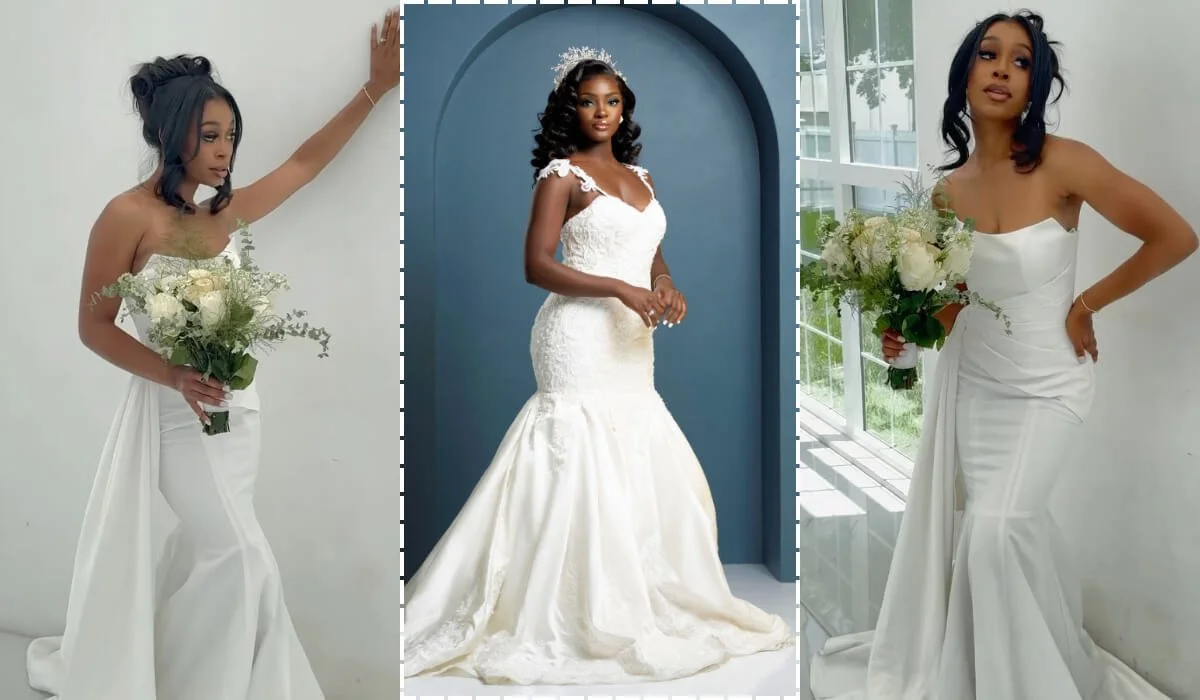
A fit and flare wedding dress is fitted through the bust, waist and hips, then opens into a softer skirt between the hip and mid-thigh. You get the curve of a mermaid with room to walk, sit and dance, which is why so many brides choose a fit and flare dress for a wedding day that runs from the ceremony to the last song.
This guide explains what a fit-and-flare wedding dress is. It compares this style with a mermaid dress. It covers the best fabrics and necklines. It also helps you choose the right fit for your body type and venue. If you are deciding between lace, satin, sleeves, strapless, or off-the-shoulder looks, the tips below will help you narrow it down.
Key Observations
A fit and flare wedding dress hugs the bust, waist and hips and releases into a fuller skirt between the hip and mid-thigh. Because the flare starts higher than on a mermaid, you keep the curve and gain an easy stride. Fabric, flare point and fit decide how comfortable it feels all day.
The flare starts between the hip and mid-thigh. That higher release is what separates a fit and flare from a trumpet or a mermaid.
It flatters many shapes when the flare lands right. Pick a release above the fullest part of your hips or thighs so the skirt opens instead of pulling.
Fabric sets the mood. Lace reads romantic, satin and crepe look sleek, and mikado holds a crisp, structured line.
Plan for fittings. Most fit and flare gowns need the bodice, side seams, hem and a bustle adjusted to your body.
You can try one on in Houston. Estelle Bridal offers the Evelyn Bridal collection in sizes 2 to 22 and custom gowns made to measure up to size 30.
| Feature | What to expect |
|---|---|
| Fitted through | Bust, waist and hips |
| Where the flare starts | Between the hip and mid-thigh |
| Movement | Normal stride, easy to sit and dance |
| Popular fabrics | Lace, satin, stretch crepe and mikado |
| Usual alterations | Bodice, side seams, hem and bustle |
| Often a first try for | Pear, apple and plus size figures, and brides who want curves with comfort |
What Is a Fit and Flare Wedding Dress?
A fit and flare wedding dress is fitted through the bodice, waist and hips, then releases gently into a fuller skirt, usually between the hip and mid-thigh. It shows your shape like a mermaid but leaves room to walk, sit and dance.
A fit-and-flare wedding dress hugs the bust, waist, and hips, then flares out around mid-thigh. The flare is usually softer than a mermaid wedding dress.
Key features of fit and flare wedding dresses:
A defined waist and fitted bodice
A close fit through the hips
A flare that starts higher than a mermaid dress
A skirt that allows easier walking and sitting
Because the flare starts earlier, fit-and-flare wedding dresses are often easier to wear for long weddings. Many brides who want a curve-hugging look without feeling restricted choose this style.
Is a Fit and Flare the Same as a Mermaid Wedding Dress?
No. A fit and flare releases into its skirt between the hip and mid-thigh, while a mermaid stays fitted to the knee and flares at or below it. They can look alike in photos, but a fit and flare lets you take a normal stride, sit easily and dance without lifting the skirt.
Fit and flare: flare starts around mid-thigh, easier movement
Mermaid: stays fitted longer, flare begins closer to the knees
If you are debating between mermaid and fit-and-flare wedding dress styles, consider comfort. To dance freely and walk without tiny steps, a fit-and-flare is usually the more comfortable choice.
Fit and Flare vs Trumpet vs Mermaid: Where Does the Flare Start on Each?
A fit and flare usually releases between the hip and mid-thigh, a trumpet from mid-thigh to just above the knee, and a mermaid at or below the knee. The lower the flare starts, the more the gown hugs your thighs and the shorter your stride.
These labels are not standardized. One gown can be tagged fit and flare in one place and trumpet in another, so judge the gown on your body, not by its tag.
| Silhouette | Fitted through | Where the flare starts | Walking, sitting and dancing |
|---|---|---|---|
| Fit and flare | Bust, waist and hips | Hip to mid-thigh, gentle release | Easiest fitted style: normal stride, easy to sit |
| Trumpet | Bust to upper thigh | Mid-thigh to just above the knee | Natural walk, fine for dancing, snug at the thighs |
| Mermaid | Bust down to the knee | At or below the knee, dramatic flare | Shortest stride: practice stairs, sitting and your first dance |
| A-line (for reference) | Bust and waist only | From the waist, widening gradually | Full freedom of movement |
How can you tell which silhouette you are trying on?
Look at the side of the gown and find where the skirt stops following your body. At or above mid-thigh, it is a fit and flare or soft trumpet; at the knee or lower, it is a mermaid.
The shape of the release matters too. A skirt that opens at mid-thigh but kicks out sharply reads as a mermaid in photos, while a slow release reads as fit and flare. Our guide on how to walk in a mermaid wedding dress shows what a low flare feels like on the day.
What Is the Difference Between an A-Line and a Fit and Flare Wedding Dress?
An A-line is fitted only through the bodice and waist, then widens gradually from the waist to the hem. A fit and flare stays close through the hips before it opens, so it shows more of your shape. Choose an A-line wedding dress for the most freedom and a softer line over the hips, and a fit and flare when you want your waist and hips to show.
Choose A-line if you want to skim the hips, plan a long outdoor day or prefer a fuller skirt from the waist.
Choose fit and flare if you want a defined curve through the hips with a skirt that still lets you dance.
Try both in the same fabric at your appointment, since a side by side view settles the question quickly.
Who Looks Best in a Fit and Flare Wedding Dress?
Fit-and-flare wedding dresses can flatter many body types because they create shape without adding bulk.
This silhouette often works well for:
Brides who want to highlight the waist
Brides who want curves without an oversized skirt
Brides who want a balance between fitted and flowy
If you have fuller hips, choose a fabric that smooths and supports. If you have a straighter figure, fit-and-flare can create definition through structure and seams.
A plus-size fit-and-flare wedding dress can be very flattering. This works best when the bodice is supportive. The flare should start in the right place. Look for built-in structure, comfortable lining, and seams that shape without squeezing.
Which Fitted Silhouette Works Best for Petite, Tall, Plus Size, Pear and Apple Shapes?
Choose a flare that starts above the widest part of your hips or thighs, so the skirt releases instead of pulling. Your height and where you carry your curves then decide whether fit and flare, trumpet or mermaid is the best first try.
| Body shape | Try first | What to look for |
|---|---|---|
| Petite (5 feet 4 inches and under) | Fit and flare or trumpet | A higher flare point, lighter fabric, a shorter train and lengthwise lace or seams |
| Tall | Any; mermaid is easiest to carry | Enough bodice length for the waist seam to land at your waist, and a train in proportion |
| Hourglass | Any of the three | A seam at your natural waist; the flare point becomes a style choice |
| Pear (fuller hips and thighs) | Fit and flare | A release at the hip so the skirt skims your thighs, and neckline detail to balance your shoulders |
| Apple (fuller midsection) | Fit and flare | A V-shaped or slightly dropped waist, ruching or a structured bodice |
| Straight or athletic | Fit and flare or mermaid | Seams, corsetry or ruching that build curves, and a fuller flare at the hem |
| Plus size | Fit and flare | Boning or an inner corset, a stretch lining and vertical seams |
What should plus size brides look for in a fit and flare wedding dress?
Look for built-in structure, a stretch lining and a flare that begins above the fullest part of your thighs. Boning puts the support in the dress, stretch crepe or lining moves with you when you sit, and vertical seams give a seamstress more places to fine-tune the fit.
At Estelle Bridal, Evelyn Bridal collection gowns come in sizes 2 to 22, and custom gowns are made to your measurements up to size 30. Read more in our plus size wedding dress shopping guide.
What Fabrics Work Best for a Fit and Flare Wedding Dress?
The best fabrics for a fit and flare wedding dress hold a smooth line through the hips and still move with you: lace over a supportive lining, satin, mikado or stretch crepe. Because the silhouette is close fitting, weight and stretch shape your comfort as much as the look.
Is a Lace Fit and Flare Wedding Dress a Good Choice?
A lace fit-and-flare wedding dress is romantic and timeless. Fit-and-flare lace wedding dress styles can be fully lace or lace over a smooth base. Lace also works well for sleeves.
Should You Choose a Satin or Mikado Fit and Flare?
A satin fit-and-flare wedding dress option gives a clean, polished look. Satin shows shape clearly, so good tailoring matters. Mikado has more structure and holds its shape well.
Why Choose a Crepe Fit and Flare Wedding Dress?
Crepe is smooth, matte and modern, and stretch crepe moves with you when you sit. If you want a clean, minimalist fit and flare, crepe is a strong option; our crepe wedding dress guide explains the different weights.
Can a Fit and Flare Wedding Dress Have Beading and Sparkle?
A beaded fit-and-flare wedding dress adds glamour without a huge skirt. If you choose heavy beading, check comfort at the arms and waist.
Which Sleeves and Necklines Suit a Fit and Flare Wedding Dress?
Sleeves and necklines can change the whole mood of a fit-and-flare dress.
Should You Choose a Fit and Flare Wedding Dress with Sleeves?
A fit-and-flare wedding dress with sleeves can feel classic and elegant. Sleeves can be lace, sheer, or fitted in crepe or satin. A long-sleeve fit-and-flare wedding dress is popular for fall and winter weddings. Fit-and-flare wedding dress styles with sleeves also work well for church ceremonies or brides who prefer more coverage.
Does a Strapless or Sweetheart Neckline Work on a Fit and Flare?
A strapless fit-and-flare wedding dress creates a clean neckline and highlights the shoulders. A fit-and-flare sweetheart neckline wedding dress adds a romantic shape that suits many body types.
Is an Off-the-Shoulder Fit and Flare Right for You?
An off-the-shoulder fit-and-flare wedding dress feels romantic and modern. Off-the-shoulder fit-and-flare wedding dress styles highlight the collarbone and balance the gown's fitted shape.

Does a Corset Fit and Flare Wedding Dress Work?
Yes. A corset bodice with boning shapes the waist and holds the fitted part of the gown in place, which suits a fit and flare well. Look for a corset that ends at your natural waist or just below it, so the flare still releases at the hip. Our corset wedding dress guide covers the different corset styles.
How Do You Style a Fit and Flare Wedding Dress?
Fit-and-flare silhouettes already create a strong shape, so styling works best when it is balanced.
If your dress has heavy lace or beading, keep jewelry simple
If the neckline is open, a delicate necklace can work
If you have sleeves or a high neck, focus on earrings
Choose a veil length that complements the shape. Fingertip and chapel veils often look great.
Shoes should be comfortable, because fit-and-flare dresses are often easier to walk in, so that you will move more. If your venue is outdoors, a block heel can be a smart choice.
What Shoes Should You Wear With a Fit and Flare Wedding Dress?
Wear a shoe you can stand in for hours, at the exact heel height you will wear on the day, because the hem is cut to that height. A fit and flare skirt shows the front of your shoe as you walk, so a pointed pump, a strappy sandal or a block heel all work.
Lawn or garden aisle: a block heel or wedge so you do not sink.
Long day on your feet: a lower heel with a cushioned insole.
Fittings: bring the same pair to every fitting so the hem stays right.
See more options in our bridal shoes guide.
Which Fit and Flare Style Suits Your Venue and Season?
Fit and flare works for many venue types because it is elegant without being bulky.
Ballroom weddings: satin, beading, and structured bodices look formal
Garden weddings: lace and softer fabrics feel romantic
Beach weddings: lighter fabrics and minimal trains feel practical
Winter weddings: long sleeves and heavier fabrics add comfort
If you want a fit-and-flare wedding dress with long sleeves, consider lining and fabric weight. This will help the dress feel comfortable all day.
Can You Add a Detachable Overskirt to a Fit and Flare?
Yes. A detachable tulle or organza overskirt gives a fit and flare a fuller ceremony look, then comes off for the reception so you can dance in the fitted shape. Browse ideas in our convertible wedding dresses guide.
Can Wedding Guests Wear a Fit and Flare Dress?
Fit and flare is not only for brides. Fit-and-flare wedding dresses are popular among guests because they are flattering and comfortable.
For guests, choose:
A fit and flare dress for a wedding guest in a midi length for daytime
Fit and flare cocktail dresses for weddings and evening receptions
Fit and flare wedding guest dress with sleeves for cooler seasons
A fit-and-flare midi dress for a wedding guest looks polished and easy to wear. Keep colors respectful and avoid bridal whites.
How Should a Fit and Flare Wedding Dress Fit?
A fit and flare wedding dress should feel snug but not tight from bust to hip, with the waist seam at your natural waist and the skirt opening just above the fullest part of your thighs. You should be able to breathe, sit and take a full stride without the fabric pulling.
Helpful tips:
Do a sit test and walk test during fittings
Make sure the flare starts where it flatters your body
Choose supportive underlayers that do not show lines
Bustle the train properly if your dress has one
A well-fitted dress should feel secure without squeezing. You should be able to breathe, sit, and dance comfortably.
What Should You Wear Under a Fit and Flare Wedding Dress?
Wear seamless shapewear, or nothing extra if the bodice has built-in cups and boning. A fit and flare shows every line above the flare, so aim for a smooth surface from bust to hip.
- Bra: many fitted bodices have cups sewn in. If yours does not, ask whether cups can be added before buying a strapless bra.
- Shapewear: pick a seamless style whose edge ends well above or below the flare point, so no band shows where the skirt releases.
- Slip: if the skirt looks flatter than the sample, a soft crinoline slip adds shape and is easier to sit in than a hoop.
- Fittings: bring your wedding-day undergarments and shoes to every fitting, since both change how the hips and hem sit.
What Alterations Does a Fit and Flare Wedding Dress Usually Need?
Most fit and flare gowns need the bodice and side seams adjusted, a hem and a bustle. Because the gown follows your body from bust to hip, even an inch at the waist or thigh shows, so plan for more than one fitting.
- Bodice and waist: taken in or let out so the bust sits flat and the waist seam lands at your natural waist.
- Upper thigh: let out if the skirt feels tight. Even a small release at these seams can change how the skirt feels and falls, as long as the gown has seam allowance there.
- Skirt volume: a seamstress can often remove a tulle or crinoline layer if the flare looks puffier than expected.
- Hem and bustle: the hem is set in your wedding shoes, then the bustle is added.
Changing the silhouette itself, such as turning a fit and flare into a sheath wedding dress, is far harder and depends on the fabric, so choose the flare you love before you order. At Estelle Bridal, alterations are included with custom gowns. Evelyn Bridal collection gowns do not include alterations.
How Do You Bustle a Fit and Flare Wedding Dress?
You bustle a fit and flare wedding dress by lifting the train onto hidden hooks, buttons or ribbon loops that your seamstress adds at a final fitting. An under bustle, also called a French bustle, tucks the train underneath and keeps the line smooth on crepe or satin, while light lace or tulle trains often suit an over bustle.
As a rule of thumb, under bustles suit heavier fabrics and shorter trains, and over bustles suit lightweight fabrics with longer trains. Compare the styles in our guide to wedding dress bustle types.
Wear your wedding shoes to the fitting where the bustle is set.
Ask your seamstress to pin two bustle options, then walk and turn in each.
Have the person who will bustle you on the day practice once at the fitting.
Bustle after the ceremony and formal photos, before the reception starts.
How Do You Try On a Fit and Flare Dress at a Bridal Appointment?
Try it on in your real undergarments and a shoe close to your wedding heel, then test it in motion. A fitted gown can look perfect standing still and feel wrong the moment you walk or sit.
- Ask the consultant to clip the sample to your size. A sample far too big or too small hides where the flare really falls.
- Take ten full strides at your normal pace. If the skirt catches at your knees, the flare starts too low for a long day.
- Sit in a regular chair and check that the waist does not dig in and the hips do not strain.
- Check the side view in the mirror, which shows exactly where the release starts.
- Ask a guest to film you walking, since a still photo does not show how the skirt moves.
At Estelle Bridal, private appointments last about one hour and include up to three guests. Weekday appointments have no booking fee, and weekend appointments carry a booking fee. If you live out of town, start with a virtual bridal consultation. Book your appointment, and read what to expect at your first bridal appointment.
Where Can You Try On a Fit and Flare Wedding Dress in Houston?
You can try on a fit and flare wedding dress at Estelle Bridal, a Black-owned, woman-owned boutique at 2428 S Texas 6 in Houston that has dressed brides since 2016. The Evelyn Bridal collection comes in sizes 2 to 22, and custom fit and flare gowns are made to your measurements up to size 30.
Custom gowns take about 6 to 8 months, with rush available from about 2 months, and alterations are included with custom gowns. Founder and lead designer Flo A. and the team help you narrow fabric, neckline and sleeve options for your body, venue and season. Call (281) 208-7805 or email hello@estellebridal.com with questions.
Fit and Flare Wedding Dress FAQs
Is a trumpet dress the same as a fit and flare?
Not quite. A trumpet stays close through the upper thigh and flares from mid-thigh to just above the knee, while a fit and flare releases higher and more gently. Many stores group them together, so check where the skirt opens on you.
Can petite brides wear a fit and flare wedding dress?
Yes. A fit and flare with a higher flare point and a lighter fabric keeps a petite frame looking long. Skip very heavy skirts and long trains, and plan on a hem alteration.
How do you go to the bathroom in a fit and flare wedding dress?
Most brides step out of the dress with a bridesmaid's help or gather the skirt up from the front. A slip that gathers the skirt up and away from you makes it easier to manage alone. Practice once before the day.
Why does my fit and flare dress feel tight at the thighs?
A fit and flare should only be snug to the hips, so tightness at the thighs usually means the sample is too small or the gown is really a trumpet or mermaid. Try your true size, and ask whether the upper thigh seams can be let out.
How far ahead should you order a custom fit and flare wedding dress?
Custom gowns at Estelle Bridal take about 6 to 8 months, which leaves time for fittings on a fitted silhouette. Rush service is available from about 2 months for shorter timelines. See how the custom design process works.
Is a fit and flare wedding dress comfortable for dancing?
Yes, many brides find this silhouette comfortable. The flare starts higher than on a mermaid dress. This allows more movement at the knees. Comfort still depends on fabric and tailoring. Choose a fabric with good drape or structure, and make sure the hips are not overly tight. A proper bustle also helps you move freely at the reception.
What is the difference between mermaid vs fit and flare wedding dresses?
The main difference is in the way the dress flares. Mermaid styles stay fitted longer and flare closer to the knees, which can feel more restrictive. Fit-and-flare styles flare around mid-thigh, making them easier to walk and sit in. For a similar curve-hugging look with more mobility, fit-and-flare is often the better option.
Can plus-size brides wear fit and flare wedding dresses?
Yes, a plus-size fit-and-flare wedding dress can be exceptionally flattering. The key is a supportive structure in the bodice and smooth fabric that skims rather than clings. Look for strong seaming, comfortable lining, and a flare placement that balances your proportions. Tailoring makes a substantial difference, so allow time for alterations.
Which neckline works best with a fit-and-flare silhouette?
Many necklines work well. Strapless and sweetheart shapes highlight the shoulders, creating a classic bridal look. Off-the-shoulder styles add romance and balance the fitted shape. If you want coverage, a fit-and-flare wedding dress with sleeves can look elegant and timeless. The best neckline is the one that suits your comfort and matches your wedding style.
What fabrics look best for a simple fit and flare wedding dress?
Crepe, satin, and mikado are popular for a simple look. Crepe feels modern and smooth. Satin gives a polished finish but shows shape clearly, so tailoring matters. Mikado holds structure and creates a clean silhouette. If you want subtle texture, lace panels or light beading can add interest without making the dress feel busy.
What is a fit and flare wedding dress?
A fit and flare wedding dress is a gown fitted through the bust, waist and hips that opens into a fuller skirt between the hip and mid-thigh. It shows your shape like a mermaid but is easier to walk, sit and dance in.
Is an A-line or a fit and flare wedding dress better?
Neither is better for everyone. An A-line widens from the waist and skims the hips, while a fit and flare stays fitted through the hips before it opens. Choose A-line for the most freedom and fit and flare to show more of your curves.
What shoes go with a fit and flare wedding dress?
Choose a comfortable shoe at the exact heel height you will wear on the day, since the hem is cut to it. Pumps, strappy sandals and block heels all work, and block heels are easier on grass.
Can you get a fit and flare wedding dress with sleeves?
Yes. Long lace sleeves, sheer sleeves, off the shoulder sleeves and detachable sleeves all pair well with a fit and flare. At Estelle Bridal, sleeves can be designed into a custom gown made to your measurements.
Is a Fit and Flare Wedding Dress Right for You?
Fit-and-flare wedding dresses offer the best of both worlds. They create a flattering, curve-hugging shape while still allowing comfort and movement. Whether you love lace sleeves, satin structure, strapless sweetheart necklines, or an off-the-shoulder look, the right fit and flare wedding dress will feel balanced, elegant, and wearable.
Focus on fabric, flare placement, and tailoring. You will have a silhouette that looks stunning in photos. It will feel comfortable throughout your wedding day.
Google Map Link: https://maps.app.goo.gl/YwZZLnWN1nXALwrC9
Instagram Link: https://www.instagram.com/estellebridal/
Facebook Link: https://www.facebook.com/estellebridal/
Threads Link: https://www.threads.com/@estellebridal/
X / Twitter Link: https://x.com/estellebridal
Pinterest Link: https://www.pinterest.com/estellebridalstore/