
Bridal Shoes: Heel Height, Comfort and Hem Guide
Almost every guide to bridal shoes shows you pictures of shoes. Very few of them tell you the thing that actually matters, which is that the shoe you choose decides the length of your dress.
Your seamstress cannot finish a hem without knowing how high you will stand. Change your mind about heel height two weeks before the wedding and the hem that was perfect is now either dragging or hovering. That is the real reason bridal shoes are a fitting decision long before they are a styling one.
Quick Summary
Choose your bridal shoes before your first fitting, not after, because heel height sets the finished hem. Pick the height you can genuinely stand in for ten hours, match the shoe to the surface you will be walking on, and bring the exact same pair to every single fitting. Everything else, colour, fabric, embellishment, is styling that can be decided later.
- The hem is measured from the shoe, not from the floor. A hem finished over a three inch heel will pool on the ground the moment you switch to a flat, and a hem finished barefoot will sit awkwardly short over any heel at all.
- Your feet will not be the same size at 10pm as they were at 10am. Standing, heat and dancing all cause swelling, which is why shoes that felt fine in a shop in the morning can feel tight by the reception.
- The venue floor matters more than the shoe itself. A stiletto on grass, sand or old stone is a trip hazard, and no amount of comfort padding fixes a heel that sinks.
- Most guests will never see your shoes. Under a full ball gown the shoe is invisible for the whole ceremony, which frees you to prioritise comfort over appearance.
- White is not one colour. Stark white shoes next to an ivory or diamond white gown read as a mismatch in photographs, even when they look fine in the room.
- A second pair for the reception is normal, not indulgent. Many brides wear the heel for the ceremony and photographs, then change into something flat before the dancing starts.
| Heel height | Suits | Watch out for |
|---|---|---|
| Flat to 1 inch | Outdoor ceremonies, grass, sand, long receptions, tall brides | Hem must be finished at this height or it will drag |
| 2 to 2.5 inches | Most brides, most venues, all day wear | Block or wedge shapes stay far steadier than a stiletto |
| 3 to 3.5 inches | Indoor venues, shorter ceremonies, brides used to heels | Standing time during photographs is longer than you expect |
| 4 inches and above | Photographs, short indoor ceremonies, a planned change later | Rarely survives a full day without a second pair ready |
Not sure what height to commit to before your hem is set? Book a private appointment and bring two options with you. We will fit over both.
Why do bridal shoes decide your hem length?
This is the part nobody explains until it is too late. A wedding dress hem is not cut to a fixed measurement. It is finished to you, standing, in the shoes you will wear. The seamstress pins it so the front skims the floor without catching under your toes and the back falls the way the design intends.
Change the shoe and you change the measurement. Drop from a three inch heel to a flat and you have just added three inches of fabric that now sits on the ground in front of you. Go the other way and the hem lifts, exposing your ankles in a way the silhouette was never drawn for.
What happens if you have not chosen shoes yet?
Bring the closest height you own and say so clearly. A good fitter can work to a stated height and leave a small allowance, but that allowance is not infinite. The more precisely you can commit early, the cleaner the finished hem. Our wedding dress alterations guide walks through what each fitting is for and when the hem is locked in.
Does this apply to every silhouette?
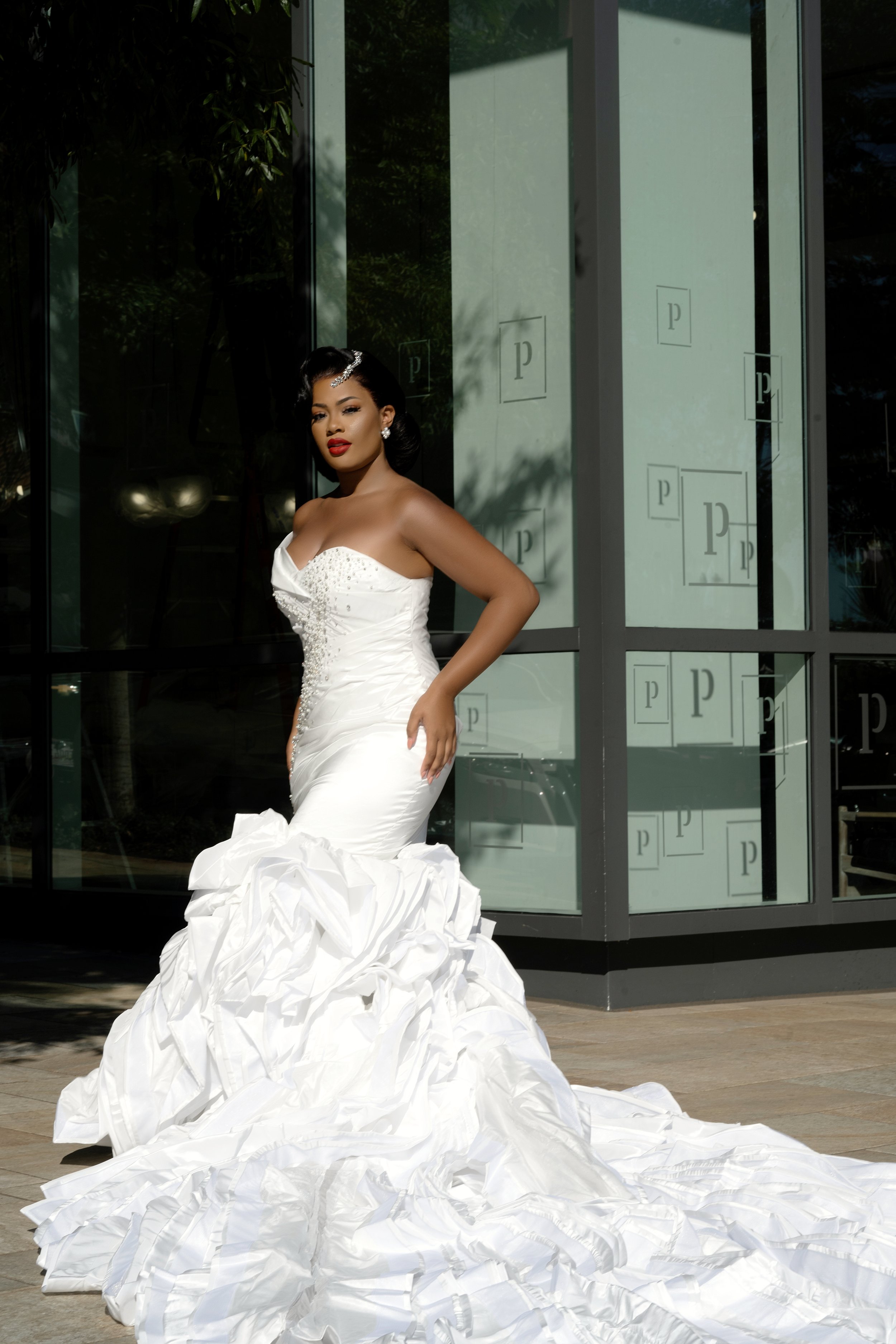
It applies to all of them, but the consequences differ. A mermaid gown shows a hem error immediately because the fabric is close to the leg all the way down. A full skirt hides a small discrepancy better, but a skirt that is too long is the single most common cause of a bride stepping on her own dress on the stairs.
What heel height should you actually choose?
Start from how long you will be upright rather than from how the shoe looks. A church ceremony, a receiving line, a photography session and a first dance add up to far more standing than most brides estimate. Two to two and a half inches is the height that suits the widest range of brides and venues.
Is a block heel really better than a stiletto?
For stability, yes, and the difference is larger than it sounds. A block heel or a wedge spreads your weight across a wider base, which keeps you steady on uneven ground and reduces the ache that builds in the ball of the foot. A stiletto concentrates everything onto a point, which is exactly what sinks into grass.
What if you are tall or petite?
Height changes the brief rather than the rules. Taller brides often prefer a flat or a low heel, partly for proportion alongside a partner and partly because the extra leg length already carries the silhouette. Our guide to wedding dresses for tall women covers how hem and proportion work together. Petite brides often want the lift, and the petite bride guide explains how heel height interacts with where a waistline sits.
Which shoes work on your venue floor?
Walk the venue in your head before you shop. The surface you will cross on the day is the single most practical filter you can apply, and it rules out whole categories of shoe before you have looked at a single photograph.
| Surface | What works | What to avoid |
|---|---|---|
| Grass or garden | Block heel, wedge, flat, or a heel cap | Stiletto, any narrow heel point |
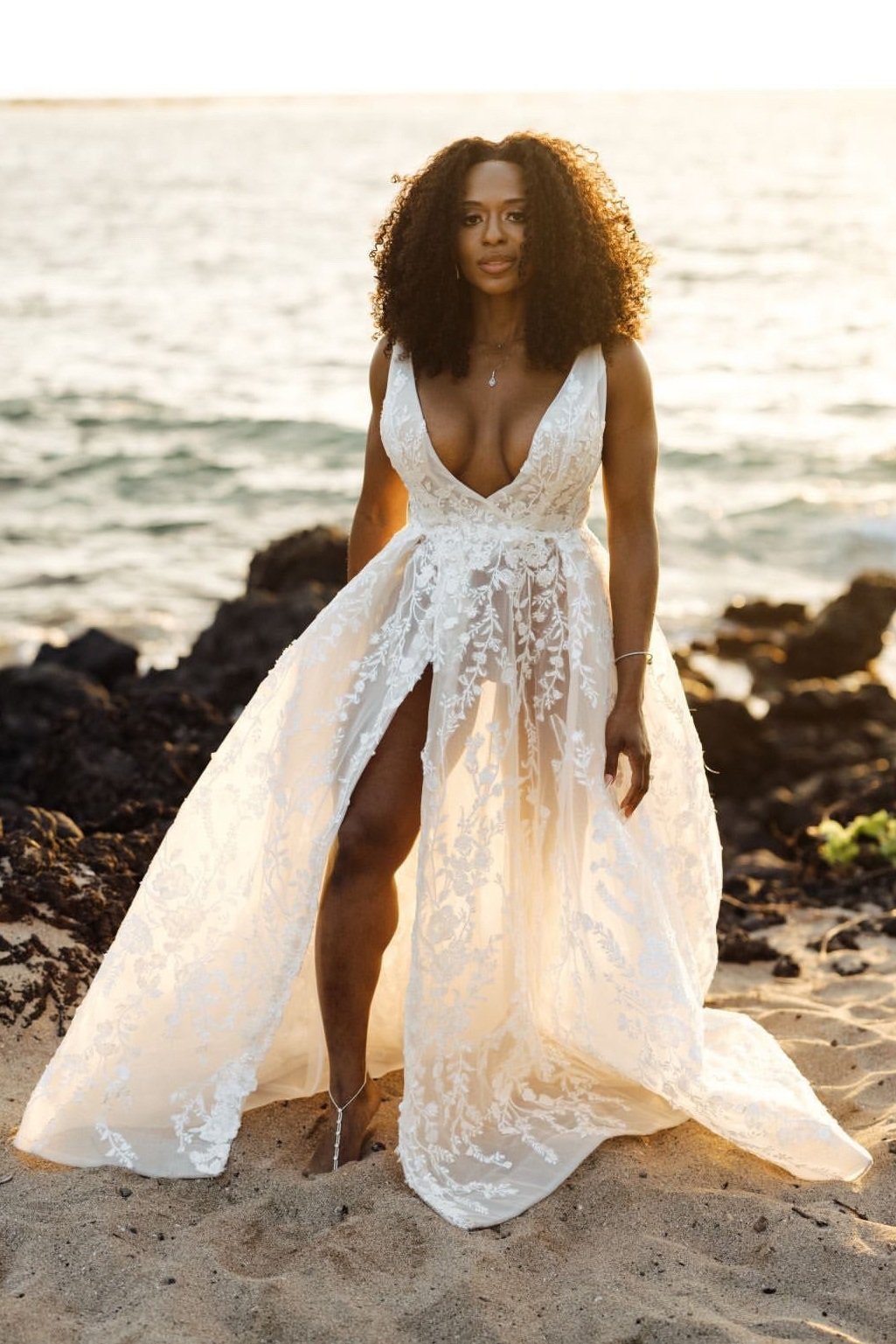
| Sand or beach | Flat sandal, barefoot sandal, or nothing at all | Any heel, and any fabric that stains |
| Cobblestone or old brick | Low block heel with a flexible sole | Thin heels, rigid soles, open toes |
| Polished wood or marble | Any height, with a grip pad added underneath | Smooth new leather soles, which slide |
| Church stone and long aisles | Comfortable low to mid heel | Anything you have not walked in for an hour |
What about an outdoor ceremony and an indoor reception?
Treat them as two problems. Plenty of brides wear a flat or a wedge outside and change into a heel once they are on a solid floor, or the reverse. This is also the cleanest argument for a second pair, covered further down.
How much of your shoe will anyone actually see?
Less than you think, and for some silhouettes almost never. This matters because it tells you how much of your budget and comfort to trade for appearance.
| Silhouette | Shoe visibility | What this means for you |
|---|---|---|
| Ball gown | Almost none, except when seated or lifting the skirt | Choose purely for comfort and height |
| A line | Occasional glimpse when walking | Comfort first, appearance second |
| Mermaid or trumpet | Visible at the front when you move | Appearance matters, and so does a short stride |
| Sheath or column | Clearly visible | Treat the shoe as part of the look |
| Tea length or short | Fully visible at all times | The shoe is a main styling decision |
If you are still deciding on shape, our wedding dress silhouettes guide explains how each one behaves, and the tea length wedding dress guide covers the one length where the shoe is on display from the first photograph onwards.
Does a mermaid gown limit the heel?
It limits your stride more than your heel. A fitted skirt narrows how far you can step, so a high heel on top of a restricted stride makes stairs genuinely difficult. The piece on how to walk in a mermaid wedding dress goes into the movement side in detail.
How do you stay comfortable for a whole wedding day?
Comfort is not a feature you buy. It is the result of fit, preparation and a realistic plan for the hours after the ceremony.
Should you size up?
Often by a half size, and sometimes by width rather than length. Feet swell through a long day on your feet, particularly in a Texas summer. A shoe that is snug in a cool fitting room in the morning can be painful by the evening. Buy for the end of the night, not the start.
How do you break them in?
Wear them indoors, on carpet, for an hour at a time, several times across the weeks before the wedding. This does two things. It softens the areas that rub, and it tells you honestly whether you can last in them. If an hour on carpet is uncomfortable, the shoe will not survive a wedding.
What small things actually help?
Gel pads under the ball of the foot, a grip pad on a smooth sole, and a plaster carried in a bag for the one spot that always rubs. None of this is glamorous and all of it works. Add the shoes to your appointment bag as well, which our checklist on what to wear to a bridal appointment covers alongside the rest of what to bring.
What should you know about colour and fabric?
White is not a single shade, and this catches brides out regularly. Gowns come in stark white, off white, ivory and diamond white, and a shoe in the wrong one of those will look like a mistake in photographs even though the room never noticed.
How do you match the shade?
Take a fabric swatch with you when you shop, and look at it in daylight rather than under shop lighting. If an exact match is not available, going slightly deeper than the gown reads better than going brighter. A shoe that is whiter than the dress draws the eye straight to it.
Does a metallic or coloured shoe work?
It works well, and it sidesteps the matching problem entirely. A soft gold, champagne or nude shoe sits comfortably under almost any shade of white, and a deliberately coloured shoe reads as a choice rather than a mismatch. Consider how it sits alongside the rest of your bridal accessories, because a cool silver shoe next to warm gold jewellery is the kind of clash that shows up in close photographs.
Satin, leather or something else?
Satin looks right with a bridal gown and takes a dye well, but it marks easily and does not love wet grass. Leather is far more forgiving outdoors and moulds to the foot over time. Synthetic finishes vary widely, so the test is whether the shoe flexes where your foot flexes.
How does the shoe sit with the rest of the look?
Treat shoes as one part of a whole rather than a separate purchase. Our bridal accessories guide covers how veil, jewellery and belt work together, the wedding veil guide deals with length and layering, and the complete bridal styling guide pulls the full outfit together.
Do you need a second pair for the reception?
Not strictly, but most brides who dance end up wanting one. The ceremony and the photographs are where the shoe is seen and where posture matters. The reception is where you are on your feet longest and where nobody is looking at your feet at all.
Does changing shoes affect the dress?
Yes, and this is the catch. If your second pair is a different height, your hem will be wrong for one of the two. There are three practical ways around it. Choose a second pair at the same height as the first, bustle the train for the reception so the extra length is lifted, or accept a slightly longer hem for the part of the night when you are mostly on a dance floor.
What works as a second pair?
A flat sandal, a soft ballet style, or a trainer if the mood of the evening suits it. Keep it somewhere you can reach without a search, because the moment you want it is rarely the moment you planned for.
When should you buy your bridal shoes?
Before your first fitting. That single rule prevents almost every problem in this guide. In practice that usually means shopping for shoes once your gown is ordered and well before alterations begin.
How does this fit the overall timeline?
A custom or made to order gown runs on a longer schedule than most brides expect, and fittings sit near the end of it. Our guide to how long it takes to get a wedding dress sets out the full timeline, and when to buy a wedding dress covers where shoe shopping sits inside it.
What should you bring to the fitting?
The shoes, and the undergarments you intend to wear. Both change the fit. If you are still measuring at home, the how to measure page explains why measurements are taken in bare feet while hems are taken in shoes, which is a distinction that confuses a lot of brides.
What if your shoes arrive late?
Tell your fitter the exact heel height in inches as soon as you know it, and bring any shoe of that height to the fitting. A matched height stands in perfectly well for a hem. What does not work is guessing.
Why Houston Brides Choose Estelle Bridal
Your hem is fitted to you, in your shoes. Every gown we build or alter is finished at a private appointment with you standing in the shoes you will actually wear, which is the only way a hem lands correctly on the day.
Custom construction means the length is built in, not corrected later. When a gown is made to your measurements from the start, the skirt is drafted for your height and your heel rather than shortened from a standard length. Our guide to a custom wedding dress and a perfect fit explains how that process runs.
You get an honest answer about what will work. If the heel you love will sink into the lawn at your venue, we will say so while there is still time to change it.
Everything is handled in one place. Gown, accessories and alterations run through the same studio at 2428 S Hwy 6 in Houston, so nothing falls between two suppliers.
Bridal Shoes FAQs
When should I buy my bridal shoes?
Before your first fitting. Your hem is finished to your standing height in the shoes you will wear, so choosing them afterwards means the length has to be reworked or will simply be wrong on the day.
What heel height is best for a wedding?
Two to two and a half inches suits the widest range of brides and venues. It gives lift without the fatigue of a higher heel, and a block or wedge shape at that height stays steady on most surfaces.
Do I need to bring my shoes to every fitting?
Yes, and the same pair each time. Hem, posture and the way the skirt falls all change with heel height, so swapping shoes between fittings undoes work that has already been done.
Should I size up in bridal shoes?
Often by a half size. Feet swell over a long day of standing and dancing, particularly in warm weather, so a shoe that fits perfectly in the morning can feel tight by the evening.
What shoes work for an outdoor wedding on grass?
A block heel, a wedge or a flat. Narrow heels sink into soft ground, and while heel caps help, they are not a substitute for a wider base when the lawn is damp.
More Bridal Shoe Questions
Do my shoes need to match my dress exactly?
They need to not clash, which is not the same thing. Gowns come in several shades of white, so a stark white shoe under an ivory gown stands out. A metallic, champagne or nude shoe avoids the problem entirely.
Can I wear a second pair of shoes at the reception?
Yes, and many brides do. The only thing to plan for is height. If the second pair is lower than the first, bustle the train or accept a longer hem for the evening, because the dress was finished to the original height.
Will anyone actually see my shoes?
Under a ball gown, barely ever. Under a sheath, a mermaid or a tea length dress, constantly. The silhouette tells you how much the appearance of the shoe should weigh against its comfort.
How do I break in bridal shoes?
Wear them indoors on carpet for about an hour at a time across several weeks. It softens the areas that rub and gives you an honest test of whether you can last a full day in them.
What if I want to go barefoot for a beach ceremony?
That is a valid choice, but tell your fitter early. A hem finished for a barefoot height is shorter than one finished over a heel, and it cannot be lengthened afterwards.
About the Author
Florence Adeboye is the founder and lead designer of Estelle Bridal in Houston, Texas. Since 2016 she has designed and fitted gowns for hundreds of Houston brides, with particular experience in custom construction, lace and embellished work, and gowns built around fabric that brides bring to her themselves.
To talk through your garment, your cloth and your ceremony plan, book a private appointment at 2428 S Hwy 6, Houston, TX 77077, or call (281) 208-7805.