
Choosing bridesmaid dress colors sounds like the fun part and turns into the stuck part. Most advice stops at the phrase consider skin tone, which is true and useless, because it gives you no way to actually test anything.
This guide gives you a method. It covers how to judge a shade against your bridesmaids in real light, why the same colour looks different in satin and chiffon, what a dye lot is and how it ruins an otherwise perfect lineup, and how to lock the decision in before shipping and alterations start eating your timeline.
Quick Summary
Choose bridesmaid dress colors by testing swatches against each bridesmaid's face in daylight, not on a screen. Deep muted shades flatter the widest range of skin tones, fabric finish changes how a dye reads, and ordering all dresses together protects you from dye lot variation.
- Test in daylight, against the face. Screens and shop lighting both lie about colour.
- Deep muted shades are the safest across mixed skin tones. Pale pastels and mustard are the hardest.
- Fabric changes the colour. The same dye reads brighter on satin and softer on chiffon or crepe.
- Order together, in one dye lot, or expect visible differences between dresses.
- Cross check the groomsmen, because undertones clash against tan, brown and grey suits more than people expect.
- Lock the colour early. Indecision costs you alteration time, not just patience.
| Colour family | Flatters | Watch out for | Best season |
|---|---|---|---|
| Jewel tones: emerald, sapphire, garnet | Almost every skin tone | Can read heavy in high summer | Autumn and winter |
| Dusty and muted: sage, dusty blue, mauve | Very wide range | Can wash out in bright sun | Spring and summer |
| Earth tones: terracotta, rust, caramel | Warm and olive undertones | Can pull sallow on very cool skin | Autumn |
| Pastels: blush, mint, powder blue | Fair to medium with pink undertones | Hardest group, can disappear against pale skin | Spring |
| Neutrals: champagne, taupe, grey | Deeper skin tones particularly well | Champagne can read bridal on camera | Year round |
| Black | Everyone | Can read severe at a daytime garden wedding | Autumn and winter |
Want to see shades against real fabric rather than a screen? Book a private appointment and bring one or two bridesmaids with you.
How do you choose bridesmaid dress colors?
Choose bridesmaid dress colors by working outward from three fixed points: your venue and season, the groomsmen's suits, and the skin tones in your bridal party. Order swatches, test them in daylight against faces, then decide. Picking from a screen and hoping is the main reason brides end up changing their minds twice.
The order matters. Deciding the shade first and then discovering it fights the suits or the venue is a far more expensive mistake than spending two extra weeks on swatches.
How many colours should you consider?
Narrow to three or four shades before you order swatches, not ten. A long list feels thorough and actually slows the decision down, because every new option resets the comparison. Choose a family first, then the exact shade within it.
Should your bridesmaids get a vote?
Ask for input, keep the decision. Most bridesmaids genuinely want to be helpful and will tell you honestly what they feel good in. Opening the final choice to a group vote is how a straightforward decision turns into a six week conversation.
How do you test a colour against skin tone properly?
Hold the swatch directly under the chin, in indirect daylight near a window, with no makeup filter and no overhead lighting. Watch the face rather than the fabric. A shade that suits brightens the eyes and evens the skin, and one that does not makes the face look tired or grey.
This takes about thirty seconds per person and replaces all the vague advice about skin tone with an actual answer.
What are you actually looking for?
- Does the skin look even, or do shadows and redness get stronger?
- Do the eyes brighten or flatten?
- Does the face come forward, or does the fabric pull attention?
- Is there a grey or yellow cast appearing under the jaw?
- Does it still work when you step back two metres?
What if you cannot get everyone in one room?
Send each bridesmaid the same swatch and the same instruction: indirect daylight, under the chin, two photographs, one close and one at a distance. Consistent conditions make the photographs comparable. Our guide to ordering bridesmaid dresses long distance covers the rest of the logistics.
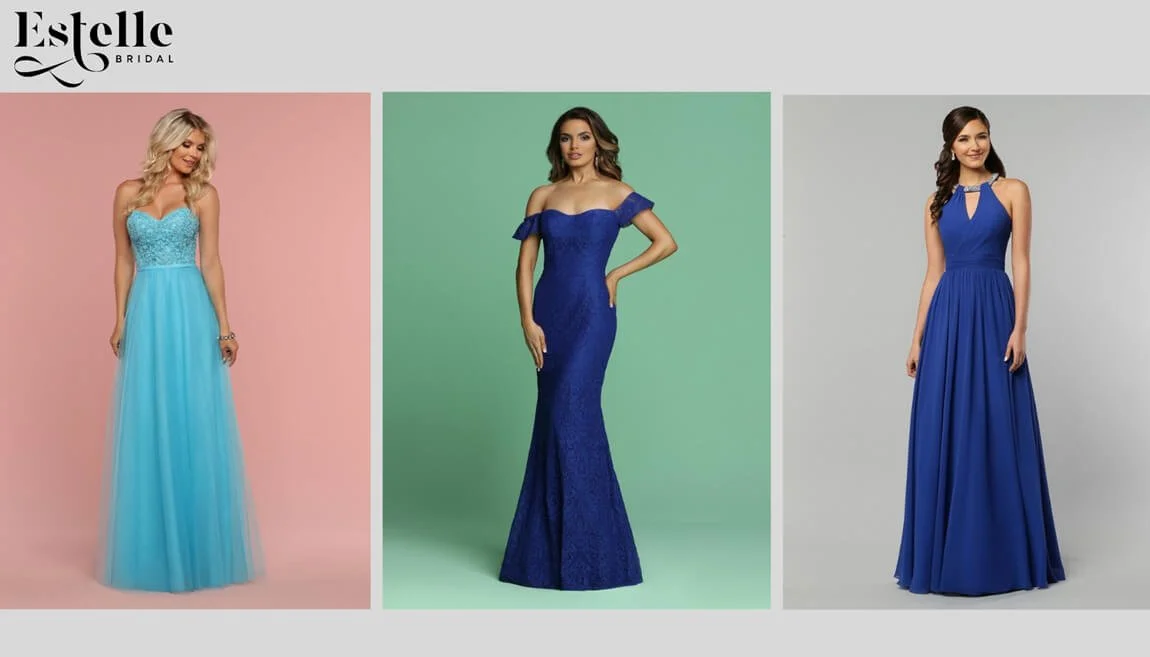
Which colours flatter the widest range of bridesmaids?
Deep, slightly muted shades flatter the widest range of skin tones. Emerald, navy, burgundy, dusty blue and sage all have enough depth to hold their own against fair, olive, medium and deep skin without washing anyone out. They are the reliable middle ground.
The difficult shades are the very pale and the very acidic. Pale pastels can vanish against fair skin, and mustard, lime and neon pull an unflattering cast on most people. None of them is forbidden, they just need more careful testing.
| Shade | Range | Notes |
|---|---|---|
| Navy | Universal | The single safest choice across mixed parties |
| Emerald and forest green | Universal | Rich on deep skin, striking on fair |
| Burgundy and wine | Very wide | Warms most complexions, excellent in photographs |
| Dusty blue | Very wide | Soft without being pale, photographs reliably |
| Sage and eucalyptus | Wide | Can pull sallow on very yellow undertones |
| Terracotta and rust | Moderate | Beautiful on warm and olive, harder on very cool skin |
| Blush and pale pink | Narrow | Can disappear against fair skin, test carefully |
| Mustard and lime | Narrow | Demanding on most skin tones |
What if one bridesmaid really does not suit the colour?
Change her fabric or neckline rather than her colour, or let her wear a slightly deeper shade of the same family. A tonal lineup looks deliberate and solves the problem quietly. Telling someone she looks bad in the colour, however gently, is the version everyone remembers.
What are the best colours for each season?
Season sets the mood rather than a hard rule. Spring and summer weddings suit lighter and dustier shades, autumn suits earth tones and deep jewels, and winter suits saturated colours and true neutrals. A Houston summer also makes fabric weight part of the colour decision.
| Season | Strongest shades | Fabric that suits |
|---|---|---|
| Spring | Dusty blue, sage, lavender, soft rose | Chiffon, light crepe |
| Summer | Sky blue, sage, coral, soft terracotta | Chiffon, georgette |
| Autumn | Rust, burgundy, forest green, caramel | Crepe, velvet, satin |
| Winter | Emerald, navy, plum, black, deep silver | Velvet, satin, heavy crepe |
Does an indoor venue change the seasonal rule?
Yes, quite a lot. An air conditioned ballroom in July behaves like an autumn venue, so a deeper shade and a heavier fabric both work. Let the room decide rather than the calendar. Our guide to bridesmaid dress fabrics for summer goes into the fabric side in detail.
Should bridesmaid dresses match your wedding colours?
They should sit within your palette, not match it exactly. An exact match to the florals or the stationery often looks flat in photographs, because everything in the frame carries the same value. A shade or two of separation gives the images depth.
The useful test is to put a swatch next to a photograph of your flowers and your table setting. If the swatch disappears into them, go lighter or darker rather than changing the colour.
How do you coordinate with the groomsmen?
Check the dress swatch against the actual suit fabric, not against a product photograph. Warm brown and tan suits clash with cool pinks and lilacs, and grey suits can flatten a muted dress. This cross check takes minutes and prevents the most common photographic clash.
What about the mothers?
Tell both mothers the bridesmaid shade so they can avoid it. That single message prevents the most common accidental clash in family photographs. Our guides to mother of the bride dresses and mother of the groom dresses both cover how to coordinate without matching.
Why does the same colour look different in satin and chiffon?
Fabric finish changes how light bounces off the dye. Satin reflects light, so a colour reads brighter, cleaner and more saturated. Chiffon, crepe and velvet absorb more light, so the same dye reads softer, deeper and more muted. The colour name on the swatch card does not change, but what you see does.
This matters most when a bridal party mixes fabrics. Two bridesmaids in the same official shade, one in satin and one in chiffon, will not look like they are wearing the same colour in photographs.
| Fabric | How the colour reads | Photographs as |
|---|---|---|
| Satin | Brighter and more saturated | High shine, picks up every light source |
| Chiffon | Softer and slightly lighter | Matte and airy, very forgiving |
| Crepe | True to swatch, slightly matte | Clean and structured |
| Velvet | Deeper and richer | Absorbs light, reads darker than the swatch |
| Tulle | Lighter, almost hazy | Soft edges, colour builds with layers |
| Sequin or metallic | Varies with angle | Unpredictable under flash, test it |
Can you mix fabrics in one colour?
Yes, if you choose the mix deliberately and see the swatches side by side first. Satin and crepe in the same shade can look intentional and expensive. Satin and chiffon in the same shade more often look like a mistake.
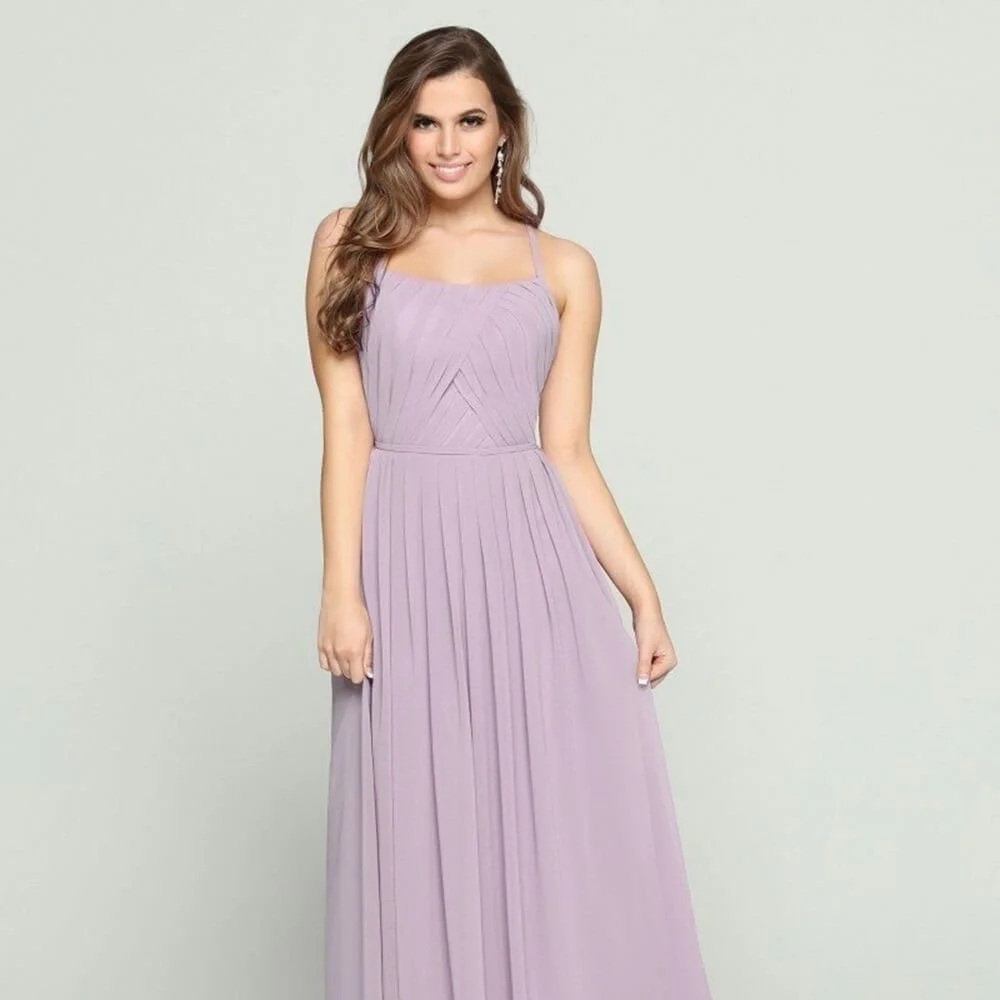
Can bridesmaids wear different colours?
Yes, and it works well when something else holds the group together. The usual anchors are a single fabric, a single shade family in different depths, or a shared neckline. Without one of those, a mixed lineup reads as unplanned rather than relaxed.
Three to four shades is the practical ceiling for most parties. Beyond that the group stops reading as a group in wide photographs.
What is the easiest mismatched approach?
Tonal, meaning one colour family in three depths. Light, mid and deep dusty blue across six bridesmaids looks considered and photographs beautifully, and it solves the skin tone problem at the same time. Our guide to bridesmaid dresses in Houston covers the styling options.
How do you place the colours in a lineup?
Alternate rather than grouping. Putting all the light dresses at one end and all the dark at the other makes the group look split in photographs. Mixing them along the line keeps the eye moving across the whole party.
How do bridesmaid dress colours photograph at your venue?
Venue lighting changes colour more than most brides expect. Warm tungsten lighting pushes everything yellow, uplighting tints pale fabrics with whatever colour is in the room, and direct midday sun washes out pastels. Golden hour flatters almost everything.
If your reception has coloured uplighting, pale dresses will take on that colour in every photograph. A deeper shade resists it.
Should you ask your photographer?
Yes, and early rather than after the dresses are ordered. A photographer who has shot your venue will know exactly how the room behaves and which shades have struggled there before. It is a two minute question with a lot of value.
What about flash?
Flash brightens satin and metallics sharply and can blow out very pale shades entirely. Matte fabrics handle it far better. If most of your reception photographs will be flash lit, that is an argument for crepe or chiffon over high shine satin.
What is a dye lot, and why does it matter?
A dye lot is a single batch of fabric dyed at one time. Fabric from two different lots in the same official colour can differ visibly, and the difference usually only shows when the dresses hang side by side. This is the most common cause of a bridal party that looks slightly off in photographs.
The fix is simple and has to happen at order time, not later. Order all the dresses together, in one order, and ask the supplier to confirm they will be cut from the same dye lot.
- Order every dress in one transaction, even if the bridesmaids pay separately.
- Ask for dye lot confirmation in writing before the order is placed.
- Avoid adding a dress later, since a late addition almost always comes from a different lot.
- Keep a swatch from the original order so you can check the dresses on arrival.
- Check all dresses together in daylight as soon as they arrive, not the week of the wedding.
What if the colour names differ between suppliers?
Assume they do. Dusty rose at one label and dusty rose at another are rarely the same colour, and neither matches a screen. If you are ordering from more than one place, order swatches from every one and compare them physically before committing.
How do you lock in the colour and order without surprises?
Work backward from the wedding date and treat the colour decision as a deadline rather than a mood. Dresses need production time, shipping time and alteration time, and all three compress if the colour is decided late. Indecision costs schedule, which is the part that actually hurts.
| Months before | What to do |
|---|---|
| 9 to 10 | Narrow to three or four shades, order swatches from every supplier |
| 8 to 9 | Daylight face test with each bridesmaid, cross check the suits and florals |
| 7 to 8 | Confirm the shade, place one order for all dresses, get dye lot confirmation |
| 4 to 5 | Dresses arrive, check all together in daylight against your swatch |
| 2 to 3 | Individual alterations, hems set with each bridesmaid's actual shoes |
| 1 | Final check, steam everything, photograph the full lineup together |
What should you tell your bridesmaids up front?
The shade, the fabric, the order date and the alteration deadline, in one message. Most friction in bridesmaid dress planning comes from people not knowing when they need to act rather than from the colour itself.
Why Houston Brides Choose Estelle Bridal
Estelle Bridal fits whole bridal parties, not just brides, and that means seeing how a colour behaves across different people, fabrics and body types in the same room. It is a very different view of colour from a swatch card.
- Real fabric in real light, so you judge the shade the way the camera will.
- Whole party fittings, including bridesmaids ordering from a distance.
- Custom construction when a standard size range does not cover your group.
- Honest input on which shades will photograph well at your venue.
See our bridesmaid collections and accessories, or contact the studio to talk through a palette.
Frequently asked questions
What is the most flattering bridesmaid dress colour?
Navy is the single safest choice across mixed skin tones, followed by emerald, burgundy and dusty blue. Deep, slightly muted shades flatter the widest range because they have enough depth to hold their own without washing anyone out.
Should bridesmaid dresses match the wedding colours exactly?
No. Dresses should sit within your palette rather than match it exactly, because an exact match flattens the photographs. A shade or two of separation from the florals and stationery gives the images depth.
Can bridesmaids wear different colours?
Yes, as long as something anchors the group: one fabric, one shade family in different depths, or a shared neckline. Three to four shades is the practical maximum before the party stops reading as a group.
Why do bridesmaid dresses in the same colour look different?
Usually either fabric finish or dye lot. Satin reflects light and reads brighter while chiffon and velvet absorb it, and fabric dyed in two separate batches can differ visibly in the same official shade. Order every dress together to avoid the second problem.
Can bridesmaids wear black or white?
Black is widely accepted and flatters everyone, though it can read severe at a daytime garden wedding. White and anything close to it is best avoided, because it competes with the bride in photographs.
More questions from Houston brides
What are the best bridesmaid dress colours for a fall wedding?
Rust, burgundy, forest green, caramel and deep plum all suit autumn and photograph beautifully in warm light. Crepe, velvet and satin all work for the season, with velvet reading deepest on camera.
What bridesmaid colours work for a summer wedding in Houston?
Sky blue, sage, soft terracotta and coral in chiffon or georgette work well outdoors. For an air conditioned indoor reception you can go deeper and heavier, because the room behaves more like autumn than summer.
How do you choose a colour when your bridesmaids have very different skin tones?
Use a tonal approach: one colour family in two or three depths, assigned so each person wears the depth that suits her. It looks deliberate, photographs well, and removes the need for one shade to work for everybody.
How early should you choose bridesmaid dress colours?
Nine to ten months before the wedding for swatches, with the final shade confirmed and ordered seven to eight months out. Production, shipping and individual alterations all need time, and a late colour decision compresses all three.
Does venue lighting really change the dress colour?
Yes, noticeably. Warm indoor lighting pushes colours yellow, coloured uplighting tints pale fabrics, and direct midday sun washes out pastels. Ask a photographer who has shot your venue before you order.
For related reading, our guides to junior bridesmaid dresses and seasonal colour analysis both help when a party spans a wide age range or a wide set of complexions.
About the Author
Florence Adeboye is the founder and lead designer of Estelle Bridal in Houston, Texas. Since 2016 she has designed and fitted gowns for hundreds of Houston brides, with particular experience in custom construction, lace and embellished work, and gowns built around fabric that brides bring to her themselves.
To talk through your garment, your cloth and your ceremony plan, book a private appointment at 2428 S Hwy 6, Houston, TX 77077, or call (281) 208-7805.