
Wedding Shapewear: What to Wear Under Your Dress
Most advice about wedding shapewear is organised by product. You get a list of brands, a list of styles, and no way of knowing which one belongs under the dress you have actually bought.
That is backwards. The useful question is not which shapewear is best, it is what your particular dress needs underneath it. A low back needs something completely different from a corset bodice, and a fluid crepe skirt needs something different again from heavy beaded lace.
Quick Summary
Choose your shapewear by the demands of your dress, not by category, and buy it before your first fitting. A gown fitted over one layer will not fit correctly over a different one, which is why the exact pair you wear on the day has to come to every appointment. Comfort matters as much as smoothing, because you will be in it for twelve hours.
- The dress is fitted over whatever you wear underneath. Swap a thick layer for a thin one after the final fitting and the bodice becomes loose. Swap thin for thick and it will not close.
- A low or open back rules out most shapewear immediately. This is the single most common mismatch, and the answer is usually a low back bodysuit or built in cups rather than a conventional piece.
- Fabric decides how much shows. Crepe, satin and jersey reveal almost every edge underneath. Beaded lace, brocade and layered tulle hide nearly all of it.
- Lines show up at edges, not in the middle. A hem that cuts across the thigh or a band that sits at the waist is what appears in photographs, so seamless edges matter more than compression.
- Many gowns need nothing extra at all. A corset bodice with boning is already doing the work, and adding a layer underneath can make the fit worse rather than better.
- You have to be able to sit, eat and dance in it. If you cannot wear it comfortably for an hour at home, you will not last a wedding day in it.
| Dress feature | What usually works | What usually does not |
|---|---|---|
| Low or open back | Low back bodysuit, adhesive cups, or built in support | Any piece with a normal back band |
| Strapless bodice | Strapless longline, or nothing if the gown is boned | Anything with straps that will show |
| Corset or boned bodice | Usually nothing, or a light brief only | A second shaping layer, which fights the boning |
| Fitted crepe or satin skirt | Seamless long shorts or a slip | Any hem that cuts across the thigh |
| Sheer or illusion panels | Nude seamless pieces matched to your skin | Anything white, which shows darker than skin |
| Full skirt or heavy lace | Whatever is most comfortable | Over thinking it, because nothing will show |
Bring what you plan to wear underneath to your first appointment. Book a private appointment and we will fit the gown over it from the start.
Why does shapewear have to come to your fitting?
Because the gown is fitted to the outside of whatever you are wearing, not to your body on its own. Every measurement taken at a fitting includes the thickness of the layer underneath.
A firm shaping piece can change the measurement at the waist and hip by a noticeable amount. If the bodice is taken in over that layer and you then decide against it, the gown no longer sits where it was pinned. The reverse is worse. A dress fitted with nothing underneath will not close over a firm layer added later.
Does this apply even to a light piece?
Yes, though the margin is smaller. A thin seamless slip changes very little. A firm longline changes quite a lot. The safe rule is simple. Whatever you intend to wear on the day, wear it to every fitting, including the first.
What if you have not decided yet?
Say so, and decide before the second fitting rather than the last. There is usually room to adjust early and very little room at the end. The sequence of fittings and what each one locks in is set out in our wedding dress alterations guide.
How does this affect measurements taken at home?
Home measurements are taken differently from fitting measurements, and the difference matters. Measurements are taken in bare feet and over undergarments only, not over a shaping layer and not over clothing. Our how to measure page sets out the method, and how to figure out your custom wedding dress size explains how those numbers turn into a pattern.

Do you actually need shapewear at all?
Often not, and the honest answer depends almost entirely on the construction of your gown rather than on you.
When is it genuinely unnecessary?
When the bodice is boned or corseted, the gown is already built to hold its own shape. Adding a shaping layer under a structured bodice usually makes the fit worse, because two structures fight each other and the seam lines stop sitting flat. A corset wedding dress is designed to replace the need, not sit on top of it.
It is also unnecessary under a full skirt, heavy beading or multiple layers of tulle, simply because nothing underneath is visible.
When does it genuinely help?
Under fluid fabric with a close fit, where the usefulness is less about shaping and more about creating a smooth surface for the fabric to fall over. It also helps when you want a layer between you and the gown on a hot day, and when you want the security of something that stays in place while you move.
Is comfort a good enough reason on its own?
It is. A soft slip under a lined gown stops the lining catching on your skin as you walk, which makes a full day in a fitted dress considerably easier. That is a perfectly good reason to wear one even if nothing would show either way.
What works under a low back or open back dress?
This is the mismatch we see most often. A bride buys a beautiful open back gown and a conventional shaping piece, and the two cannot coexist.
What are the real options?
A low back bodysuit cut below the gown's back line is the cleanest solution, as long as you check the actual depth against the dress rather than trusting the description. Adhesive cups give support with nothing across the back at all. Many gowns can also have cups sewn into the bodice during alterations, which removes the problem entirely and is often the most comfortable answer.
How do you check the depth correctly?
At the fitting, with the gown on. Have someone look at where the dress back actually sits on you rather than where it sits on a hanger. Backs drop lower on the body than they appear on a rail, which is how an edge ends up visible in photographs taken from behind.
What about a plunging front?
Similar problem, different direction. Adhesive cups or sewn in support work, and fashion tape holds the edges in place. Our guide to styling a deep plunging neckline covers the tape and support side in detail, and the neckline types guide explains how each shape behaves.
What works under a strapless or corset bodice?
Start by checking what the gown already has. Many strapless bodices are boned and lined, which means they are self supporting and nothing extra is wanted.
How do you tell whether the gown supports itself?
Hold the bodice up by the top edge. If it keeps its shape rather than collapsing, it is structured. If it folds, it is relying on whatever is underneath. Your fitter can tell you in seconds, and it is worth asking at the first appointment rather than guessing. The strapless wedding dress guide covers how that construction works.
What if you want more support anyway?
A strapless longline piece is the usual answer, and the important detail is the top edge. It has to sit below the top edge of the bodice, or it will show as a ridge across the chest in every photograph. Measure this with the gown on rather than assuming.
Will it stay up?
That is a fit question rather than a shapewear question. A strapless gown that is correctly fitted at the ribcage stays up on its own. If it is relying on being pulled tight at the bust instead, it will slip, and no amount of shapewear underneath will fix it.
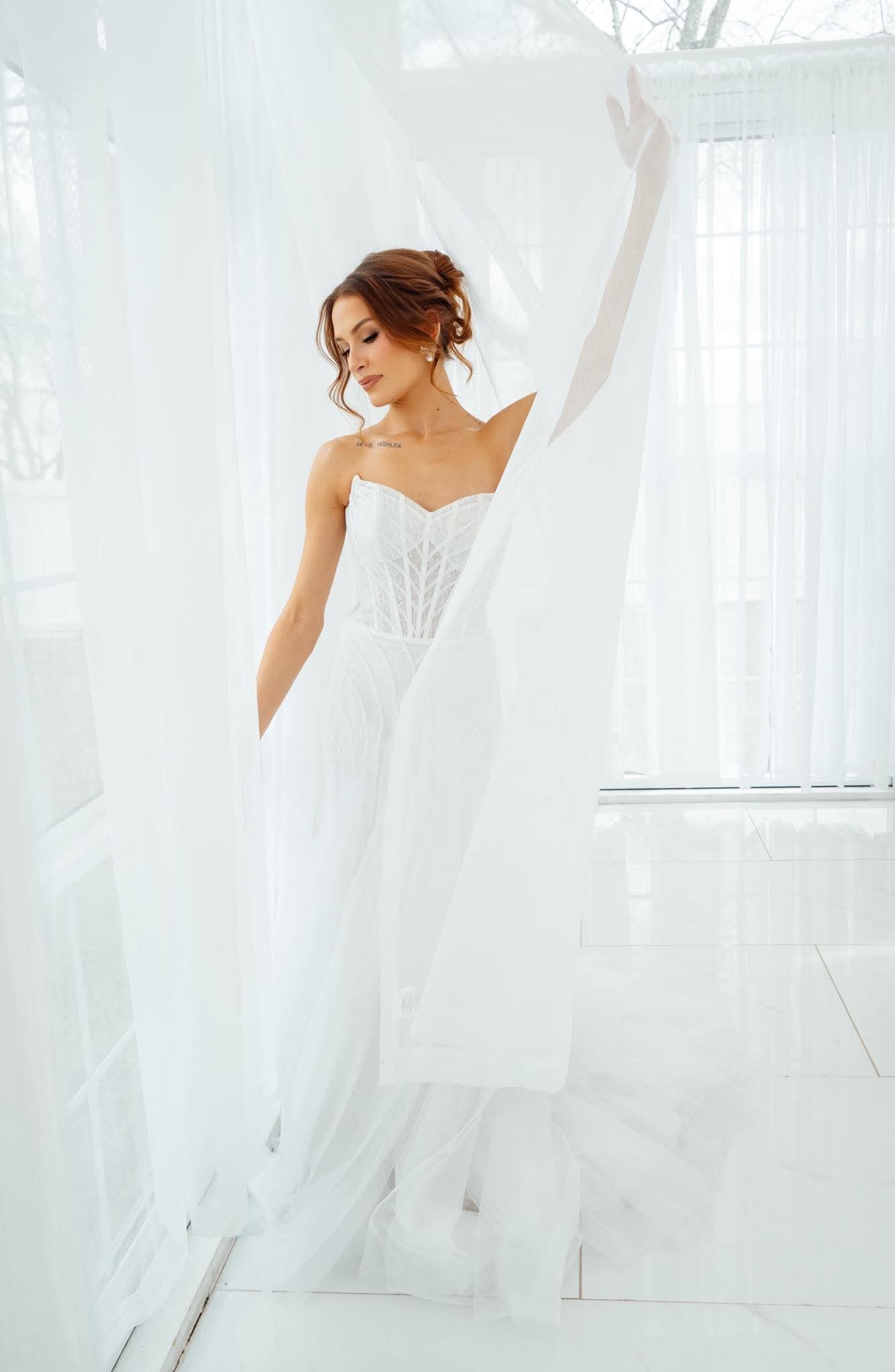
Which dress fabrics show everything underneath?
The honest test is whether the fabric has anything going on across its surface. Busy surfaces hide. Smooth surfaces reveal.
| Gown fabric | How much shows | What to do about it |
|---|---|---|
| Crepe | Almost everything, including stitching | Seamless pieces only, or a full slip |
| Satin and mikado | Edges and bands, especially in flash photography | Avoid any hem that cuts across the leg |
| Jersey and stretch | Everything, and it clings to edges | One single smooth layer, nothing layered |
| Beaded or embellished lace | Very little | Choose for comfort instead |
| Tulle, organza, layered skirts | Nothing below the waist | Focus only on the bodice |
| Illusion or sheer panels | Anything placed behind them | Match to your skin tone, never white |
Crepe is the fabric that catches most brides out, because it looks forgiving on the hanger and behaves very differently on the body. Our crepe wedding dress guide goes into how the fabric moves, and the sheath wedding dress guide covers the silhouette where it shows most.
How do you stop lines showing through?
Lines come from edges. Anywhere a garment stops, there is a step in thickness, and in smooth fabric under direct light that step becomes a visible ridge.
Where do lines usually appear?
Across the thigh where shorts end, around the ribcage where a longline stops, at the waist where a band sits, and across the back where a fastening crosses. Those four places account for almost every visible line in wedding photographs.
What actually fixes it?
Laser cut or bonded edges rather than hemmed ones, pieces that are long enough that the edge falls where the skirt is fuller, and choosing one single layer rather than stacking two. Two thin layers create two sets of edges, which is worse than one firmer layer.
How do you test before the day?
At your final fitting, with the gown on, have someone photograph you with a flash from a few steps back. A camera flash finds edges that daylight in a fitting room hides completely. This is the same test used for sheerness and it takes thirty seconds.
What colour should it be?
As close to your own skin tone as you can find, never white. White underneath a white dress reads as a visible darker shape through thin fabric, which is the opposite of what people expect.
What about fuller bust and plus size support?
The useful distinction here is between shaping and support. They are different jobs and a single garment rarely does both well.
What does support actually require?
Structure at the ribcage rather than tension at the shoulders or bust. In a wedding gown that structure is usually best built into the dress itself, through boning, a built in bodice or cups sewn in during alterations. That is more comfortable over a long day than relying on a separate garment pulled tight.
Does a fuller bust rule out strapless?
Not at all, provided the bodice is properly constructed and fitted at the ribcage. Our guides to plus size wedding dresses and plus size wedding dress styling cover how construction carries the weight, and shopping for plus size gowns covers what to ask for at an appointment.
Is firmer better?
No. Firmer shapewear restricts breathing and movement, and a bride who cannot take a full breath during her vows is not better dressed, she is uncomfortable. Choose the lightest thing that creates a smooth line and let the gown do the rest.
How do you stay comfortable for twelve hours?
Everything in this guide is decided by a long day, not by a photograph.
How do you test it properly?
Wear it at home for two hours. Sit down in it, eat a meal in it, walk up stairs in it. If anything digs, rolls or rides up in two hours at home, it will be unbearable by the reception.
What about the bathroom?
A practical question that almost nobody asks in a shop, and it matters a great deal in a floor length gown. Look for pieces with an open gusset or a separate two piece arrangement. The alternative involves undressing almost entirely, in a bathroom, in a wedding dress.
What about Houston heat?
An extra layer is an extra layer. For an outdoor ceremony in summer, choose breathable fabric and the lightest option that does the job, or skip it where the gown fabric hides everything anyway.
When should you buy it?
Before your first fitting, in the same way as your shoes. Both change the fit and both should be settled before anyone starts pinning.
What should you bring to the appointment?
The shapewear, the shoes and any bra you intend to wear. Our checklist on what to wear to a bridal appointment covers the full list, and the wedding dress shopping tips guide explains why the first appointment sets up everything that follows.
Where does it sit in the timeline?
Once the gown is ordered and before alterations begin. The full schedule is in how long it takes to get a wedding dress, and when to buy a wedding dress covers the earlier end of the process.
What if your size changes before the wedding?
Tell your fitter rather than changing your shapewear to compensate. Adjusting the gown is straightforward when there is notice. Using a firmer layer to make an unaltered dress close is not a solution and it shows in how the bodice sits.
Why Houston Brides Choose Estelle Bridal
We fit the gown over what you will actually wear. Your appointment is private, and the dress is pinned over your shoes and your chosen layers rather than over an assumption.
Support can be built into the dress instead. Cups, boning and an internal bodice can be added during construction or alterations, which is usually more comfortable than a separate garment and removes the low back problem entirely.
You get a straight answer about whether you need anything. If your gown is already structured, we will tell you to save the money rather than sell you a layer that will fight the fit.
Custom construction removes most of the problem. A gown drafted to your measurements fits where it should from the start. Our page on a custom wedding dress and a perfect fit explains how that works, and you can see the range on our wedding gowns page.
Wedding Shapewear FAQs
Do I need shapewear under my wedding dress?
Only if the gown needs it. A boned or corseted bodice is already self supporting, and a full or heavily beaded skirt hides everything underneath. Smooth fitted fabrics like crepe and satin are where it genuinely helps.
Do I have to bring shapewear to my fitting?
Yes, and the exact pair you will wear on the day. The gown is fitted over whatever you have on, so changing the layer afterwards leaves the bodice either loose or too tight.
What shapewear works under a low back wedding dress?
A low back bodysuit cut below the dress line, adhesive cups, or cups sewn into the bodice during alterations. Check the depth with the gown on, because backs sit lower on the body than they appear on a hanger.
What colour shapewear should I wear under a white dress?
As close to your own skin tone as possible. White shows through thin white fabric as a darker shape, which is the opposite of what most brides expect.
How do I stop shapewear lines showing in photographs?
Choose laser cut or bonded edges, wear one single layer rather than two, and make sure any hem falls where the skirt is fuller. Then test it with a flash photograph at your final fitting.
More Wedding Shapewear Questions
Can I wear shapewear under a corset wedding dress?
You can, but it usually makes the fit worse. A corset bodice is built to hold its own shape, and a second structure underneath stops the seams sitting flat against you.
What works under a strapless wedding dress?
Often nothing, if the bodice is boned. If you want extra support, a strapless longline works provided its top edge sits below the top edge of the gown so it does not show as a ridge.
Is firmer shapewear better?
No. Firmer pieces restrict breathing and movement over a long day. The lightest option that creates a smooth line is the better choice, and the gown should be doing most of the work.
How do I go to the bathroom in shapewear and a wedding dress?
Choose a piece with an open gusset or a two piece arrangement. It is a practical detail that almost nobody checks in the shop and that matters a great deal on the day.
When should I buy wedding shapewear?
Before your first fitting, at the same stage as your shoes. Both change how the gown is fitted, so both need to be settled before any pinning starts.
About the Author
Florence Adeboye is the founder and lead designer of Estelle Bridal in Houston, Texas. Since 2016 she has designed and fitted gowns for hundreds of Houston brides, with particular experience in custom construction, lace and embellished work, and gowns built around fabric that brides bring to her themselves.
To talk through your garment, your cloth and your ceremony plan, book a private appointment at 2428 S Hwy 6, Houston, TX 77077, or call (281) 208-7805.