
A Vietnamese wedding dress is not one garment but a sequence of them. The bride wears different outfits across the engagement, the tea ceremony and the reception, and most guides online stop at a single photograph of a red ao dai without explaining which part of the day it belongs to.
This guide maps the whole day. It covers the ao dai cuoi, what each colour signals, the khan dong headpiece, what the embroidery motifs mean, how many outfits a Vietnamese American bride actually wears, and how to plan fabric and fittings for a Houston summer.
Quick Summary
The Vietnamese wedding dress is the ao dai cuoi, a long fitted tunic worn over wide trousers, usually with a khan dong headpiece. Red and gold are the traditional bridal colours, and most brides wear two or three outfits across the day as the ceremonies change.
- The ao dai cuoi is the bridal version of the ao dai, cut longer and heavier with more embroidery.
- Red and gold lead, signalling luck and prosperity. Avoid all white and all black for the bride.
- The khan dong is the headpiece, and the bride's is larger and more detailed than the groom's.
- Motifs carry meaning. Phoenix, dragon and lotus are the three you will see most.
- Two to three outfits is normal in the United States, often an ao dai for the tea ceremony and a gown for the reception.
- Order four to six months ahead if the ao dai is made to measure, and leave room for local alterations.
| Stage | What it is | Bride usually wears |
|---|---|---|
| Le dam ngo | Small proposal visit between families | Simple ao dai, often pastel |
| Le an hoi | Engagement, gift trays presented | Ao dai, commonly red or pink |
| Tea ceremony | Tea served to elders, the heart of the day | Red and gold ao dai cuoi with khan dong |
| Church or civil ceremony | Where held | White gown |
| Reception | Dinner, toasts, table greetings | Gown on entry, often an ao dai for greetings |
Planning an ao dai and a gown for the same day? Book a private appointment and bring your ceremony schedule.
What is a Vietnamese wedding dress?
The Vietnamese wedding dress is called the ao dai cuoi. It is a long fitted tunic with side splits, worn over wide legged trousers, and the bridal version is cut heavier and more ornate than an everyday ao dai. It is almost always worn with a khan dong headpiece.
The ao dai itself is worn year round for many occasions. What makes one bridal is the fabric weight, the embroidery and the colour, not a different pattern. That is why a bridal ao dai looks unmistakable even though the shape is familiar.
What does ao dai cuoi mean?
Cuoi means wedding, so ao dai cuoi is simply the wedding ao dai. You will also hear the garment described by its colour or by the ceremony it is worn to, which is why the same bride may be described as wearing several ao dai across one day.
How is it different from a Chinese qipao?
They are separate traditions. The ao dai is worn over trousers and has long side splits from the waist, while a qipao is a single fitted dress. Both use silk and both favour red, but the cut, the construction and the ceremonies around them differ. Our guide to Chinese wedding dresses covers that tradition.
What does the bride wear at each stage of the day?
A Vietnamese wedding is a sequence of events rather than one ceremony, and the outfit changes with it. Most guides skip this, which is why brides end up buying the wrong garment for the wrong moment.
The tea ceremony is the one that matters most for the ao dai. It is where the couple serve tea to parents and elders, and it is the moment the full bridal ao dai cuoi with khan dong belongs to.
What happens at the tea ceremony?
The groom's family arrives with gift trays, the couple are formally introduced, and tea is served to elders in order of seniority. There is bowing and kneeling, so the outfit has to allow movement at the knees and shoulders. A very stiff or heavily boned garment makes this harder than it needs to be.
Does the engagement need a separate outfit?
Often yes, though it can be a lighter one. Many brides wear a softer coloured ao dai for the engagement and save the red and gold for the wedding day itself. If budget or time is tight, this is the outfit to simplify rather than the tea ceremony one.
How many outfits does a Vietnamese American bride wear?
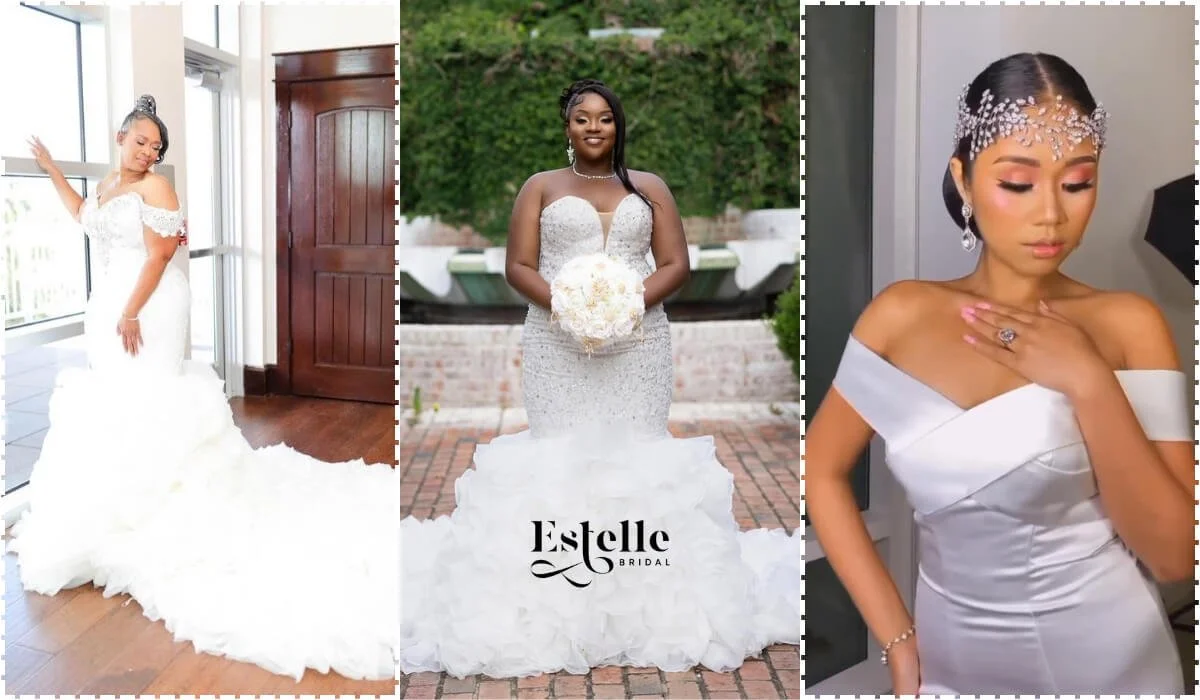
Two to three is typical in the United States, and some brides wear more. The common pattern is an ao dai cuoi for the tea ceremony, a white gown for the church or civil ceremony and the reception entrance, and often a second ao dai or a change back into one later in the evening.
That last change surprises people. Many brides switch into an ao dai partway through the reception specifically because it is easier to move in while greeting guests table by table, then change again for dancing.
| Plan | What it looks like | Suits |
|---|---|---|
| Two outfits | Ao dai for the tea ceremony, gown for everything after | Most brides, simplest to manage |
| Three outfits | Ao dai, gown, then back into an ao dai for table greetings | Large receptions with many tables |
| Three outfits, evening change | Ao dai, gown, lighter party dress for dancing | Long receptions with a late finish |
| One outfit | Ao dai throughout | Smaller, fully traditional celebrations |
Where do you change, and how long does it take?
Build it into the schedule rather than assuming it will happen between courses. An ao dai with a khan dong takes longer to change into than a gown, because the headpiece has to be positioned and pinned. Ten to fifteen minutes with help is realistic, and you need a private room.
What colour should your ao dai be, and what does each mean?
Red is the traditional bridal colour, usually paired with gold embroidery, and it signals luck and happiness. Pink is a common alternative for the engagement. Modern brides also wear cream, champagne, blush, green and blue, and these are widely accepted now even though they are not traditional.
The colours to approach carefully are all white and all black, both of which carry mourning associations in Vietnamese custom. White as a Western bridal gown is understood and accepted. A white ao dai is a different matter, because the plain white ao dai is strongly associated with schoolgirls.
| Colour | Signals | Usual use |
|---|---|---|
| Red with gold | Luck, happiness, prosperity | The classic tea ceremony choice |
| Pink | Softer celebration | Engagement and younger brides |
| Gold or champagne | Wealth and warmth | Modern bridal, photographs well |
| Blush and cream | Modern and Western leaning | Receptions and second looks |
| Green or blue | Growth and calm | Modern, increasingly common |
| Plain white | Associated with students and with mourning | Avoid for the bride |
| All black | Mourning | Avoid |
Do guests follow colour rules too?
Yes, broadly. Guests avoid all white and all black, and they avoid wearing the same red the bride has chosen. Bright, celebratory colours are welcome. If you are hosting, telling guests the bride's colour in advance saves awkwardness.
What is a khan dong, and how do you choose one?
The khan dong is the circular headpiece worn with a formal ao dai. It is wrapped and structured rather than tied fresh each time, and the bride's is noticeably larger and more decorated than the groom's. It is what completes the bridal look.
Fit matters more than people expect, because a khan dong sits on the head rather than clipping into hair. Measure the circumference of your head where the piece will sit and order to that measurement rather than assuming one size works.
Should the khan dong match the ao dai exactly?
Match the colour family, balance the detail. A heavily embroidered ao dai sits better with a simpler khan dong, and a plainer ao dai can carry a more ornate headpiece. Matching both at full intensity tends to compete rather than coordinate.
Do you have to wear one?
Not strictly, and some brides skip it or wear flowers instead. It is strongly associated with the traditional look though, so most brides wear one for the tea ceremony even if they leave it off later in the day.
What do the phoenix, dragon and lotus motifs mean?
Embroidery on a bridal ao dai is not decorative filler. The motifs carry specific meanings, and the pairing of dragon and phoenix in particular is the one most often chosen for weddings.
| Motif | Meaning | Usually worn by |
|---|---|---|
| Phoenix | Grace, renewal, the bride | Bride |
| Dragon | Strength and good fortune, the groom | Groom |
| Dragon and phoenix together | Balance and union of the couple | Either, on a wedding set |
| Lotus | Purity and resilience, Vietnam's national flower | Bride |
| Peony | Prosperity and honour | Bride |
| Lovebirds | Devotion between the couple | Either |
| Double happiness character | Shared joy in marriage | Either |
Can you choose motifs freely?
Mostly yes. These motifs are widely shared rather than restricted, so choosing a lotus because you like it is perfectly normal. The one convention worth keeping is the dragon for the groom and the phoenix for the bride when the pair is used as a set.
What should the mothers and bridal party wear?
Mothers very often wear an ao dai, and many prefer to wear it for the tea ceremony and change into Western formalwear for the reception. Their colours sit a step away from the bride's, commonly in deeper jewel tones or softer neutrals.
Bridesmaids usually wear matching ao dai in a colour that contrasts with the bride's, with simpler or smaller headpieces if they wear them at all. Groomsmen often carry the gift trays at the engagement, which is a role worth assigning early.
- Mothers: ao dai for the tea ceremony, in a colour clearly distinct from the bride's.
- Bridesmaids: matching ao dai in a contrasting colour, plainer than the bride's.
- Groomsmen: matching ao dai or suits, and they carry the gift trays.
- Guests: bright colours, avoiding all white, all black and the bride's exact shade.
How do you coordinate two sets of family expectations?
Ask both mothers early what they plan to wear, and share the bride's colour before anyone orders. Most friction here comes from timing rather than taste, because ao dai are frequently made to measure and cannot be changed late.
Which fabrics hold up in Houston heat?
An ao dai is worn over trousers and covers the arms, so fabric choice decides how comfortable a long Houston day will be. Silk and silk blends breathe well. Heavy brocade and densely beaded fabrics look striking and hold heat against the body.
Lining is the detail that catches people out. A light silk ao dai with a heavy lining behaves like a heavy garment, so ask what the lining is before you judge comfort by the outer fabric.
| Fabric | Breathability | Best for |
|---|---|---|
| Silk chiffon | Excellent | Outdoor engagement and daytime events |
| Silk charmeuse | Good | Tea ceremony, photographs with a soft sheen |
| Silk blend | Good | A practical all day choice |
| Taffeta | Moderate | Structured looks, holds its shape |
| Brocade | Low | Air conditioned venues, short wear |
| Heavy beaded fabric | Low | Evening and indoor only |
Does the fabric change how it photographs?
Noticeably. Pure silk has a soft, uneven sheen that reads expensive on camera, while synthetic satin can flash under direct flash. If much of your photography is indoors with flash, a matte or lightly textured fabric is the safer choice. Our guide to bridal fabrics covers how each behaves.
How do you pair an ao dai with a white gown?
The risk with two very different outfits is that the day looks like two separate weddings stitched together. The fix is to carry one thread across both looks rather than trying to match them.
- Repeat a motif. A lotus embroidered on the ao dai can reappear as beading or a hair piece with the gown.
- Keep one metal. Gold jewellery with both, rather than gold then silver.
- Hold the colour accent. A red detail somewhere in the gown look ties it back.
- Keep the hair related. A similar shape before and after the khan dong comes off.
- Plan the photographs. Tell your photographer the change times so both looks are properly covered.
Which look should the reception entrance use?
Most couples enter in the gown and change into an ao dai later, but there is no rule. What matters is deciding early, because it affects the timeline, the room you need for changing and when your photographer schedules portraits.
How far ahead should you order and fit everything?
Four to six months for a made to measure ao dai, and longer if it is fully custom or being ordered from overseas. Ready to wear is faster but will still need altering, because an ao dai is fitted closely through the body and the fit is the whole point.
| Route | Start by | What to expect |
|---|---|---|
| Fully custom | 8 to 12 months | Design, fabric sourcing, several fittings |
| Made to measure | 4 to 6 months | Measurements sent, one or two local fittings after arrival |
| Ready to wear | 2 to 3 months | Buy then alter locally, fit through the torso |
| Rental | 2 to 3 months | Limited alteration, choose close to your size |
| Khan dong | With the ao dai | Order to a head measurement, not a size label |
What measurements should you have ready?
Bust, waist, hip, shoulder width, sleeve length, the full length from shoulder to hem and your trouser length with the shoes you will wear. Our measuring guide walks through how to take each one accurately.
Should you plan local alterations?
Yes, almost always. An ao dai ordered remotely rarely arrives perfectly fitted, and the close fit through the bodice is unforgiving. Budget time for a local fitting after it arrives rather than hoping it will be right.
Why Houston Brides Choose Estelle Bridal
Estelle Bridal works with Houston's cultural wedding traditions as a normal part of the studio, not as an exception. That includes brides planning a traditional ceremony and a Western gown on the same day.
- Custom construction for gowns built around a multi ceremony day.
- Alterations included on gowns bought from our collection, including closely fitted pieces.
- Fabric guidance for Houston heat, based on what has worked for families here.
- Private appointments, with room to bring family into the decision.
See our wedding gowns and accessories, or contact the studio to talk through your schedule.
Frequently asked questions
What is a Vietnamese wedding dress called?
It is called the ao dai cuoi, meaning wedding ao dai. It is a long fitted tunic with side splits worn over wide trousers, made in heavier fabric with more embroidery than an everyday ao dai, and usually worn with a khan dong headpiece.
What colour do Vietnamese brides wear?
Red with gold embroidery is the traditional choice and signals luck and happiness. Pink, gold, champagne, blush, green and blue are all worn today. Plain white and all black are avoided by the bride because of their associations.
What is a khan dong?
The khan dong is the structured circular headpiece worn with a formal ao dai. The bride's is larger and more detailed than the groom's. Because it sits on the head rather than clipping into hair, order it to your head measurement.
How many outfits does a Vietnamese bride wear?
Two or three is typical in the United States. The usual pattern is an ao dai for the tea ceremony and a white gown for the ceremony and reception, with many brides changing back into an ao dai to greet guests table by table.
Can a non-Vietnamese bride wear an ao dai?
Yes, and brides marrying into Vietnamese families do so regularly. It is welcomed when the family is part of the choice. Involve them early, have it properly fitted, and wear it for the ceremony it belongs to rather than as a costume.
More questions from Houston brides
What happens at a Vietnamese tea ceremony?
The groom's family arrives with gift trays, the couple are formally introduced, and tea is served to parents and elders in order of seniority. There is bowing and kneeling, so the ao dai needs enough movement at the knees and shoulders.
What do the mothers wear at a Vietnamese wedding?
Mothers usually wear an ao dai for the tea ceremony in a colour clearly distinct from the bride's, often a deeper jewel tone. Many then change into Western formalwear for the reception.
Which fabric is best for an ao dai in Houston summer?
Silk chiffon and silk blends breathe best and suit outdoor or daytime events. Brocade and heavily beaded fabrics look striking but trap heat, so save them for air conditioned venues. Always check the lining, since a heavy lining cancels out a light outer fabric.
How far in advance should you order a bridal ao dai?
Four to six months for made to measure and eight to twelve for fully custom. Ready to wear can be bought closer to the date but will still need local alterations, because the ao dai is fitted closely through the body.
Do you need a separate outfit for the engagement ceremony?
Often, though it can be simpler than the wedding day ao dai. Many brides wear a softer colour such as pink for the engagement and save red and gold for the tea ceremony. If you need to economise anywhere, this is the outfit to simplify.
For related reading, our guides to Chinese wedding dresses, Indian wedding dresses and shopping as a multicultural bride cover other traditions, and our alterations guide explains how fittings should run.
About the Author
Flo A. is the founder and lead designer of Estelle Bridal in Houston, Texas. Since 2016 she has designed and fitted gowns for hundreds of Houston brides, with particular experience in custom construction, lace and embellished work, and gowns built around fabric that brides bring to her themselves.
To talk through your garment, your cloth and your ceremony plan, book a private appointment at 2428 S Hwy 6, Houston, TX 77077, or call (281) 208-7805.