
Chinese Wedding Dress: Qipao, Qun Kwa and Colour Guide
Two garments dominate Chinese bridal wear and most guides treat them as the same thing. A qipao and a qun kwa are not variations on a style. They come from different places, they are worn at different moments, and one of them is far less forgiving about fit than the other.
Getting that distinction right is most of the battle, because it determines what you are shopping for, who can alter it, and whether your family will consider the look complete.
Quick Summary
A Chinese wedding dress is usually one of two garments. A qipao, also called a cheongsam, is the fitted one piece dress with a mandarin collar. A qun kwa is the embroidered two piece jacket and skirt associated with Cantonese and Hong Kong tradition. Which one you need depends on your family's background, not on which you prefer the look of.
- Qipao and cheongsam are the same garment in Mandarin and Cantonese. Qun kwa is a different garment entirely.
- Fit is the whole game on a qipao. It is cut close to the body and a well made one is measured in far more places than a Western dress.
- A qun kwa is more forgiving, which matters if you cannot find a tailor who knows the garment.
- Red and gold are the traditional colours, and traditional white carries mourning associations that a Western white gown does not.
- Most couples wear more than one look, with the traditional garment for the tea ceremony and something else for the banquet.
- Renting is normal where these garments come from, which is why buying one abroad is harder than people expect.
| Garment | Where it belongs | What it looks like | Fit demands |
|---|---|---|---|
| Qipao, called cheongsam in Cantonese | Widely worn, Mandarin and Cantonese speaking families alike | One piece fitted dress, mandarin collar, frog buttons, side slits | High. Cut close through bust, waist and hip, so it is made to measure or tailored |
| Qun kwa, also written qungua | Cantonese and Hong Kong tradition | Two piece jacket and skirt, dense gold and silver dragon and phoenix embroidery | Lower. Straighter cut, so it can work off the rack more often |
| Xiuhefu | Associated with mainland and northern practice | Two piece with a looser jacket, often lighter embroidery than a qun kwa | Moderate. More room through the body than a qipao |
| Hanfu | A historical revival style rather than a regional tradition | Flowing robes with wide sleeves, from earlier dynasties | Low. Loose by construction |
Need a traditional garment altered, or a gown built to work alongside one? Book a private appointment at Estelle Bridal.
What Is the Difference Between a Qipao and a Qun Kwa?
A qipao is one fitted dress. A qun kwa is two pieces, a jacket and a skirt, covered in dense metallic embroidery. They are different garments from different traditions, and the confusion between them is the single most common correction people make when a bride posts a photograph asking for advice.
Start with the easy part. Qipao is the Mandarin word and cheongsam is the Cantonese word, and they refer to the same garment. If a shop uses one term and a relative uses the other, nothing has changed.
The qun kwa is the garment most associated with Cantonese and Hong Kong weddings. It is the more formal and more traditional of the two, which is why families who want the full traditional look usually mean a qun kwa rather than a qipao. Its embroidery is graded by density, and the heavier grades are substantially heavier to wear.
Which should you wear?
Follow your family's tradition rather than the photograph you liked. If your family is Cantonese or from Hong Kong, a qun kwa is probably what is expected for the tea ceremony. If your family is Taiwanese or from northern China, a qun kwa may be unfamiliar and a qipao is the more likely garment.
There is also a practical reason the distinction matters. A qipao must fit closely to look right. A qun kwa is cut straighter and tolerates a wider range of bodies, so if you cannot reach a tailor who knows these garments, the qun kwa is the more forgiving choice.
Which Garment Belongs to Which Tradition?
Regional practice varies more than most guides admit, and the differences are worth knowing because they decide what your family will consider correct.
Cantonese and Hong Kong families are the ones most strongly associated with the qun kwa, worn for the tea ceremony and the traditional portions of the day. Northern and mainland practice more often features the xiuhefu, a two piece with a looser jacket. Taiwanese families frequently centre the qipao instead, and a bride searching for a qun kwa in a Taiwanese context may find nobody recognises the request.
Hanfu sits apart from all of this. It is a revival of much older dress rather than a continuous regional tradition, and it has become popular for photography and for couples who want something distinct from both the qipao and the qun kwa.
If nobody in your family can tell you which applies, that is extremely common in diaspora families and not a failure. Ask the oldest relative who attended weddings in the home region, and ask about the tea ceremony specifically, since that is the moment the traditional garment is actually required.
What Do the Colours Mean, and Is White Really Off Limits?
Red is the colour of luck, joy and celebration, and it is the traditional colour for both the qipao and the qun kwa. Gold embroidery carries prosperity. Together they are what most families picture when they imagine a Chinese bride.
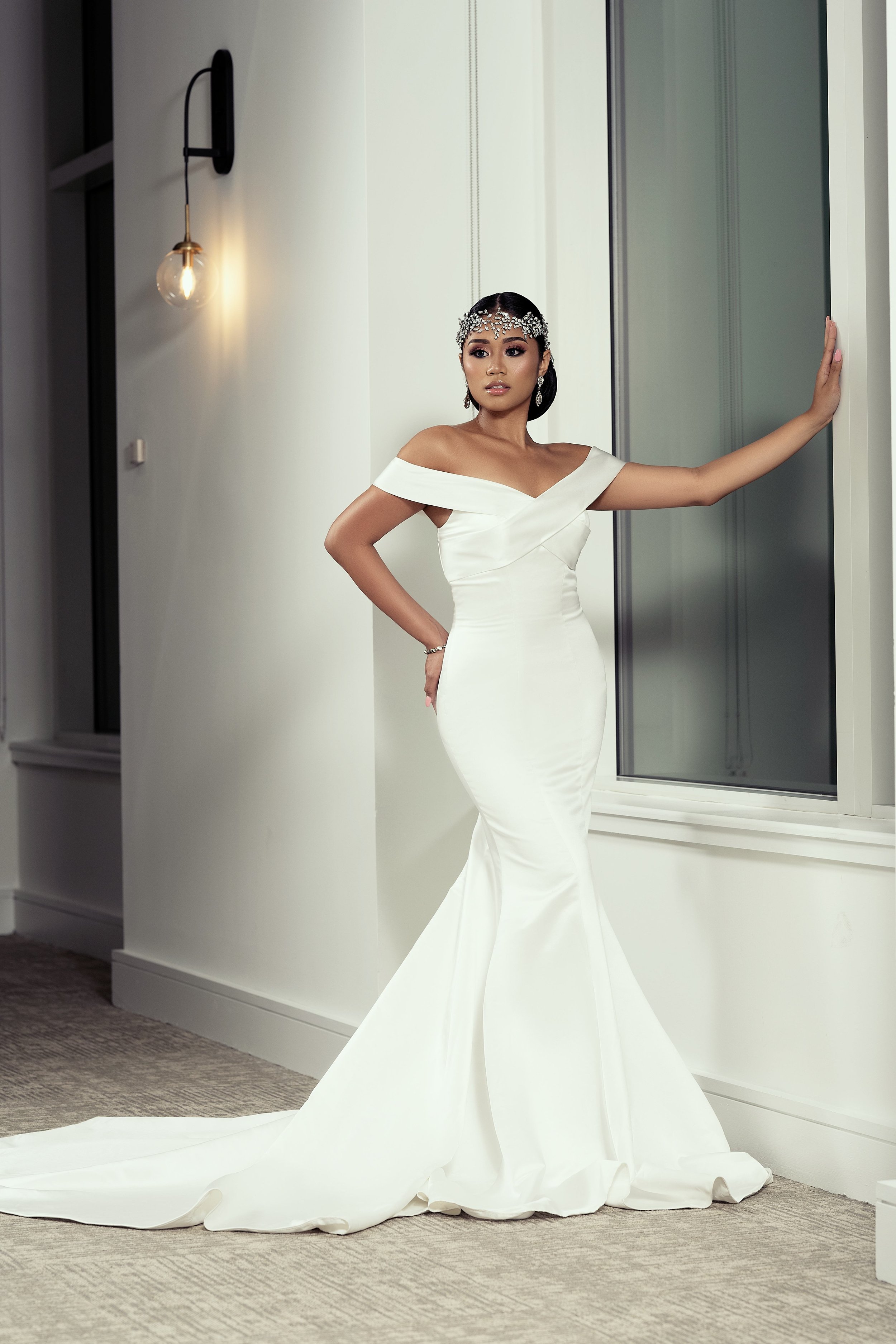
White is where the nuance sits, and it is worth being precise. Traditional white is associated with mourning and funerals, which is why a white garment in a traditional silhouette can genuinely trouble older relatives. A Western white wedding gown is a different matter and is worn by Chinese brides constantly without any objection, because it reads as Western formalwear rather than as traditional dress. The distinction is the silhouette, not just the colour.
Two other beliefs come up within families and almost never appear in published guides. Some consider pink inappropriate for a bride, and some Cantonese families treat blue as a funeral colour. Neither is universal, and both are worth asking about rather than assuming.
The useful principle is that the tea ceremony is the moment where tradition matters most, because it is held for the family rather than for the couple. Brides who want something unconventional very often wear it later in the day and keep the traditional colour for the tea.
How Many Outfits Do You Wear, and When?
Usually at least two, and the structure of the day is what decides it rather than preference.
The common pattern is a traditional garment for the tea ceremony and the door games, then a change into something else for the banquet and the toasts. Many couples add a Western white gown for a separate ceremony, which makes three looks across the day. Some families expect more, and brides describe being asked for considerably more than they planned.
Two things worth settling early.
- Decide which look carries the budget and the fitting time. Many brides put the care into the garment they wear longest, and keep the tea ceremony garment simpler, or the reverse if family expectation sits there.
- Plan the changes into the schedule. A qipao with frog buttons and a close fit is not a thirty second change, and a heavily embroidered qun kwa is heavier than it looks.
What Are Your Four Routes to the Garment?
| Route | Best when | Main risk | How to reduce the risk |
|---|---|---|---|
| Order from a maker overseas | You want authentic construction and have time | Fit from remote measurements, and shipping windows that move | Have measurements taken by a professional, send them in centimetres, and order well ahead |
| Buy in person from a US store | You live near a city with an established Chinese community | Limited bridal stock and limited sizes | Call ahead and ask what they hold in bridal rather than occasion wear |
| Rent, where rental exists | You want a heavily embroidered qun kwa for one morning | Rental is common in Hong Kong and mainland China and far rarer in the United States | Ask early, because the stock that exists is limited and books out |
| Have it made to measure locally | Fit is the priority, or you are blending traditional cloth into a gown | Few makers have worked with these garments | Ask directly whether they have built a close fitted collar and side slit garment before |
If you are weighing made to measure against buying ready made in general, the custom wedding dress guide walks through how the two processes differ.
Why Does Fit Matter More on a Qipao Than on Almost Any Gown?
Because the garment has nowhere to hide. A qipao is cut close from the collar to the hem, with no gathering, no draping and very little ease. Every measurement shows.
Brides who have had one made describe being measured in far more places than for a Western dress, including arm circumference, sleeve length, the height at which the side slit begins and the length of the leg. Shops that take only bust, waist and hip are not measuring enough for this garment.
Three things make the difference.
- Do not measure yourself. This is the most consistently reported cause of a qipao arriving unwearable. Our measurement guide shows how each measurement should be taken, and a professional should take them.
- Send measurements in centimetres. Traditional Chinese units are not the same as US inches, and unit confusion is a known failure.
- Think about the embroidery direction. On a close fitted garment, embroidery that runs horizontally across the body reads very differently from embroidery that runs vertically, and it is far easier to choose well than to fix later.
If you are choosing between close fitted and fuller shapes generally, the wedding dress silhouettes guide covers how each one behaves on the body.
Can a Western Tailor Alter a Qipao?
Some alterations yes, some no, and the difference is worth knowing before you hand the garment over.
Taking in the waist and the arms is often possible, particularly on a qun kwa, where there is more fabric to work with. Shortening is usually possible. What is much harder is anything that affects the collar, the frog button placement, the slit height or the balance of a close fitted qipao, because altering one of those changes how the whole garment sits.
The honest guidance brides give each other is that a tailor who has not worked on these garments can damage one, and that it is worth asking directly rather than assuming. A boutique that constructs garments rather than only altering them is better placed to judge what is safe. What is and is not possible on a finished garment generally is covered in the wedding dress alterations guide.
Should You Rent or Buy?
Renting is the norm in Hong Kong and mainland China, which surprises diaspora couples who assume they are buying. It is also why shopping for one of these garments overseas can be unexpectedly difficult, since many shops are set up to rent rather than sell, and many have little online presence.
The case for renting is that a heavily embroidered qun kwa is worn for a short part of one morning. The case for buying is that the garment can be kept, passed on or resold, and that an heirloom qun kwa carries real meaning in families that have one.
In the United States the practical answer is often that rental stock barely exists, so the question becomes buy or commission rather than rent or buy.
How Long Should You Allow?
More than you would for a dress bought locally, because production and shipping sit end to end and both can move.
- Confirm which garment your family expects and for which part of the day.
- Have measurements taken professionally, in centimetres, before anything is ordered.
- Order early enough to absorb a remake. Brides who left room describe problems as inconvenient. Brides who did not describe them as emergencies.
- Avoid having your delivery window fall across Chinese New Year, when workshops close and orders back up.
- Plan alterations after arrival, and find the person who will do them before the garment lands.
- Steam, do not iron. Garments shipped folded arrive with fold lines, and a steamer is the usual fix.
For how the construction stage breaks down in general, see how long it takes to get a wedding dress.
How Do Mixed Culture Couples Handle It?
Almost always by separating the events rather than merging the garments.
The common pattern is a traditional garment for the tea ceremony, which is the part of the day that belongs to the families, and a Western gown for the ceremony and reception. This works because the tea ceremony is short and because wearing the expected garment for it resolves most family concern without constraining the rest of the day.
Non Chinese partners marrying into a Chinese family are frequently encouraged to wear a qipao or qun kwa for the tea ceremony, and brides report that doing so is received as respect rather than as appropriation when the family has invited it. The things to get right are the colour, the fit and taking the garment seriously.
What Do Guests Wear to a Chinese Wedding?
- Avoid white and black as the main colour. Both carry funeral associations, so a white or black dress is the one thing worth changing.
- Avoid solid red. Red belongs to the couple, and a guest in full red reads as competing.
- Colour is welcome otherwise. Most families are far more relaxed than the internet suggests, and small amounts of white in a pattern are rarely an issue.
- Dress formally. Banquets are dressy and being underdressed is the more common mistake.
- Bring a red envelope if the couple follows that custom, and ask someone in the family what is usual.
Members of the wedding party looking at coordinated outfits can start with the bridesmaid dress collection.
Why Houston Brides Choose Estelle Bridal for Chinese Wedding Dresses
Close fitted construction is the house specialism. A qipao silhouette lives or dies on fit, and Estelle Bridal builds from individual measurements rather than ordering in and adjusting, which is the same discipline the garment requires.
Gowns are designed and made in house. Fabric can be chosen first and the design planned around it, which matters when you are working with brocade, heavy embroidery or cloth brought from family. See the custom gown guide.
Alterations are included in every gown. The fitting process from the first appointment through to final delivery is part of the gown, so a garment that needs work does not become a second open ended cost.
A second look for the rest of the day. Many couples wear a traditional garment for the tea ceremony and a gown afterwards, and both can be planned together rather than separately.
The whole party, in one place. Bridal, bridesmaids and accessories are handled together, which keeps looks consistent across several events.
Chinese Wedding Dress FAQs
What is the difference between a qipao and a cheongsam?
Nothing. Qipao is the Mandarin word and cheongsam is the Cantonese word for the same garment, a fitted one piece dress with a mandarin collar, frog buttons and side slits. A qun kwa is a different garment altogether, a two piece jacket and skirt.
What is a qun kwa?
A two piece bridal garment of jacket and skirt, densely embroidered in gold and silver thread with dragon and phoenix motifs, associated with Cantonese and Hong Kong tradition. It is the more formal and more traditional option, and it is usually what a family means when they ask for the full traditional look.
Can a Chinese bride wear white?
A Western white wedding gown is worn by Chinese brides very commonly and is not generally an issue. Traditional white in a traditional silhouette is different, because white carries mourning associations, and that combination is the one older relatives tend to object to.
How many outfits does a Chinese bride wear?
Usually at least two. A traditional garment for the tea ceremony and the door games, then a change for the banquet. Couples who also hold a Western ceremony often wear three looks across the day.
How far in advance should you order a Chinese wedding dress?
Early enough to absorb a remake. Production and international shipping run end to end, and workshops close around Chinese New Year, so avoid having your delivery window fall in that period and plan alterations for after the garment arrives.
More Questions About Fit, Colour and Timing
Why does a qipao need so many measurements?
Because it is cut close from collar to hem with very little ease, so every measurement shows. Expect arm circumference, sleeve length, leg length and the height where the side slit starts, not only bust, waist and hip. Send measurements in centimetres, since traditional Chinese units differ from US inches.
Can a regular tailor take in a qipao?
Taking in the waist and arms is often possible, and shortening usually is. Anything affecting the collar, the frog buttons, the slit height or the overall balance is much harder, and a tailor unfamiliar with the garment can damage it. Ask directly whether they have worked on one before.
Is it acceptable for a non Chinese bride to wear a qipao or qun kwa?
When the family has invited it, which is usually the case for someone marrying into a Chinese family, it is received as respect. The things to get right are the colour, the fit and treating the garment as formal dress rather than as a costume.
Can you rent a qun kwa in the United States?
Rental is the norm in Hong Kong and mainland China but is far less established in the United States, so the realistic choice here is usually to buy or to commission. If renting matters to you, ask early, because what stock exists is limited.
Does Estelle Bridal work with Chinese wedding dresses?
Yes. Gowns are designed and constructed in house from individual measurements, including garments built around fabric brides bring in themselves, and alterations are included. Book a private appointment to talk through the garment and the day.
About the Author
Florence Adeboye is the founder and lead designer of Estelle Bridal in Houston, Texas. Since 2016 she has designed and fitted gowns for hundreds of Houston brides, with particular experience in custom construction, lace and embellished work, and gowns built around fabric that brides bring to her themselves.
To talk through your garment, your cloth and your ceremony plan, book a private appointment at 2428 S Hwy 6, Houston, TX 77077, or call (281) 208-7805.